Writing and Bloom’s Taxonomy

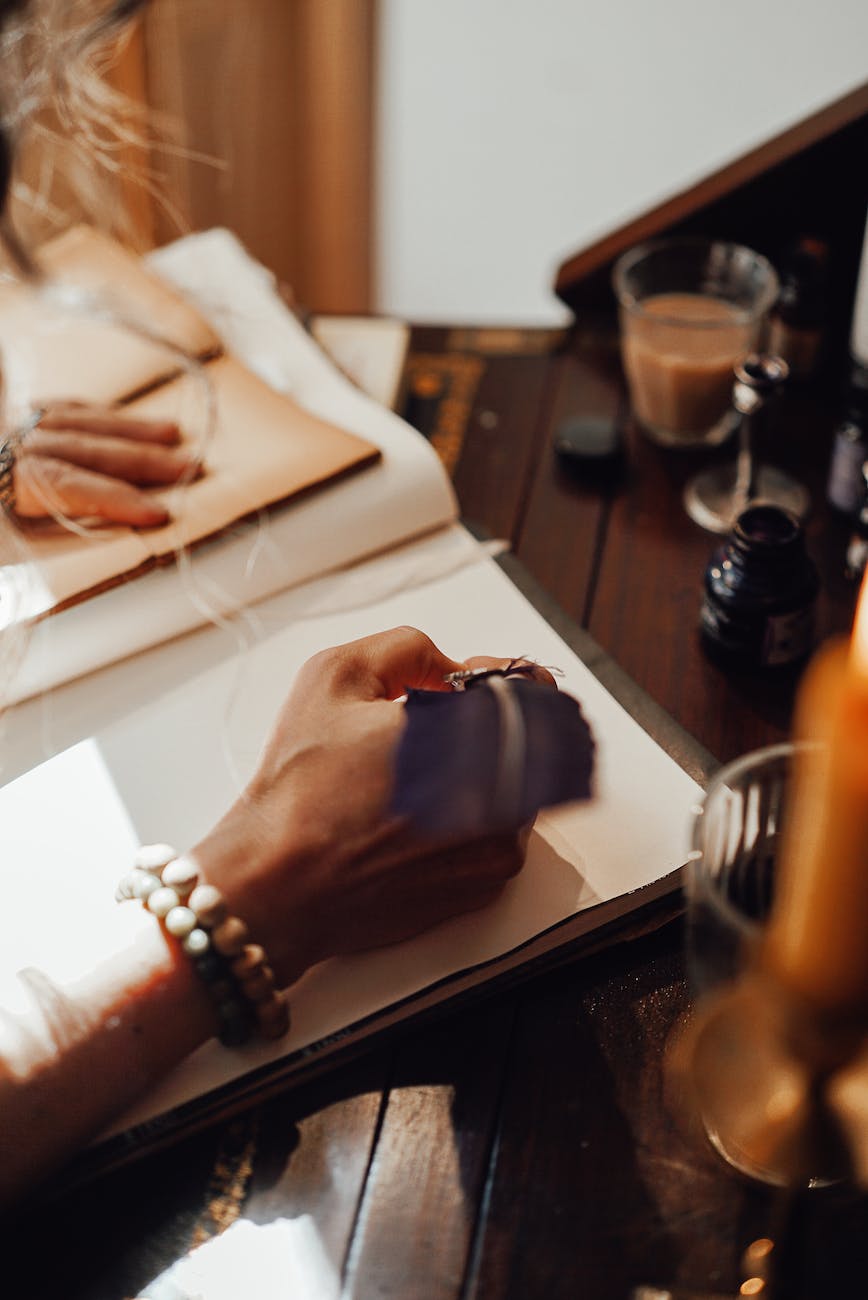
Photo by Mariya on Pexels.com

As a career educator, I often used Bloom’s Taxonomy. I taught little ones on the elementary school level, and then college students. I always encouraged my students to approach study using this six-step process.

The model was named for Benjamin Bloom, who first came up with it. It has six levels:

  1. Knowledge
  2. Comprehension
  3. Application
  4. Analysus
  5. Synthesis
  6. Evaluation

I think Bloom’s Taxonomy can be applied to writing. You may come across an idea for your writing and research the topic and comprehend it. Then you can apply it in your writing. In the analysis phase you break down complex ideas about what you’re writing. In the synthesis part you combine the ideas you have generated in the process and make it original, or your own.

Finally in evaluation, you make judgments about the value of what you have created and decide if it is something you want to pursue. As writers, we have all written things we don’t think work, but even if you don’t come out with something good after this process, it’s bound to lead to something worth using later. Nothing is ever wasted in the creative process.

I will be take a hiatus from blogging for the summer, but will be back blogging on Thursdays in September. Have a great summer and look for me here in the fall.

Getting Past Your Inner Critic

“Do or do not, there is no try.” Yoda

Photo by Monstera on Pexels.com

There is a  negative voice inside all of us.  It’s the brain’s defense mechanism against danger.

Anxiety acts as a guardian angel. Its intentions are pure, but we all know the road to hell is paved with good intentions.

Anxiety protects us in life or death situations. But in day to day modern life, we rarely encounter a life or death situation that warrants such an extreme measure. Anxiety acts like a guardian, but it can cause us to not act.

The important thing to to is to reframe your anxiety,   so it doesn’t get in the way of your writing. The inner critic isn’t objective.

If what you write today doesn’t turn into something you can use, it is an exercise toward good writing. Think of it as athletic practice before you get really good. Your inner narrator should keep you grounded, but moving forward.

Every time you hear yourself thinking that the writing is not good enoughr, you tell yourself that it’s not so.

Your inner critic is far from objective.  Although its intentions are good, it won’t help you get to where you want to go.

If we try, we might fail. If we give it our all, we might fail.

So, what’s the trick?

Simple. If you’re a writer, you have to write.  It’s compulsive.  So you might as well follow your heart.

When it’s do or die, most people tend to do.

Sometimes  it’s  not massive action in order to reach a certain goal.

Our attitude always determines our altitude in life. When we think we can’t do something, there’s no reason to even try.

It’s better to try something than to give up without even attempting just because you believe that you must do it.  Thomas Edison said he re-framed his failures into “finding ways that don’t 

It’s always  better to try,  at least once or twice what can’t be done.

So remember to keep your inner critic in check.

We are the ones who decide what words we choose to write after “I am…”

I’ll be blogging on Thursdays. Follow me here.

I’m Grateful to Starry Starry Kite for Publishing My Poem in Response to Daydreams by Irene Christensen

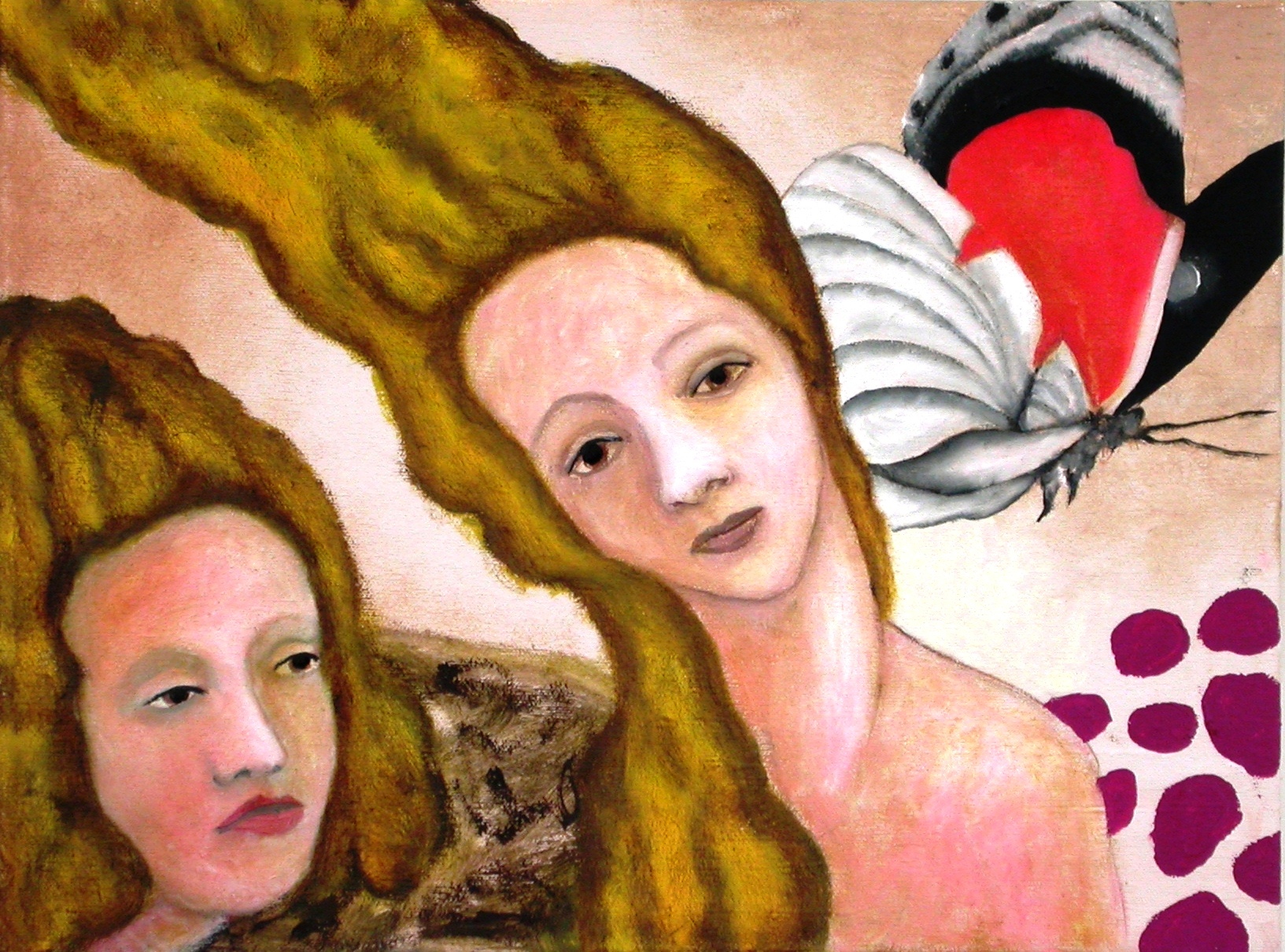
Daydreams

Two enigmatic women,

their Botticelli beauty

looms undeniable.

Like the butterfly

they long to glide away,

their earth in tatters.

Floating between blood

and a wrathful world naked,

they envision peace.

About the Poet

Eileen P. Kennedy is the author of two collections of poetry: Banshees (Flutter Press, 2015), which was nominated for a Pushcart Prize and won Second Prize in Poetry from the Wordwrite Book Awards, and Touch My Head Softly (Finishing Line Press, 2021) which Literary Titan has described asemotionally-charged poetry that explores life with observant poems that will appeal to anyone who loves inspired poetry.” It was a finalist for the International Book Awards in General Poetry. She lives in Amherst, MA with the ghost of Emily Dickinson. More at www.EileenPKennedy.com.

About the Artist

Irene Christensen’s art is about painting as a magical act. Her images repeat and are transformed, as words and images in poems. She likes to maintain a sense of wonder in her art. That life is strange and quirky, and contradictory, that tragedy and comedy are not played out in separate theaters, but co-exist, side by side. More at ireneartster.wordpress.com

Check out “Daydreams” and two other paintings and poems by Irene and myself at Starry Starry Kite:

https://www.lindacastronovo.com/theonlinejournal

See my interview with the editor here:

Christine Jones to Read at the 2023 Massachusetts Poetry Festival

Christine is an accomplished poet and editor. Here is her profile: Christine Jones lives in Orleans, MA and is the author of Now Calls Me Daughter (Nixes Mate Review, 2022) and Girl Without a Shirt (Finishing Line Press, 2020), also co-editor of the anthology, Voices Amidst the Virus: Poets Respond to the Pandemic (Lily Poetry Review Books, 2020). She is the founder/editor-in-chief of Poems2go and associate editor of Lily Poetry Review. Her poetry can be found in numerous journals and anthologies in print and online. 

Photo by fauxels on Pexels.com

According to the National Institute on Aging, Alzheimer’s is a brain disorder that slowly destroys memory and thinking skills, and it’s estimated that over six million Americans struggle with dementia as a result. To be in the presence of someone with Alzheimer’s is a lesson in appreciating the very present moment because both the past and future are unattainable to those individuals inflicted. As caregivers, we try to hold this space. As poets, we turn to language to help undertand and accept. In this group reading, followed by a Q&A, we’ll read our poetry and discuss our own experiences caring for a loved with Alzheimer’s disease.

I have the pleasure of reading with Christine Jones, as well as Gail Thomas and Eric Hyett at this workshop called “Now As Mother: In the Presence of Loved Ones With Alzheimer’s” at 11:30 am at the 2023 Massachusetts Poetry Festival.

Come and join us in Salem, Massachusetts at 11:30 am on Saturday, May 6. https://masspoetryfest2023.sched.com/?utm_medium=email&utm_source=admins&utm_campaign=global-password_reset-A&utm_content=header-link

I’m Grateful to Starry Starry Kite for Publishing My Poem Response to Irene Christensen’s Maori Woman

Māori Woman by Irene Christensen

Māori Woman

She weaves her fate carefully.

Bone and ancient music guide

her face marks to solemnize her ancestors

and move forward with tomorrow.

The karaka tree soothes the symbols with its balm

mending as the woman heals.

She creates wananga to enhance her knowledge.

Mystical memory grows awareness.

About the Poet

Eileen P. Kennedy is the author of two collections of poetry: Banshees (Flutter Press, 2015), which was nominated for a Pushcart Prize and won Second Prize in Poetry from the Wordwrite Book Awards, and Touch My Head Softly (Finishing Line Press, 2021) which Literary Titan has described asemotionally-charged poetry that explores life with observant poems that will appeal to anyone who loves inspired poetry.” It was a finalist for the International Book Awards in General Poetry. She lives in Amherst, MA with the ghost of Emily Dickinson. More at www.EileenPKennedy.com.

About the Artist

Irene Christensen’s art is about painting as a magical act. Her images repeat and are transformed, as words and images in poems. She likes to maintain a sense of wonder in her art. That life is strange and quirky, and contradictory, that tragedy and comedy are not played out in separate theaters, but co-exist, side by side. More at ireneartster.wordpress.com

Writers and Isolation

Writers write in isolation mostly. This can be both challenging and rewarding. Sometimes it’s in small groups or workshops, but mostly alone. Sometimes I wait until the last minute to write what I want? Why?

In the end, I try to listen to my inner voice that speaks my true thoughts that ultimately helps me cut through the nonsense that sometimes enters into my writing. Good writing comes from the true self.

Photo by furkanfdemir on Pexels.com

I use different methods to get in touch with my inner self. I meditate, move to a coffee shop or library, read a book of an author who is writing something similar to my project. Sometimes just sit quietly.

Join me in imagining and getting in touch with your inner self. Try writing from that one true voice.

If you’re writing in isolation, it’s probably because you love the craft, because you can’t not write. Sometimes this is in a group, or a library, or a coffee shop, but mostly it’s in isolation.

I’ll continue to blog on Thursdays. If you’d like me to make an announcement for an upcoming reading, publication or award, get in touch with me here.

Writing and Meditation

Many writers are also meditators. Some even write about the relationship between writing and mediation. I am a meditator and a writer. I meditate in the morning and write in the morning. I also practice yoga. To me, these are all intertwin

The U.S. alone has an estimated 36 million yoga practitioners. It has adapted to local socio-political and cultural norms world over so much so that it can hardly be called an Indian custom. Yoga originated in India. The system of yoga has physical, mental, and emotional dimensions in addition to spiritual underpinnings. But yoga is not a religion. It has no dogma. But the practice for me is essential to my writing and brings me to a place where I can write truth.

Meditation helps improve focus. Something essential for the good writer. I began meditating years ago with a meditation method popular at that time, Transcendental Meditation. Maharishi Mahesh Yogi developed this mantric method of meditation in the 50’s in India, and it spread widely throughout the world. For me, it was a good place to learn the technique, but my meditation practice evolved when I combined meditation with yoga, especially Kundalini. Kundalini is a spiritual energy or life force located at the base of the spine, conceptualized as a coiled serpent. It didn’t matter which type of meditation I was using, as long as it focused my mind and enabled me to write from that place.

Meditation provides a safe space to be. Meditation slows the world down to make room for creative thought and exploration. It’s an ideal practice for the writer or artist.

Have you had experiences with writing and meditation?

Photo by Prasanth Inturi on Pexels.com

I will be blogging on Thursdays, with occasional literary announcements, but I’m taking a few Thursdays off. Follow me here on WordPress.

Writing In Uncertain Times

Photo by picjumbo.com on Pexels.com

We live in unprecedented times. Pandemics, wildfires, hurricanes, floods, winter storms, political unrest, economic uncertainty and war are just some of the things we deal with daily. So why write through it?

Writing is important. As writers, we bear witness to what is going on in the world and write it down. It helps to put things into perspective and forms the basis of history. When we put our thoughts down on the page, it helps to give voice for those who may not be able to put it into words. It’s a comfort when we can form our feelings into writing that other people may read.

And when we write fantasy or fiction, we are allowing ourselves and others to get lost in escape. This is important in life also, especially when people are going through such massive upheavals. You can offer people relief though your literature.

Writers are sensitive to the world around them. This takes sympathy and empathy. Writers are empathetic to the suffering of others and can sometimes put this empathy into words and thus relieve the suffering. As writers, we have the gift of being able to put our feelings into words. Nelson Mandela said, “It always seems impossible until it’s done.” 

I’ll be blogging on Thursdays. Follow me here on WordPress.

Best Wishes for the New Year

Photo by Matthew Montrone on Pexels.com

The future belongs to those who believe in the beauty of their dreams.” ― Eleanor Roosevelt.

The future has not yet happened. We each have a role in what it will hold.

For artists and writers, it springs from the imagination.

The world is filled with chaos, fighting, greed. For those who are kind and generous, humane and creative, put your energy out there to shape good things. May we each play our part—with gladness and gratitude—for the unfolding of a blessed future. 

I’ll be back in Costa Rica for the new year and will be blogging on from there on Thursdays. Follow me.

I am grateful to Poetry Super Highway for Making Me Poet of the Week on Poetry Super Highway December 26-January 1, 2023. Take a look during that week:

I am grateful to have been chosen “Poet of the Week” on the Poetry Super Highway. Check it out on December 26-January 1, 2023 for my poem “A Paddle Into Childhood.”

Happy New Year to All. I’ll see you again in 2023.