
On Your Writing Space
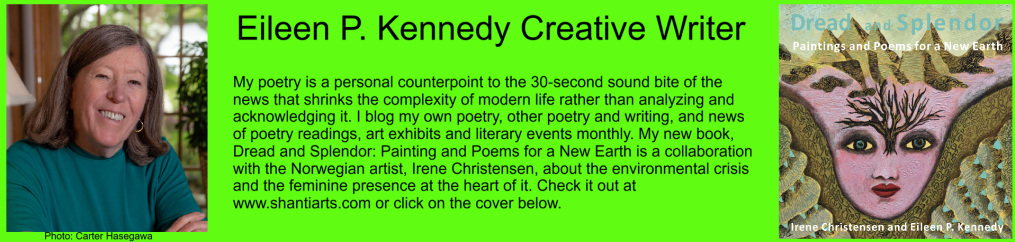
–Abraham Lincoln
So said the man who got rid of slavery in the United States. It is an inspirational quote.
How do we as writers stay inspired? Writers have difficulty carving out time and summoning inspiration.
One way that keeps me going is the occasional writing workshop. There are so many opportunities online and in your writing community. I don’t take multi-week workshops unless I’m really trying to focus on something new and learn about it. I just take the occasional one-shot workshop to get some fresh ideas about my writing. Just google under a topic you might find interesting and see what’s available. Sometimes they are free, or very low cost.
Another way of finding inspiration is in a writing group. Listen to what others are reading and hear what they have to say about what you’re working on. Most communities have pockets of writers who meet up. Join a community group and see if you can get invited into a small group of your own. My writing groups have sustained me through the years.
Collaboration is another way I find inspiration. I particularly like collaborating with artists. I like reading a artist’s exhibits. This gives you inspiration and brings people in to see the art or art lovers in to hear some of your writing. It’s a win/win situation. You can also write ekphrastic poetry, or responses to art pieces. I recently did this with the Norwegian artist, Irene Christensen. She did a series of full-color paintings on women at the heart of the environmental movement. I found the paintings so inspiring, I wrote a whole series of ekphrastic poems in response and we wound up developing a 60-page manuscript called, Dread and Splendor: Paintings and Poems for a New Earth.
Follow me here on Thursdays. I’ll be blogging about writing, the writing process, steps to publishing, and the progress of our manuscript, Dread and Splendor: Paintings and Poems for a New Earth.

Many writers are also meditators. Some even write about the relationship between writing and mediation. I am a meditator and a writer. I meditate in the morning and write in the morning. I also practice yoga. To me, these are all intertwined.
The U.S. alone has an estimated 36 million yoga practitioners. It has adapted to local socio-political and cultural norms world over so much so that it can hardly be called an Indian custom. Yoga originated in India. The system of yoga has physical, mental, and emotional dimensions in addition to spiritual underpinnings. But yoga is not a religion. It has no dogma. But the practice for me is essential to my writing and brings me to a place where I can write truth.
Meditation helps improve focus. Something essential for the good writer. I began meditating years ago with a meditation method popular at that time, Transcendental Meditation. Maharishi Mahesh Yogi developed this mantric method of meditation in the 50’s in India, and it spread widely throughout the world. For me, it was a good place to learn the technique, but my meditation practice evolved when I combined meditation with yoga, especially Kundalini. Kundalini is a spiritual energy or life force located at the base of the spine, conceptualized as a coiled serpent. It didn’t matter which type of meditation I was using, as long as it focused my mind and enabled me to write from that place.
Meditation provides a safe space to be. Meditation slows the world down to make room for creative thought and exploration. It’s an ideal practice for the writer or artist. I meditated every day when I worked on my latest manuscript, Dread and Splendor: Paintings and Poems for a New Earth.
Have you had experiences with writing and meditation?
I will be taking a hiatus for March, as I travel through Costa Rica. Look for me again in April.
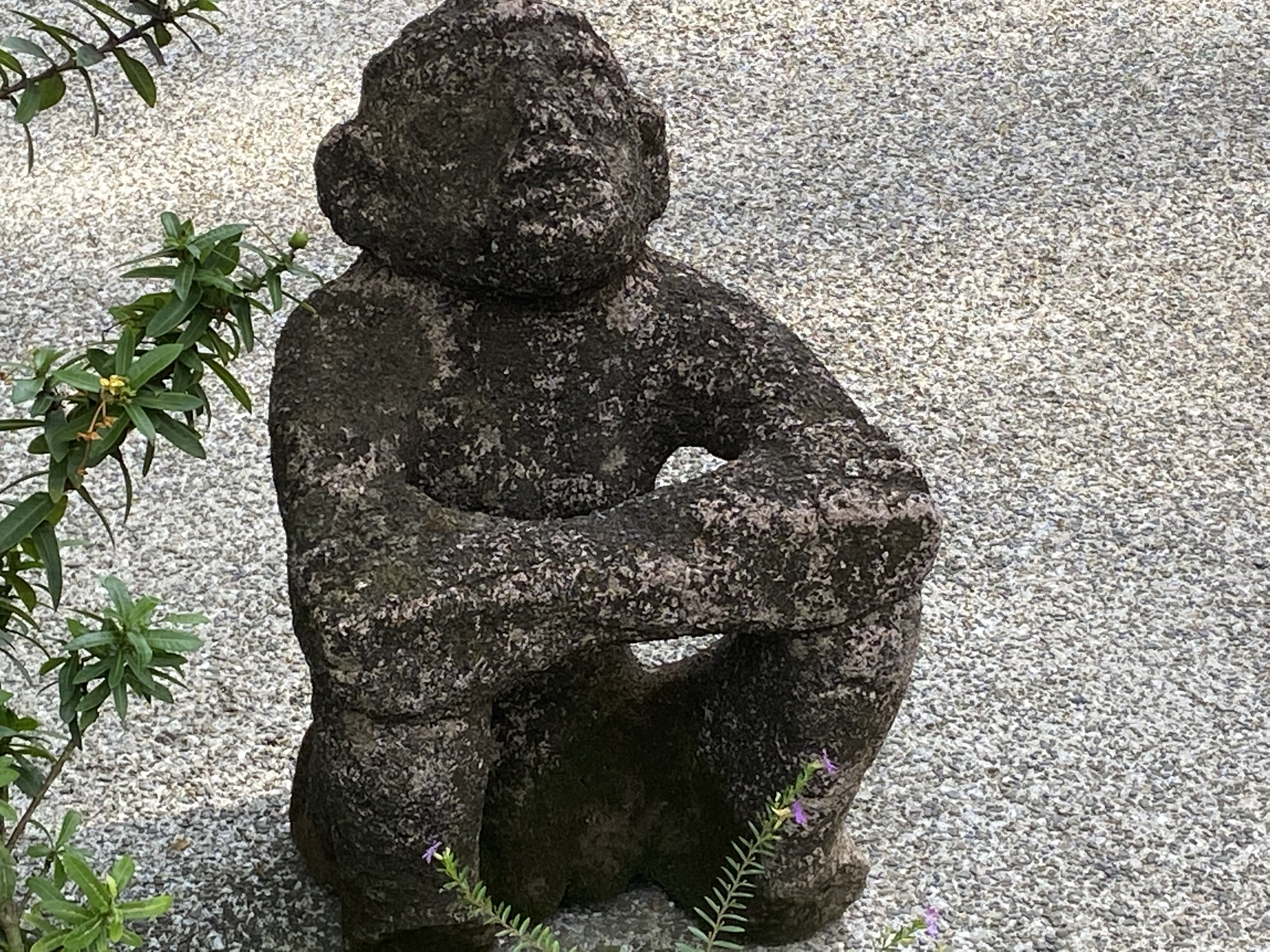

Māori. Oil, 40” x 40”
Many writers ask me about how to approach a publisher and get them interested in reading my manuscript. I’ve published three books. A good query letter is invaluable in soliciting interest from a publisher. With a novel, it is simpler to give a plot summary, character analysis, etc. But with a poetry manuscript, it’s harder to describe. You have to provide the theme. A good query letter is on the short side and to the point. It has one purpose, to entice the publisher into looking at your manuscript.
To start, look at what the publisher publishes and maybe getting some sample titles. If you like the books, and what the publisher did with them, then you and the publisher are probably a good fit. You might also have friends who had a good experience publishing with someone. If so, you could use this in your opening. As a writer, you have books you love. Get those books and look up the publisher.
Next, read the publisher’s guidelines carefully and follow them. Some publishers want sample pages; some want the whole manuscript;and some just want your letter outlining exactly what it is you want to send. Make sure you know the standards of each publisher and how to meet those standards. When you write your query, incorporate what you like about the publisher’s line of books. Was it one title that drew you in? Is that title relevant to your manuscript?
Start with your favorite publisher first, then wait a few weeks for the response. If it’s a no, and every writer gets a no at least once in a while, go onto your second favorite publisher. Start accumulating a list of publishers, in order of your preference, and keep at it. Persistence is key.
Your previous publishing record is important in your query. The publisher wants to know other people have published you. List book credits, journals and/or anthologies. This proves that you have an audience. Also, if you have won any awards, this is the place to list them. Endorsements from other poets and writers in the field are helpful. If you know someone who has published well, ask them to read your manuscript and write a blurb for you. Include this in your query letter.
This letter is an introduction and framework for your manuscript. It should prepare and excite the publisher to ask for and read your manuscript. Connecting threads could be more valuable to your presentation than just summarizing your manuscript. There must be something about this work that inspired you to do it. Share that enthusiasm with the publisher. Get to the heart of the project and show the publisher why it’s important and why you did it.
I am working on a collection of eco-poetry inspired by the paintings of the Norwegian artist, Irene Christensen. The paintings are on the theme of women at the heart of the environmental movement. One of her paintings is pictured above, Māori. This poem and painting of the same name was published in Starry Starry Kite, which was part of my query letter. So far, Dread and Splendor: Paintings and Poems for a New Earth is out for consideration with two publishers. We await their response.
I will be continuing the journey of this manuscript on Thursdays . Follow me here.

Writing an opening, a foreword to a book, a first line that will encourage your reader to continue is a challenge.
The tone for a trial is set by the lawyer’s opening statement. It’s the first opportunity to make an impression, to frame the narrative. In your writing, your introduction serves the same purpose.
Start with a strong statement. Hook your reader with a provocative statement. “Call me Ismael” brings you right into Moby Dick. It’s an invitation you can’t refuse.
Lawyers build their cases on evidence. They introduce facts, exhibits, testimonies to support their opening statement. Your introduction should also be grounded in facts.
Lawyers question witnesses to strengthen their case and counter opposing arguments. As a writer, you should think about and address counterarguments to your opening, including opposing views. Provide a thoughtful counter-argument. Consider all sides of the issue and enhance your reliability.
In all of these ways you will have an opening that will encourage people to continue reading.
In the case of a poetry collection, like Dread and Splendor: Paintings and Poems for a New Earth, the artist, Irene Christensen and I, put the strongest paintings and poems up front. There are 27 paintings and poems in a 60-page manuscript. We began with poems that editors had chosen for publication and with paintings that had been curated for international shows.
I’ll be blogging on Thursdays, following the progress of our manuscript, Dread and Splendor: Paintings and Poems for a New Earth. And writing about the writer’s process. Follow me here.

I recently was given a book by a writer friend called A Friend Sails in on a Poem, by Molly Peacock. It is a book about two friends who are poets and it’s dedicated to “all friends who make art together”. It put me in mind of all of the friendships I have made of other artists and how easy it is to take these relationships for granted.
This book celebrates the friendship of Molly and her poet friend of 46 years, Phillis Levin. According to the book “they have read and discussed nearly every poem they’ve written, creating an unparalleled friendship.” It puts me in mind of all the years I have sat in writing groups reading to my writer friends and seeking their support in my endeavors.
The past two years I have been collaborating with the Norwegian artist, Irene Christensen, pictured on the left above. We met at the Julia and David White Artist Colony in Costa Rica years ago and it was our mutual love of nature and art through the years that eventually led to our collection of eco-poetry and art called Dread and Splendor: Paintings and Poems for a New Earth.
I guess when one artist collaborates with another, it creates an understanding of the other’s artists’ work that wouldn’t have been possible otherwise. Irene created a series of paintings about women at the heart of the environmental movement. I responded to these evocative paintings in the best way I know, through poetry.
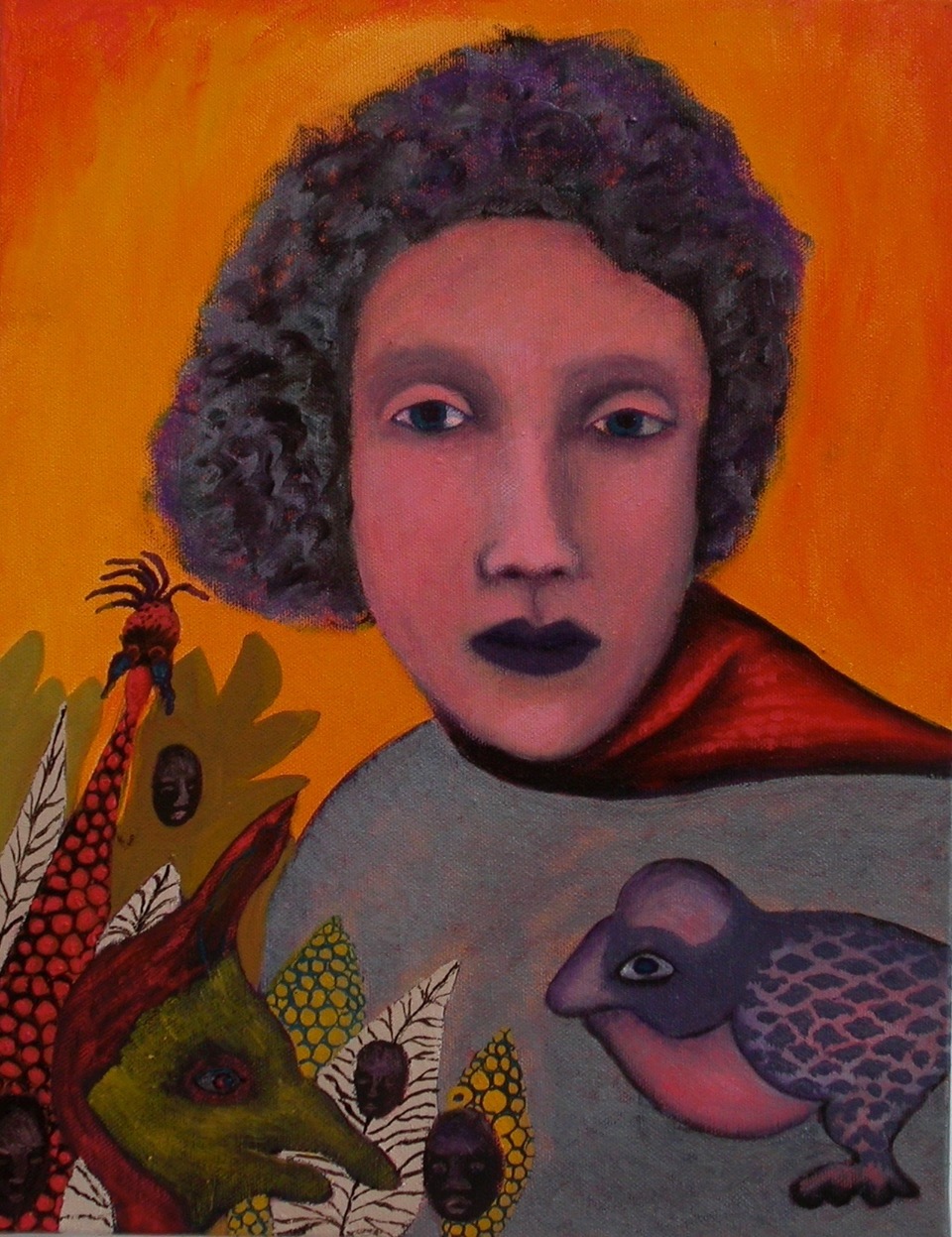
Yesterday. Oil, 16” x 12” by Irene Christensen
I responded to Yesterday with a poem called “She Occupies Time,” which begins “no quiet merging with the azure, but an orange sky, the earth bizarre with diasporic life.” The combination of painting and poem merge to become something new. A way of communicating in art that transcends painting or poem alone.
Irene started exhibiting her paintings with the poems I had written for them. Perilous Journey at the Galleries of the Interchurch Center in New York City. Queen of the Woods was exhibited with poem and painting at the Voices of the Earth Exhibition in Galleri Schaeffers Gate 5, Oslo,Norway. The painting and poem were sold together as that’s what the buyer wanted, the experience of having both the poem and painting together in his home.
The experience of collaborating and supporting each other as writers and artists is an invaluable part of the process. What has your interpersonal journey been like as a writer?
I will be blogging on Thursdays. Follow me here.

“What keeps life fascinating is the constant creativity of the soul.” —Deepak Chopra
In the pursuit of success, we often focus on the end result. In so doing, we neglect interest in the journey because we want to get there as soon as possible or we lose the desire to even reach the destination.
Many artists focus on the final product, but the secret is in enjoying the process of creation
The process itself is a reward. The creative journey should interest you far more than reaching the destination. I am currently working on a manuscript, Dread and Splendor: Paintings and Poems for a New Earth, with the Norwegian artist, Irene Christensen.
We forget forget to enjoy the journey, and in effect, we lose our desire to even reach the destination.Sylvia Plath said, “The worst enemy to creativity is self-doubt.
Creativity holds great significance when it comes to connecting with our soul or authentic self.
By tuning into that creative fire that burns within, we can connect more powerfully with the soul. For some people, creativity can even be more affective at this than meditation.
When we make room for creativity in our lives and activate our creative muscles, it can be transformative. It can strengthen our intuition, release stagnant energy, and align with our larger project, like writing a book or composing a song.
I will be blogging on Thursdays. Follow me here for the journey of the manuscript, Dread and Splendor: Paintings and Poems for a New Earth.

I am delighted to have my poem “Toast in Costa Rica”
published in Pineapple, the online literary zine of
The Gallery of Readers. Take a look:
You can also subscribe to Pineapple by just listing your email with them here:
https://galleryofreaders.org/category/pineapple-zine/
Or you can visit the Gallery of Readers Press, a small, excellent publisher, and see its amazing list of books:
Gallery of Readers
I’ll be blogging on Thursdays. Follow me here.

As writers, we often feel that we don’t do enough. We don’t put enough hours into our writing,
we don’t do enough research before writing, and we don’t publish enough. When you finish a
piece of writing, give yourself a pat on the back: You finished a piece of creative writing—
something many attempt, but not quite as many achieve. I recently finished a manuscript called
Dread and Splendor: Paintings and Poems for a New Earth. I collaborated on it with the
Norwegian Artist, Irene Christensen. It’s a collection about the climate crisis and women at the
heart of it. I feel good about completing it.
Some writers consider the worth of their writing in the published pieces, but others don’t even
attempt to publish. The reward for them is in the process. You can share your writing at an
open-mic reading. You can post it online or bring it to an in-person writing group for
constructive critique. You can send it to a friend.
You can send it to a literary journal or an agent for possible publication, but that’s a topic for
another blog. As writers, we need to acknowledge our accomplishments for ourselves.
I’ll be blogging Thursdays about the writing process. Follow me here.
Manuscripts are not easy to put together, especially when they’re a collaboration. I have a new manuscript of eco-poetry that I am collaborating on with the Norwegian artists, Irene Christensen. I would like to write about the different stages of developing and publishing a manuscript.
The project started one winter at an artist colony, The Julia and David White Artist Colony, that sits on a naturally spectacular 17-acre rain forest, is in Costa Rica. We both shared a love of this beautiful country. I was drawn to Irene’s evocative full-color paintings. Irene expressed admiration for my poetry. I gave Irene a copy of my second poetry collection, Touch My Head Softly (Finishing Line Press, 2021) and she gave me her painting, “Volcano Flower.” This interaction started a conversation that over a two-year period developed into the manuscript, Dread and Splendor: Paintings and Poems for a New Planet.
The current collection comes from our common interest in natural beauty, the complex relationship between living things and the atmosphere, stopping exploitation of the earth that spans geographical and historical borders, and the feminine care at the center of environmentalism.
Irene worked on a series of art pieces about women at the heart of the environmental justice movement. I observed the creation of many of these remarkable paintings and wrote a series of ekphrastic poems, or written responses, to them. We nurtured our creativity and friendship through this process.
Irene’s paintings unfold as the world heats up and becomes more and more unlivable. She creates images through the eyes of children, mythical characters like trolls and goddesses, and the lenses of women witnessing the dying globe. I reinforce this journey in words, giving verbal credence to Irene’s vision, and mine, of the future.
I hope to blog about our journey as the manuscript goes through different stages and if we can even find a publisher. Follow me here on Thursdays to continue this journey.
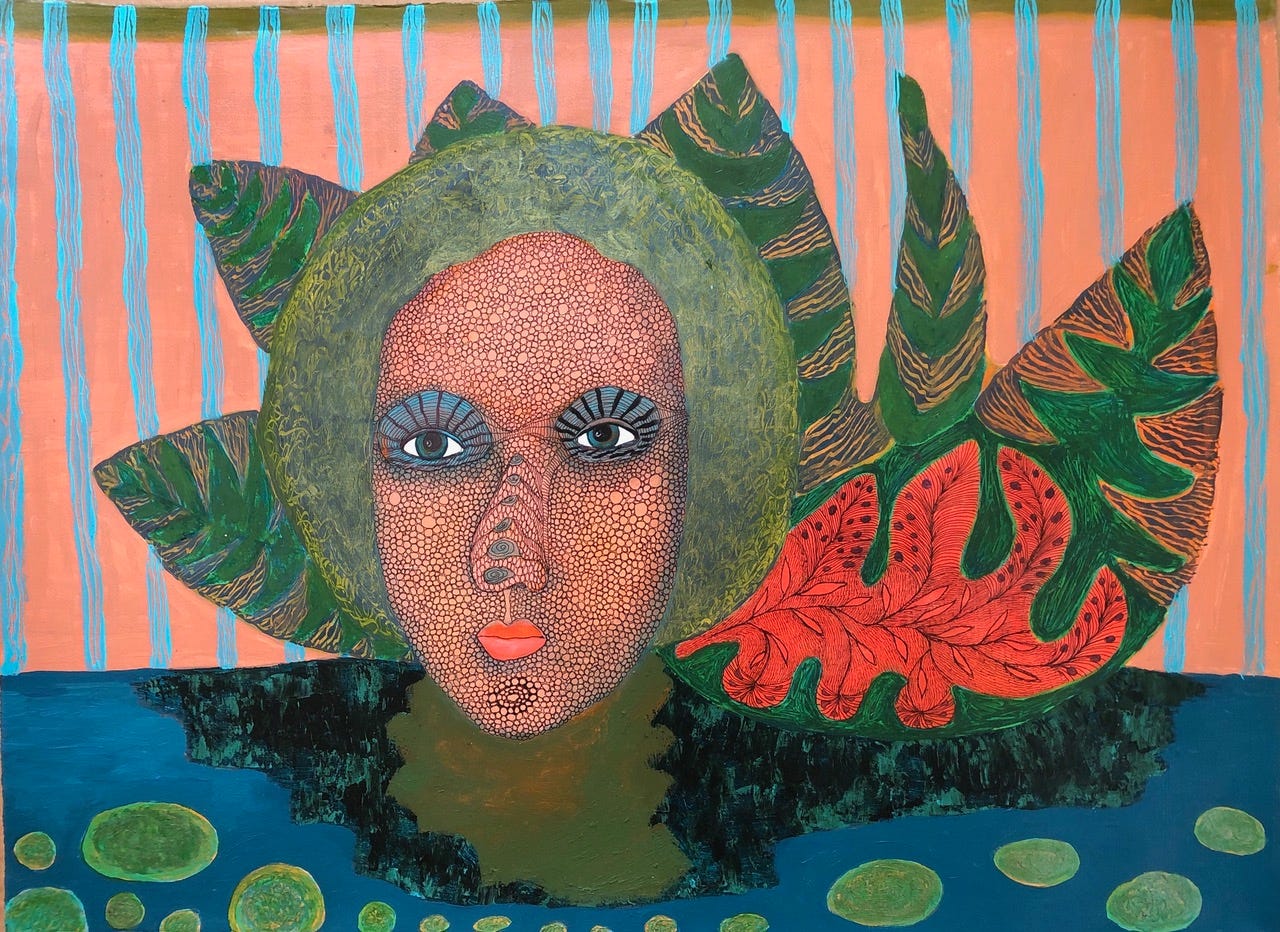
I Feel Close to Nature Too. Acrylic, 22” x 30” by Irene Christensen
 Eileen P. Kennedy Author