I woke up last night in the middle of the night and couldn’t get back to sleep, war on my mind. The new poem I had written that day needed a title. I got out of bed and added the title to the poem.
This act of writing can be a savior in these dark times. The writing is a form of sanity for me. If I am writing about current events or not, it is a way of keeping myself focussed on something positive.
My creative visualizations are on world peace these days. My creative writing takes me anywhere it leads me.
I will continue to blog on Thursdays, with announcements on Tuesdays.
I love the quiet, the writerlyness of the whole thing. But how does this affect my writing? I wrote a collection of poems about my partner who died of Alzheimer’s. We had spent a lot of time in Mexico, so this landscape came into my poems:
“When I think of Oaxaco
I remember the Zocolo
where they sold pipa del agua
and chocolate dripping from paper cups.”
The setting just naturally came into the poem. Does this happen with you?
Whether writing pen to paper or sending a text or email, writing and reading is different today.
We can listen to a podcast, watch the news on television or our computer, or still read a book or newspaper. But what of the skill of writing? Employers complain that resumes are filled with typos and a well-written resume still draws a better job application response. The written word can be a powerful tool for a business leader affecting employees. Studies show that people disregard messages when they have glaring typos and mistakes.
And what about the power of a hand-written message. When was the last time you got one? Did you read it? Did it affect you? How about a letter sent by snail mail, rather than email or text?
A personalized message has a way of making the person receiving it feel valued and recognized.
It wasn’t sent to the masses, but written especially for the receiver.
Writing has a way of developing relationships between people. I know at holiday times when I get hand-written cards, I always respond positively to them and pay attention, be they a simple,
“Best wishes for the New Year” or a whole report on the last year.
And what of the creative writer? Julia Cameron in The Artist’s Way suggest starting the day by handwriting with pen to paper. This is supposed to access the creative side and also gives the artist the freedom to write without rereading or censoring. Many writers use pen and paper as a different way into their writing that their computer keyboard just doesn’t do.
When I wrote my most recent collection of poetry, Touch My Head Softly, I tried all different ways of writing: pen and paper, keyboard, dictating into a recorder, an old typewriter.
I will be blogging on Thursdays, with announcements on Tuesdays. If you have anything to announce: readings, new publications, literary events, let me know and I’ll blog them for you.
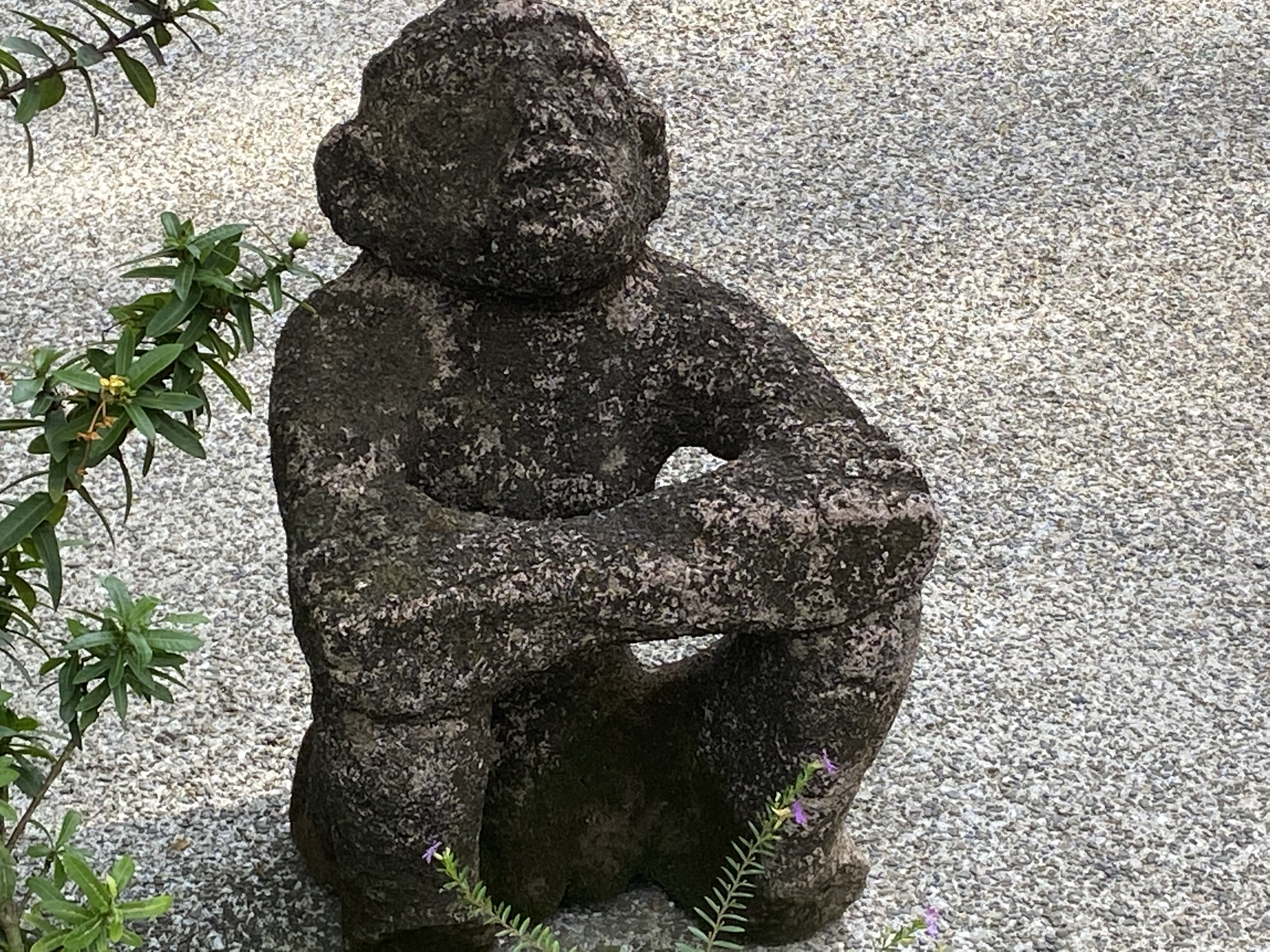
There is beauty in imperfection. In this pre-Colombian figure, the right arm is missing, but it’s still beautiful. Michelangelo would often leave a small bit of sculpture unfinished, like on his David he did not polish the very top of the head. This is the aftermath of a crippling self-doubt. He knew as an artist he could never be perfect. Kafka told his friend to burn his manuscripts.
So why do we have a feeling of inadequacy from time to time about out own work? Nothing is perfect in the world. Why should our writing be? Leonardo DaVinci said art is never finished, only abandoned.
As writers, we have to transform a blank page or screen into something other people will want to read. This is not always easy. No wonder sometimes we fail. Failure is inevitable.
This is an imperfect world and we need to let go of the idea of perfection. We can aspire to good writing, but it will never be perfect. Some people will like our writing. Some people won’t. Regardless, we should keep writing as best we can.
I will keep blogging on Thursdays and if I have announcements, they will be on Tuesdays.
Try writing something of special interest to you. Write down all the primary ideas you’d like to write and then write the smaller ideas that make up the big ideas. Then write an outline of these ideas.
Now you have an outline that is a starting point. Research your topic. Then write down your own thoughts on the research. Identify gaps in the research you find. Now you’re ready to write.
When I wrote my last collection of poems, I had many blocks. Some are emotional, such as my partner’s Alzheimer’s that I wrote about in Touch My Head Softly. Or just time barriers, so that when you finally have a chance to write, there’s a lot of pressure to sit down and produce.
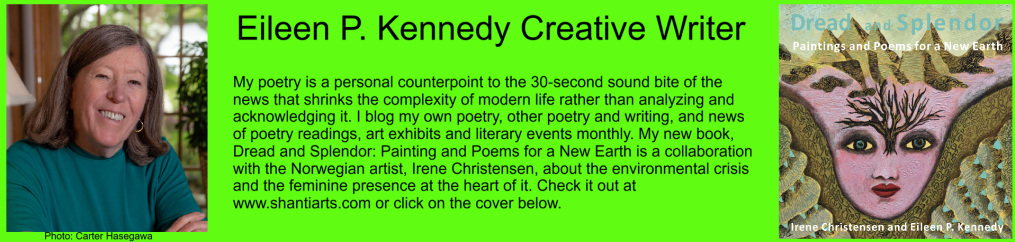
But I got through it and published my latest collection earlier this year:
Since the pandemic, I have been much more inclined to interact with strangers. The isolation taught me the power of human interaction. Some of the most interesting interactions have been chance, at the supermarket check out or the farmer’s market. I write at coffee shops and I’ve used some of the dialog I’ve overheard in my writing.
It’s good to interact, connect and appreciate each other. It makes for better writing, remember Robert Frost’s “Mending Wall,” about the wall between his property and his neighbors. This will make for a better world generally. If you use dialog in your writing, it makes your writing more authentic. It’s also good to meet periodically with writer friends to compare notes and get advice on what you’re submitting, etc. I’m in several writer’s groups.
I published a collection of poems about my partner who died of Alzheimer’s, and it’s led to many interesting discussions with people I didn’t know who were affected or had loved ones affected by this disease. Check it out:
Now I am in Costa Rica for a good part of the winter.
The landscape is very different from the Northeast where I live for the balance of the year.
I love the pre-Columbian art here. I’ve shown you an example of one piece. These vessels, figures, tools are dated before the Spanish conquest of Central and South America. These art pieces date back to then Mesoamerican period, around 10,000 BCE. They give clues to the lives of the indigenous.
For me the beauty of the landscape and the local art inspire me. I may not be writing about beauty, or even Costa Rica, but the art gives me insight into the lives of the people, just as my stories aspire to give insight.
I recently published a book of poems about my partner who died of Alzheimer’s Disease. I hope this gives insight to others in contact with people with this disease. Also part of the proceeds of the sale of the book will go to the Alzheimer’s Association to help find a cure for this dread disease. Check out my book:
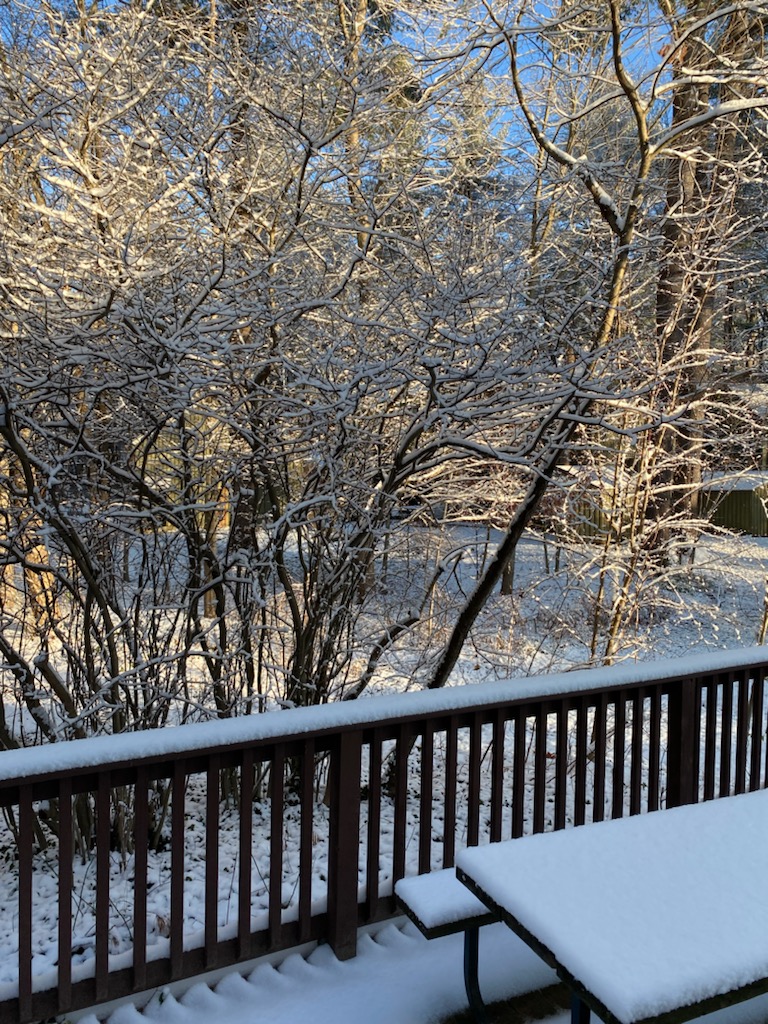
Onething I love about winter in the Northeast is the snow. This is the view from my back porch.
I love the quiet, the writerlyness of the whole thing. But how does this affect my writing? I wrote a collection of poems about my partner who died of Alzheimer’s. We had spent a lot of time in Mexico, so this landscape came into my poems:
“When I think of Oaxaco
I remember the Zocolo
where they sold pipa del agua
and chocolate dripping from paper cups.”
The setting just naturally came into the poem. Does this happen with you?
It’s getting to be New Year’s and the custom is to make resolutions. As writers, it’s important that we have goals. It’s also important to look back and acknowledge what we accomplished. Here are some of my goals for the upcoming year:
.to plant bulbs in my garden.
.to see more of my close friends in small combination
.to read more Japanese poetry
.to teach at least one poetry workshop.
.to write a longer narrative poem.
.to downsize and shed some clothing and books.
I may not get to all of these, and that’s ok, but it helps to have goals.
The feeling of having done everything one wanted is elusive. Accepting one’s limitations and shortcomings is part of the process.
I also look back at the year and acknowledge what I’ve done. I published a book this year about my partner’s death from Alzheimer’s Disease. I donated some of the proceeds to the Alzheimer’s Association. I also volunteered and taught a poetry workshop in haiku and tanka. I find a sense of calmness and accomplishment about these things. Check out my 2021 book:
It’s really easy to get distracted when writing, especially now that we’re all often working at home. Phone calls, emails and housework all conspire to take away the writing time.
Losing focus while in the middle of writing can seriously damage the quality of your content, The human brain takes around 17 minutes to refocus on a task after a distraction. If you want your writing to be the best quality content possible, you need to get rid of distractions. Billy Collins, the former Poet Laureate of the U.S., suggests sitting with your idea and writing until the complete thought is down,
You can disable notifications on your computer and delay household chores until after writing.If you put your writing first, you get more accomplished and the quality of the content will be better.
During the pandemic I wrote a collection of poetry and had it published. I did this by focusing. Take a look at the book:





 Eileen P. Kennedy Author