The Journey of an Eco-poetry Manuscript

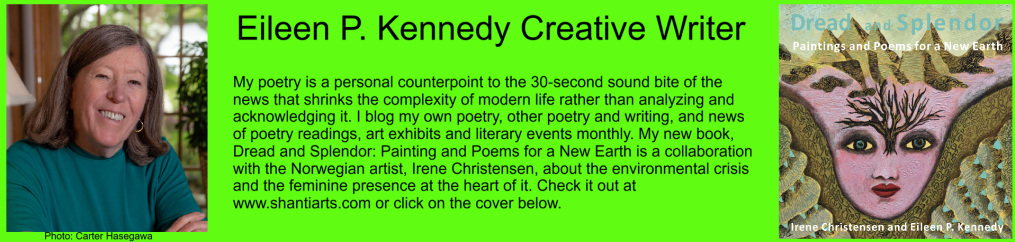
Dread and Splendor: Paintings and Poems for a New Earth

Manuscripts are not easy to put together, especially when they’re a collaboration. I have a new manuscript of eco-poetry that I am collaborating on with the Norwegian artists, Irene Christensen. I would like to write about the different stages of developing and publishing a manuscript.

The project started one winter at an artist colony, The Julia and David White Artist Colony, that sits on a naturally spectacular 17-acre rain forest, is in Costa Rica.  We both shared a love of this beautiful country. I was drawn to Irene’s evocative full-color paintings. Irene expressed admiration for my poetry.  I gave Irene a copy of my second poetry collection, Touch My Head Softly (Finishing Line Press, 2021) and she gave me her painting, “Volcano Flower.”  This interaction started a conversation that over a two-year period developed into the manuscript, Dread and  Splendor: Paintings and Poems for a New Planet.

The current collection comes from our common interest in natural beauty, the complex relationship between living things and the atmosphere, stopping exploitation of the earth that spans geographical and historical borders, and the feminine care at the center of environmentalism.

Irene worked on a series of art pieces  about women at the heart of the environmental justice movement.   I observed the creation of many of these remarkable paintings and wrote a series of ekphrastic poems, or written responses, to them.  We nurtured our creativity and friendship through this process.

Irene’s paintings unfold as the world heats up and becomes more and more unlivable. She creates images through the eyes of children,  mythical characters like trolls and goddesses, and the lenses of women witnessing the dying globe.  I reinforce this journey in words, giving verbal credence to Irene’s vision, and mine, of the future.

I hope to blog about our journey as the manuscript goes through different stages and if we can even find a publisher. Follow me here on Thursdays to continue this journey.
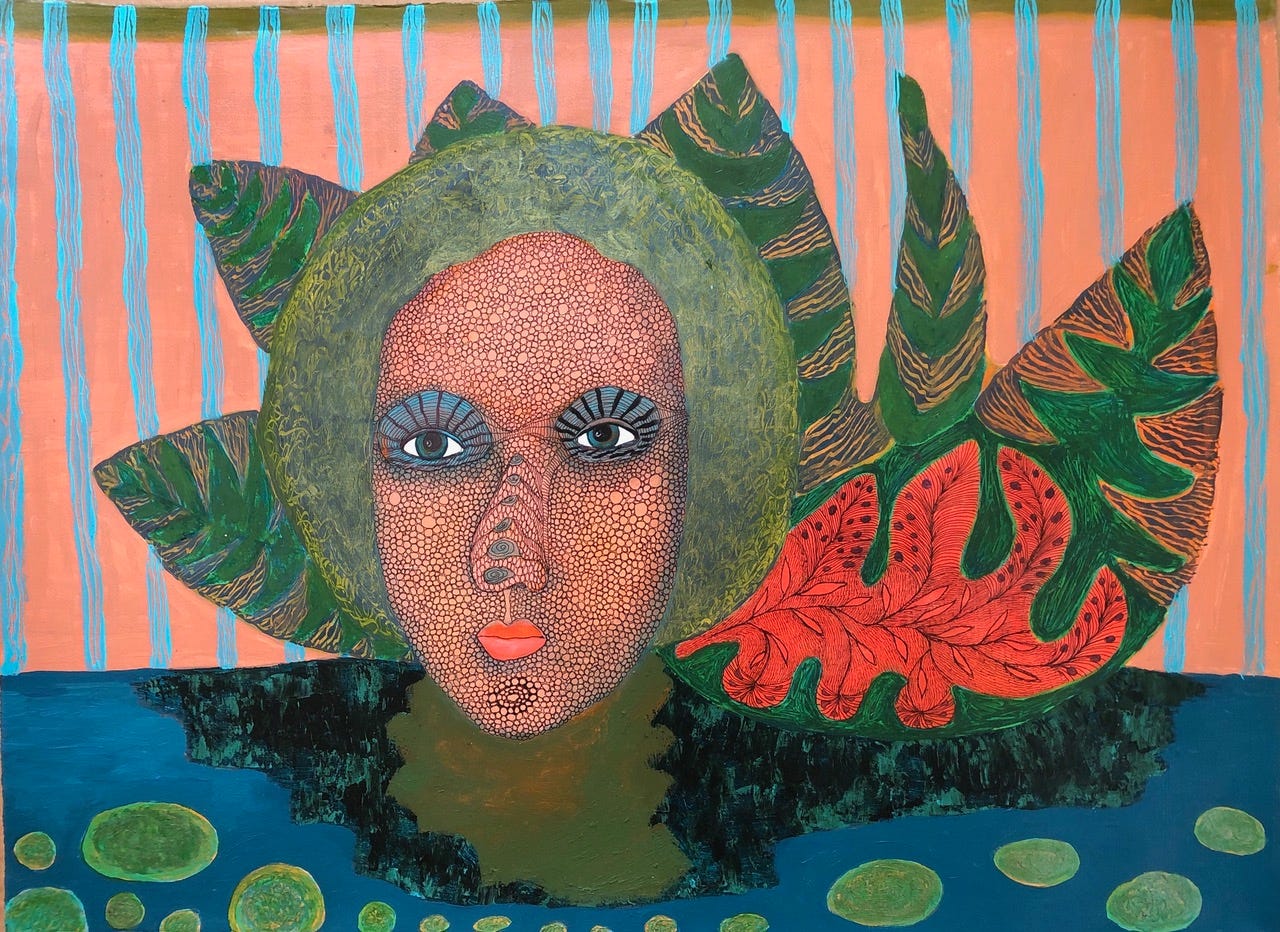
I Feel Close to Nature Too. Acrylic, 22” x 30” by Irene Christensen


On Writing and Depression from Leonard Cohen

Photo by Andre Moura on Pexels.com

I speak of a clinical depression that is the background of your entire life, a background of anguish and anxiety, a sense that nothing goes well, that pleasure is unavailable and all your strategies collapse. –Leonard Cohen

This quote from Leonard Cohen certainly mirrors my own feelings from time to time, especially about writing. The world often seems chaotic these days. So how do you write through it?

A writer can feel stuck when depressed. Being on a roll and suddenly having the creative juices dry up is something all creative people experience. Watching your process slowly break down until you are at a standstill. Staring at the blank page. You try to write your way out of it, but you hate every word. It connects to a larger phenomenon of lacking ideas or any endeavor that requires creativity.

Stephen King advises the “write yourself out of it” approach. Many writers believe the words we put down are indeed worthless and not worth the time. They fear ruining the piece. But the reality is sometimes we just need to write through the dry periods. Like athletes doing practice drills, we just have to keep at it until the good material comes back. If we don’t keep writing, we won’t be at our computers when the good stuff comes.

While much of writer’s block is steeped in depression, there are all sorts of other challenges that impact writing as well. Physical health, mental health, and emotional health can affect performance across. If you are struggling with depression, you might still be able to write like always, just as people with depression can joke with their friends or go through the motions at writing even though they are struggling inside.

Leonard Cohen, who suffered from depression, was certainly a model for “writing through it.” He was in the middle of composing a poem when he died. I like to think of that when I get discouraged with my writing.

I will be blogging on Thursdays. Follow me here.

Writing and Meditation

Many writers are also meditators. Some even write about the relationship between writing and mediation. I am a meditator and a writer. I meditate in the morning and write in the morning. I also practice yoga. To me, these are all intertwin

The U.S. alone has an estimated 36 million yoga practitioners. It has adapted to local socio-political and cultural norms world over so much so that it can hardly be called an Indian custom. Yoga originated in India. The system of yoga has physical, mental, and emotional dimensions in addition to spiritual underpinnings. But yoga is not a religion. It has no dogma. But the practice for me is essential to my writing and brings me to a place where I can write truth.

Meditation helps improve focus. Something essential for the good writer. I began meditating years ago with a meditation method popular at that time, Transcendental Meditation. Maharishi Mahesh Yogi developed this mantric method of meditation in the 50’s in India, and it spread widely throughout the world. For me, it was a good place to learn the technique, but my meditation practice evolved when I combined meditation with yoga, especially Kundalini. Kundalini is a spiritual energy or life force located at the base of the spine, conceptualized as a coiled serpent. It didn’t matter which type of meditation I was using, as long as it focused my mind and enabled me to write from that place.

Meditation provides a safe space to be. Meditation slows the world down to make room for creative thought and exploration. It’s an ideal practice for the writer or artist.

Have you had experiences with writing and meditation?

Photo by Prasanth Inturi on Pexels.com

I will be blogging on Thursdays, with occasional literary announcements, but I’m taking a few Thursdays off. Follow me here on WordPress.

Writing In Uncertain Times

Photo by picjumbo.com on Pexels.com

We live in unprecedented times. Pandemics, wildfires, hurricanes, floods, winter storms, political unrest, economic uncertainty and war are just some of the things we deal with daily. So why write through it?

Writing is important. As writers, we bear witness to what is going on in the world and write it down. It helps to put things into perspective and forms the basis of history. When we put our thoughts down on the page, it helps to give voice for those who may not be able to put it into words. It’s a comfort when we can form our feelings into writing that other people may read.

And when we write fantasy or fiction, we are allowing ourselves and others to get lost in escape. This is important in life also, especially when people are going through such massive upheavals. You can offer people relief though your literature.

Writers are sensitive to the world around them. This takes sympathy and empathy. Writers are empathetic to the suffering of others and can sometimes put this empathy into words and thus relieve the suffering. As writers, we have the gift of being able to put our feelings into words. Nelson Mandela said, “It always seems impossible until it’s done.” 

I’ll be blogging on Thursdays. Follow me here on WordPress.

Best Wishes for the New Year

Photo by Matthew Montrone on Pexels.com

The future belongs to those who believe in the beauty of their dreams.” ― Eleanor Roosevelt.

The future has not yet happened. We each have a role in what it will hold.

For artists and writers, it springs from the imagination.

The world is filled with chaos, fighting, greed. For those who are kind and generous, humane and creative, put your energy out there to shape good things. May we each play our part—with gladness and gratitude—for the unfolding of a blessed future. 

I’ll be back in Costa Rica for the new year and will be blogging on from there on Thursdays. Follow me.

HAPPY THANKSGIVING

Photo by Tima Miroshnichenko on Pexels.com

Happy Thanksgiving to all of you. Even if it’s not your tradition, it’s a day to be grateful and count your blessings.

I’m having guests, house guests and cooking a turkey dinner. I’m thankful for all of it.

I will blog again next Thursday, so follow me here.

Have a blessed, joyful day.

Reading Deprivation

Photo by Pixabay on Pexels.com

For writers, reading is a way of life. We read early and often. We read, we write. We check our media contacts, read newspapers or magazines online or in hard copy, then read a text of something similar to what we are working on in our own writing. If we stop reading, it’s deprivation.

It’s a paradox that by emptying our lives of all that text and distraction, we are actually refreshing the wellspring. By absenting ourselves from all the media, we get in touch with our inner selves, which is where all the creativity comes from. By keeping the inflow to a minimum, the outflow improves. Our true thoughts and feelings will begin to penetrate and come out in new writing, running freely. I knew a playwright who would take off his shoes and socks and stand in a running stream with a paper and pencil to literally get his flow going.

If you find not reading difficult, and many writers do, here are some suggestions:

.listen to music that has no words

.sew

.repot plants

.cook a complicated, time-consuming recipe and then

.invite friends to dinner

.watercolor

.rearrange the kitchen

.exercise

.meditate

.dance

After a number of these activities, sit down and write again. Notice any differences in your feelings or content. Your writing may benefit.

Follow me here on Thursdays.

Meditation and Writing

Photo by Andrea Piacquadio on Pexels.com

Many writers are also meditators. Some even write about the relationship between writing and mediation. I am a meditator and a writer. I meditate in the morning and write in the morning. I also practice yoga. To me, these are all intertwin

The U.S. alone has an estimated 36 million yoga practitioners. It has adapted to local socio-political and cultural norms world over so much so that it can hardly be called an Indian custom. Yoga originated in India. The system of yoga has physical, mental, and emotional dimensions in addition to spiritual underpinnings. But yoga is not a religion. It has no dogma. But the practice for me is essential to my writing and brings me to a place where I can write truth.

Meditation helps improve focus. Something essential for the good writer. I began meditating years ago with a meditation method popular at that time, Transcendental Meditation. Maharishi Mahesh Yogi developed this mantric method of meditation in the 50’s in India, and it spread widely throughout the world. For me, it was a good place to learn the technique, but my meditation practice evolved when I combined meditation with yoga, especially Kundalini. Kundalini is a spiritual energy or life force located at the base of the spine, conceptualized as a coiled serpent. It didn’t matter which type of meditation I was using, as long as it focused my mind and enabled me to write from that place.

Meditation provides a safe space to be. Meditation slows the world down to make room for creative thought and exploration. It’s an ideal practice for the writer or artist.

Have you had experiences with writing and meditation?

I will be blogging on Thursdays. Follow me at http://www.EileenPKennedy.com.

Rejection Therapy in Writing

Ok, so your piece has been rejected. As writers, we all go through it. Rejection can be defined as the act of pushing something away. We submit a piece or a manuscript somewhere where we think it will be a fit, and the powers that be don’t see it that way.

One thing I find that helps is knowing that publishing is just a business. A publisher is looking for something specific and your writing may not fit the bill. It doesn’t mean that it’s bad, it just means it’s not what the publisher is looking for.

Most editors don’t comment on their rejections, but if you do get feedback, you may learn from it. I had an editor tell me I was using too many adjectives and adverbs. I took the advice to heart and started editing them out, and it made my writing stronger.

When a piece has been rejected several times, I try revising it. Language in its uneducated, natural form, reveals if we uncouple our own judgment and explore linguistic vehicles, the piece may be better. In poetry, it sometimes means trying a different format. If it’s a free verse poem, I’ll try something more formal, like a pantoum or sonnet. It sometimes can provide a different, more successful vehicle for the piece.

Another thing I sometimes try is reordering the piece. The last line might not be right. The last line might be found a stanza or two up. Maybe I’ve done too much explaining, and it wants cutting. Or the beginning of the piece might better serve it in the middle.

When I did my last collection, “Touch My Head Softly,” I kept rearranging the order of the poems. Then I realized nothing fit the beginning. So I wound up writing a prose poem to start off the collection.

When I’m going through rejections, I sometimes remind myself why I like to write, and this often makes me feel better. I wrote the poems in Touch My Head Softly, about my partner who died of Alzheimer’s in his sixties. It helped me to get through my grief by doing this and this became an end in itself.

You can view my collection Touch My Head Softly, at:

https://www.finishinglinepress.com/product/touch-my-head-softly-by-eileen-kennedy/

Touch My Head Softly can be viewed on Goodreads at:

Photo by Ylanite Koppens on Pexels.com

https://www.goodreads.com/review/show/3609820860https://www.finishinglinepress.com/product/touch-my-head-softly-by-eileen-kennedy/

“There is no greater agony than bearing an untold story inside you.” ― Maya Angelou, I Know Why the Caged Bird Sings

Photo by Dids on Pexels.com

Storytelling, an ancient art form, allows writers to make sense of the world and derive deeper meaning from their lives since the beginning of human history.

Storytelling takes practice and there are things you can do to improve your technique. You want to have clarity when you tell a story. It should have a central theme and you should keep your eye on that theme as you go along. If you want to tell an engaging story, keep the tension up to the end. Be clear about the plot point that builds the story.

Great literature is crafted around characters that have great obstacles in their way, and eventually overcome them. You must embrace conflict if you want to engage your readers.

A good story has a beginning, middle and ending. A successful story might start with an inciting incident, lead into accelerated action, build to a climax and resolve. A good path to becoming a good storyteller is to read good storytellers. A good writer reads a lot. There’s a reason The Illiad and the Odyssey are still read after centuries of being told and written.

Observe good storytellers. See how they engage their audiences. This can be a family member who weaves tales of ancestors or a politician who engages the public

While reading other writer’s stories is essential, it’s also important to draw on your own experiences. This way your stories will ring true. Be an observer and use those observations. If you can’t use your recall for details, go research and re-experience. I recently revisited three locales I’m writing a story about: New York City, the Nevada desert, and the mountains of Costa Rica.

What places do you write about?