Why Self-Publish?

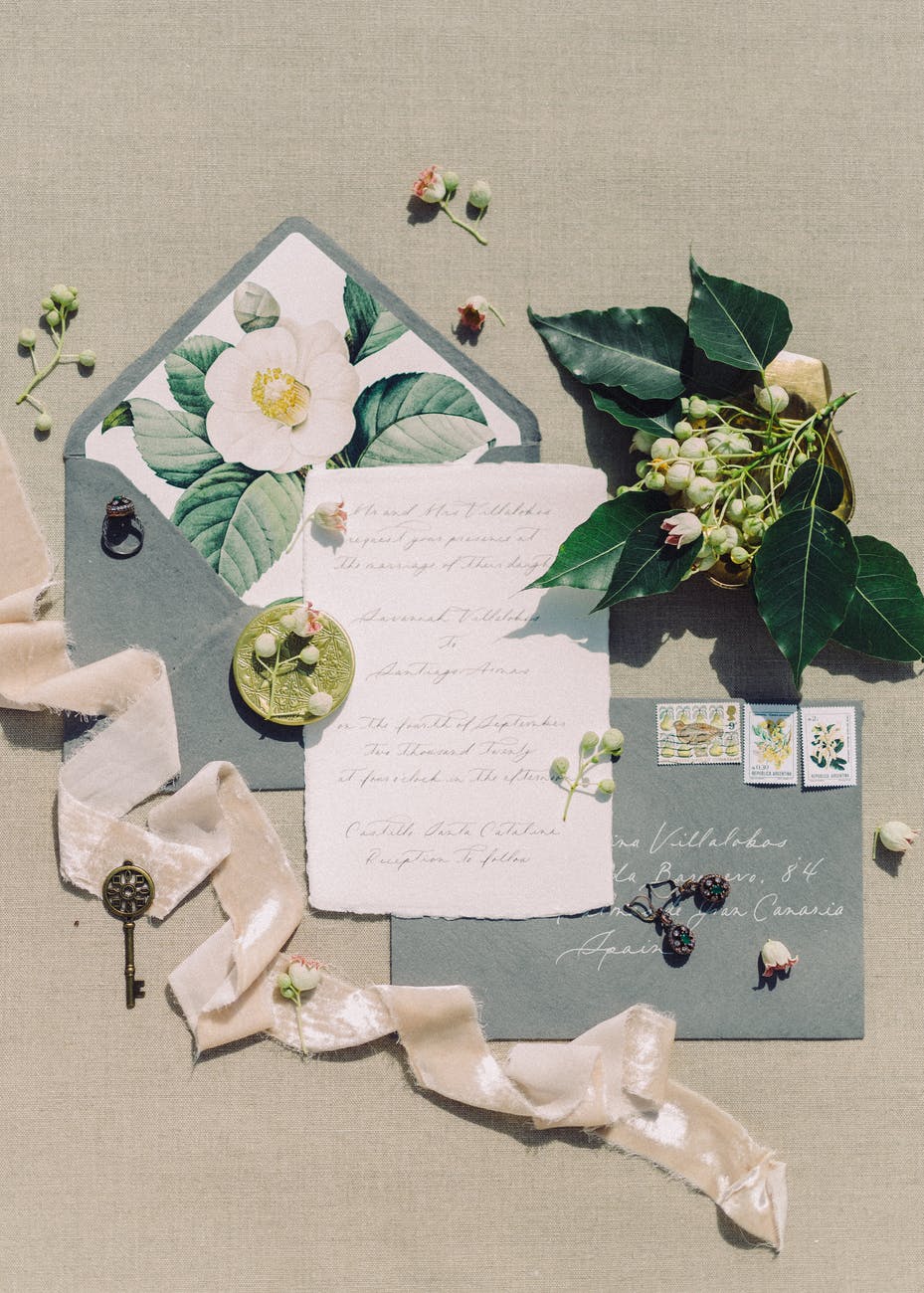
Photo by Valeria Palesska on Pexels.com

I have never self-published. I have published three books, with the fourth in production at a small, independent publisher, Shanti Arts. It’s called Dread and Splendor: Paintings and Poems for a New Earth. It’s a collaboration with the Norwegian artist, Irene Christensen, and will be out in early 2026. So why am I blogging about self-publishing? I know many people who have done it happily and thought I would pass along what I’ve learned.

There seem to be two types of self-publishing: assisted self-publishing and self-publishing. For both types, you pay the publisher to publish the book and whatever else you want done. I know people who have done both and the companies they used. You can go to a self-publisher with a few pages to be reproduced with a cover or a full-scale book with book cover and internal design.

Assisted self-publishing includes a certain amount of marketing services, in addition to the actual publishing of the book. I know two of these companies that friends used with success:

Xlibris – www.Xlibris.com publishing and marketing support. I know a writer who published a book with this company that was reasonable in cost, but she didn’t use their marketing services. She liked the book that was produced, but didn’t want to purchase additional marketing.

■Levellers Press owns both Collective Copies, a service that will print what you give them, or Off the Common Books, a form of assisted self publishing, where you pay them to publish your book and they offer website sales and carry the book in their bookstore in Florence, MA. https://www.levellerspress.com/. This publisher also attends Independent Book Conferences and may carry your book there.

Self-publishing is simply paying a publisher to publish your book. They may have marketing people you can pay to assist, or they may direct you to someone else for marketing services. All needs to be paid for by you:

.https://www.selfpubmadesimple.com/author-accelerator The publishing company is run by a writer called April Cox. A friend had success with publishing a book with them. This publisher also has people who will do everything from book and book cover designs to social media promotion.

■The Impress Group of Northampton, MA  https://jamesmcdonaldbooks.com/. I know an author who had a book published, with good results at a good price, by this company. She did not get or use any other services from this company besides publishing the book.

There are many publishers who will help you self-publish, but before you do contract to self-publish with a publisher, get a specific price for specific services in writing. I know someone who did not do this and wound up spending $10,000 on a book she wasn’t happy with. Whatever way you choose to publish your carefully crafted words and/or images, it’s a joy to have a finished book.

Follow me here once a month as I blog about the writing/publishing process. I will blog next month about the progress of my new book, Dread and Splendor:Paintings and Poems for a New Earth.

Starting the Writing Process

Photo by Photo By: Kaboompics.com on Pexels.com

Whether you’ve had six books published or you are a new writer, getting started can be a challenge. Writing is a process, not merely a product. The quality of your writing will be reflected in the thought and time you put into it.

Having a deadline can be helpful. If you have an editor waiting for your final draft or you have an assignment due, this is a motivation. If you don’t, you can set one for yourself. I often do.

Planning ahead is a good place to start. Sn outline is even better. You don’t have to actually write, you can just think about what you want to say and plan ahead. When you do sit down to it, you’re that much ahead. Then schedule a few writing sessions. That way if you’re not feeling like it, or if you want some revising time, you can return to it later. I rarely finish a piece in one sitting.

Topic and audience are often interrelated. Think about what you want to say to your audience and how that informs your topic. Ask yourself who the audience is, Why is your audience interested in this topic and what do they already know, if anything, about it. What of you think your audience would/should gain from your text?

Think about the purpose of your writing. Why are you writing the piece My most recent book, a collaboration with the Norwegian artist, Irene Christensen, was inspired by her paintings about women at the heart of the environmental movement. It’s called Dread and Splendor: Paintings and Poems for a New Earth. I wanted to respond poetically to Irene’s work, but I also wanted this to raise awareness of the environmental crisis.

My new book will be out in early 2026 from Shanti Arts. I will keep you apprised of the publishing process on it. Follow me here monthly.

Titles

Photo by Mark Neal on Pexels.com

Titles of books, short stories, poems, are very important.

Corporations spend millions to find the name of a product. Thought should be put into how you title your creative product.

Let’s discuss book titles. The first thing anyone hears about is the title of your book. It even precedes the cover. Once the artist knows what the title is, he/she can work on the visual concept. Think about what you will call your book. Here are some things to think about:

.It should give an idea of what the book is about.

.It should be easy to say.

.It should be memorable.

.It should grab your attention.

When we were deciding on a title for our manuscript, Dread and Splendor: Paintings and Poems for a New Earth, we tried out a lot of titles. The first one was “Dreadful Splendor” from a W.B. Yeats poem. This was taken by a previous book, so we changed it to “Dread and Splendor.” We thought this encompassed the “splendor” of the art and poems and the “dread” of the environmental crisis. Then we decided this didn’t really tell what the book was about and we added the subtitle “Paintings and Poems.” At first we had “Paintings and Poems for a New Planet.” But then we thought it sounded too much like speculative or science fiction. So it became “Dread and Splendor: Paintings and Poems for a New Earth.”

The same is true of a short story, poem or play title. Editors look at hundreds of poems and short stories.

If you follow the guidelines above, you’ll draw attention to your piece from the beginning and have less change of being passed over.

Sometimes for titles a phrase can be used from the manuscript can be just the right thing. If you have a concept that is long, write it down and then edit it.

Try discussing your book using the title and seeing if people understand and appreciate what you’re saying. See if they ask questions and are interested in the title and what you have to say.

Choosing the perfect title is mostly about trial and error. If you try out a number of titles, the best one becomes clear.

I will be blogging monthly, taking about the production of Dread and Splendor: Paintings and Poems for a New Planet through publication and beyond. Follow me here.

Getting a Manuscript Ready for Publishing

Photo by Ron Lach on Pexels.com

When you finally land that book contract, you have to deliver the final manuscript. I recently signed a contract with my publisher, Shanti Arts, for my manuscript, Dread and Splendor: Paintings and Poems for a New Earth.  It was more complicated than my two previous poetry collections for two reasons. The paintings and poems were a collaboration between myself and the Norwegian artist, Irene Christensen. Also, we got two offers for publication, Shanti Arts and the publisher of my previous collection, Finishing Line Press. 

It took several weeks to talk with both publishers and figure out, with my collaborator, which publisher was the right fit. I had a good relationship with Finishing Line Press and its publisher, Leah Maines. I had published my last book with them, and had a good experience with it. Finishing Line offered a higher royalty rate and I knew they were more proactive about promoting their new titles than most publishers. But they offered the contract to me and not my collaborator, Irene Christensen. We collaborated together from the beginning on the project. Shanti Arts is an arts publisher who offered us both a contract, but is not known for new book promotion. Irene and I decided to go with Shanti Arts.

Now I am in the process of preparing the manuscript for publication. As a poet, I want to put my best work into the published product. I have been workshopping my poems from the manuscript in my writing groups, relying on my fellow writers to help me edit and rewrite. I then have to pass them by my collaborator, Irene, who supplies the paintings that I responded to in poetry. Finally, I have to get it to my publisher, Christine Brooks Cote. Irene has to have the artwork ready as well.

After Christine receives the manuscript, it takes her a year to publish, with much going back and forth. Since there is a full-color painting with every poem, it takes longer to publish.

I will keep you posted here on the upcoming process, from contract to published book, and beyond. Follow me here on Thursdays.

How to Write a Query Letter to a Publisher

Māori. Oil, 40” x 40”

Many writers ask me about how to approach a publisher and get them interested in reading my manuscript. I’ve published three books. A good query letter is invaluable in soliciting interest from a publisher. With a novel, it is simpler to give a plot summary, character analysis, etc. But with a poetry manuscript, it’s harder to describe. You have to provide the theme. A good query letter is on the short side and to the point. It has one purpose, to entice the publisher into looking at your manuscript.

To start, look at what the publisher publishes and maybe getting some sample titles. If you like the books, and what the publisher did with them, then you and the publisher are probably a good fit. You might also have friends who had a good experience publishing with someone. If so, you could use this in your opening. As a writer, you have books you love. Get those books and look up the publisher.

Next, read the publisher’s guidelines carefully and follow them. Some publishers want sample pages; some want the whole manuscript;and some just want your letter outlining exactly what it is you want to send. Make sure you know the standards of each publisher and how to meet those standards. When you write your query, incorporate what you like about the publisher’s line of books. Was it one title that drew you in? Is that title relevant to your manuscript?

Start with your favorite publisher first, then wait a few weeks for the response. If it’s a no, and every writer gets a no at least once in a while, go onto your second favorite publisher. Start accumulating a list of publishers, in order of your preference, and keep at it. Persistence is key.

Your previous publishing record is important in your query. The publisher wants to know other people have published you. List book credits, journals and/or anthologies. This proves that you have an audience. Also, if you have won any awards, this is the place to list them. Endorsements from other poets and writers in the field are helpful. If you know someone who has published well, ask them to read your manuscript and write a blurb for you. Include this in your query letter.

This letter is an introduction and framework for your manuscript. It should prepare and excite the publisher to ask for and read your manuscript. Connecting threads could be more valuable to your presentation than just summarizing your manuscript. There must be something about this work that inspired you to do it. Share that enthusiasm with the publisher. Get to the heart of the project and show the publisher why it’s important and why you did it.

I am working on a collection of eco-poetry inspired by the paintings of the Norwegian artist, Irene Christensen. The paintings are on the theme of women at the heart of the environmental movement. One of her paintings is pictured above, Māori. This poem and painting of the same name was published in Starry Starry Kite, which was part of my query letter. So far, Dread and Splendor: Paintings and Poems for a New Earth is out for consideration with two publishers. We await their response.

I will be continuing the journey of this manuscript on Thursdays . Follow me here.

“We did not feel prepared to be the heirs of such a terrifying hour” –Amanda Gorman

Photo by Karolina Grabowska on Pexels.com

For any of us who watched the insurrection of the Capitol Building in Washington, D.C. last week, the words of Amanda Gorman, the inaugural poet, rings true. This poem was, ultimately, optimistic, portending a better future. Poetry can speak to us like nothing else when times are dark.

I wrote a collection of poetry after my partner died of Alzheimer’s Disease. It was a very dark time in my life. My partner, a brilliant mathematician, deteriorated quickly, leaving me in darkness. The writing of the poetry helped me to process what happened. I have been working on Touch My Head Softly with my publisher, Finishing Line Press, to finish the process. It has given me purpose through the pandemic.

Here is the link to the book at Finishing Line:

https://www.finishinglinepress.com/product/touch-my-head-softly-by-eileen-kennedy/

Here is the link to the book on Goodreads:

https://www.goodreads.com/review/show/3609820860https://www.finishinglinepress.com/product/touch-my-head-softly-by-eileen-kennedy/

Culture and Writing

Culture is a fuzzy term. Some cultures just have speech, no writing. Language affects the way we write. Some writers are multilingual, and that’s a definite advantage. Speech is flexible and can be used in particular ways in a cultural setting. We speak naturally in many diverse backgrounds as babies, from the playground, to school, to home. Writing can also be a misery for a child in school who hasn’t mastered the rules.Writing is where we must be precise. Speech is where we get to be imprecise, to play.

Imagine, as writers, playing with our words the way we play with speech. We can make magical words in our writing. Witness the incantation to open the caves entrance in Tolkein’s Lord of the Rings. Gabriel García Márquez made frog kings.

So how do we make magical writing in our culture? I’m not sure. Does anyone want to answer this question, just reply to my blog.

My latest collection of poems, Touch Ny Head Softly, will be out soon from Finishing Line Press.

Check it out here:

https://www.finishinglinepress.com/product/touch-my-head-softly-by-eileen-kennedy/

You can also find me on Goodreads at:

https://www.goodreads.com/review/show/3609820860

Can a Book Make a Difference?

“Act as if what you do makes a difference, it does.” William James

Can a book make a difference?  We are told our actions make a difference, but can a book, with diminishing print sales, lack of readership, and confusion about meaning, make a difference. This topic has been on my mind ever since I decided to donate part of the proceeds of my book of poetry about my partner who died of Alzheimer’s to the Alzheimer’s Association.  

When I approached my publisher about it, she didn’t respond.  When I approached the Alzheimer’s Association, they had never heard of such a thing and thanked me for the donation. When I told my friends, they asked if I thought I would sell enough copies to even form a decent donation.  

So why do it?  Some five million people are living with Alzheimer’s, and the number is growing.  I never had it, but the disease killed my partner and wrecked my life ten years ago.  It’s strange to write, publish and then read about this experience.  I thought if I contributed something to the research, it might ameliorate this whole process.

I also found it hard to talk to people about the donation, because they may see it as some strange hero thing. On the other hand, it can also be viewed as self-serving as people may buy the book because part of the proceeds will go to the Alzheimer’s Association, but as Adele, when she was asked if she was nervous hosting Saturday Night Live, recently said, “But if there was ever a time for any of us to jump head first into the deep end with our eyes closed and hope for the best it’s 2020 right?”

My book, Touch My Head Softly, has two weeks left in pre-sales, that time when my royalty and print run will be determined.  If you buy a copy, you will be getting a good collection of poetry and contributing to the Alzheimer’s Association:https://www.finishinglinepress.com/product/touch-my-head-softly-by-eileen-kennedy/

My book is also on Goodreads:

https://www.goodreads.com/review/show/3609820860

I’ll be continuing to post announcements on Tuesdays and blog on Thursdays.