I woke up last night in the middle of the night and couldn’t get back to sleep, war on my mind. The new poem I had written that day needed a title. I got out of bed and added the title to the poem.
This act of writing can be a savior in these dark times. The writing is a form of sanity for me. If I am writing about current events or not, it is a way of keeping myself focussed on something positive.
My creative visualizations are on world peace these days. My creative writing takes me anywhere it leads me.
I will continue to blog on Thursdays, with announcements on Tuesdays.
I love the quiet, the writerlyness of the whole thing. But how does this affect my writing? I wrote a collection of poems about my partner who died of Alzheimer’s. We had spent a lot of time in Mexico, so this landscape came into my poems:
“When I think of Oaxaco
I remember the Zocolo
where they sold pipa del agua
and chocolate dripping from paper cups.”
The setting just naturally came into the poem. Does this happen with you?
The best friend of the writer can be the writer her or himself. As writers, we crave praise, awards, good reviews, and the affirmation of the publisher, but if we remember the joy of the creative process, we don’t need the positive feedback of others.
As a poet, I work often alone and in solitude. Books tend to be published quietly also. There may be a book launch, but aside from that, people buy and read our books on their own. This doesn’t mean that our books don’t touch people or have a lasting effect. A writers, we know the books that have made that special impact on us and we have to trust that our writing will have an effect on our readers.
We entered into the art of writing for deeper reasons that passing attention and it’s best to get in touch with those internal reasons, rather than looking for external affirmations. That way, when the praise comes, it will be a pleasant reminder of our internal worth as writers, and we truly will be our own best friends.
I’ll be blogging on Thursdays and posting announcements on Tuesdays, as they come along.
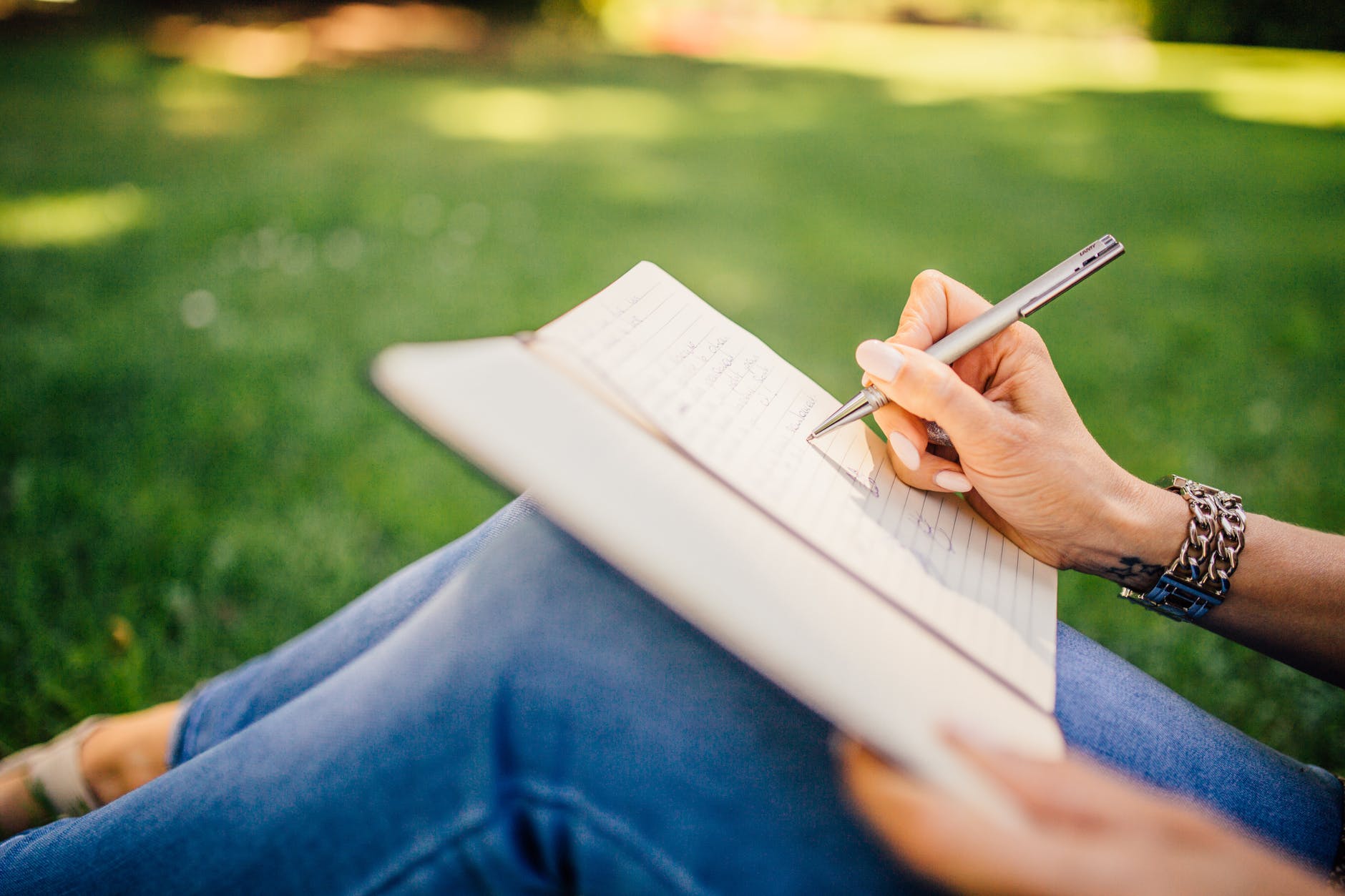
Whether writing pen to paper or sending a text or email, writing and reading is different today.
We can listen to a podcast, watch the news on television or our computer, or still read a book or newspaper. But what of the skill of writing? Employers complain that resumes are filled with typos and a well-written resume still draws a better job application response. The written word can be a powerful tool for a business leader affecting employees. Studies show that people disregard messages when they have glaring typos and mistakes.
And what about the power of a hand-written message. When was the last time you got one? Did you read it? Did it affect you? How about a letter sent by snail mail, rather than email or text?
A personalized message has a way of making the person receiving it feel valued and recognized.
It wasn’t sent to the masses, but written especially for the receiver.
Writing has a way of developing relationships between people. I know at holiday times when I get hand-written cards, I always respond positively to them and pay attention, be they a simple,
“Best wishes for the New Year” or a whole report on the last year.
And what of the creative writer? Julia Cameron in The Artist’s Way suggest starting the day by handwriting with pen to paper. This is supposed to access the creative side and also gives the artist the freedom to write without rereading or censoring. Many writers use pen and paper as a different way into their writing that their computer keyboard just doesn’t do.
When I wrote my most recent collection of poetry, Touch My Head Softly, I tried all different ways of writing: pen and paper, keyboard, dictating into a recorder, an old typewriter.
I will be blogging on Thursdays, with announcements on Tuesdays. If you have anything to announce: readings, new publications, literary events, let me know and I’ll blog them for you.
Try writing something of special interest to you. Write down all the primary ideas you’d like to write and then write the smaller ideas that make up the big ideas. Then write an outline of these ideas.
Now you have an outline that is a starting point. Research your topic. Then write down your own thoughts on the research. Identify gaps in the research you find. Now you’re ready to write.
When I wrote my last collection of poems, I had many blocks. Some are emotional, such as my partner’s Alzheimer’s that I wrote about in Touch My Head Softly. Or just time barriers, so that when you finally have a chance to write, there’s a lot of pressure to sit down and produce.
But I got through it and published my latest collection earlier this year:
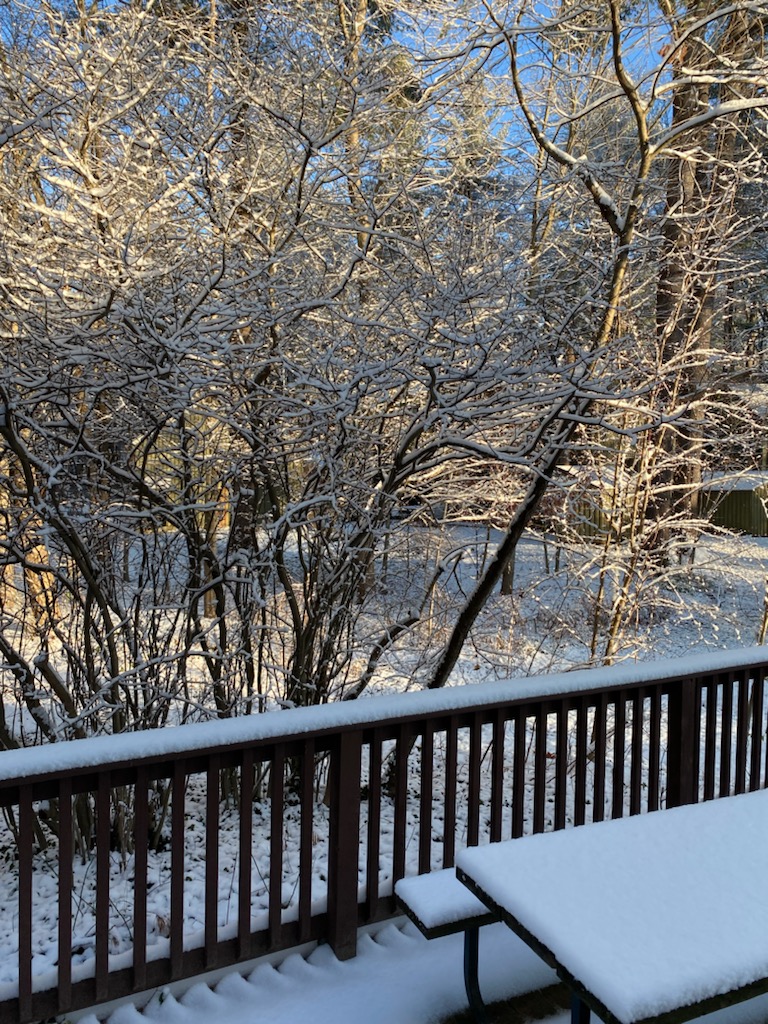
Onething I love about winter in the Northeast is the snow. This is the view from my back porch.
I love the quiet, the writerlyness of the whole thing. But how does this affect my writing? I wrote a collection of poems about my partner who died of Alzheimer’s. We had spent a lot of time in Mexico, so this landscape came into my poems:
“When I think of Oaxaco
I remember the Zocolo
where they sold pipa del agua
and chocolate dripping from paper cups.”
The setting just naturally came into the poem. Does this happen with you?
It’s getting to be New Year’s and the custom is to make resolutions. As writers, it’s important that we have goals. It’s also important to look back and acknowledge what we accomplished. Here are some of my goals for the upcoming year:
.to plant bulbs in my garden.
.to see more of my close friends in small combination
.to read more Japanese poetry
.to teach at least one poetry workshop.
.to write a longer narrative poem.
.to downsize and shed some clothing and books.
I may not get to all of these, and that’s ok, but it helps to have goals.
The feeling of having done everything one wanted is elusive. Accepting one’s limitations and shortcomings is part of the process.
I also look back at the year and acknowledge what I’ve done. I published a book this year about my partner’s death from Alzheimer’s Disease. I donated some of the proceeds to the Alzheimer’s Association. I also volunteered and taught a poetry workshop in haiku and tanka. I find a sense of calmness and accomplishment about these things. Check out my 2021 book:
In addition to being a good starting point for a writer, journaling has other benefits. According to Leslie
Andrus-Hacia, a clinical psychiatrist Writing is a brain-based porthole leading to a balanced and calm
state of being … through writing, both right-and left-brain hemispheres communicate, synthesizing
information that ultimately results in greater mental coherence.”* Other benefits of journaling include memory support and increasing communication skills.
I like to journal on my IPhone. I always have it with me and I loaded Microsoft Word onto it so I can access the files from my IPad or MacBook. Whenever I get an idea or scrap of a thought, I enter it into my Phone Journal. I review my notes once a week to see if there is anything I want to flesh out into a poem. It’s a good system for collecting odd thoughts that otherwise would just escape you.
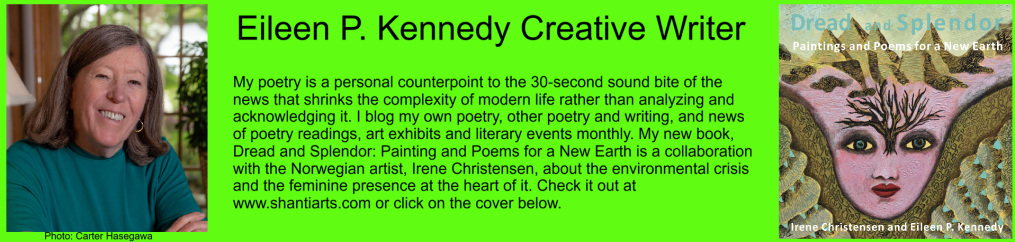
Sometimes those odd thoughts turn into your best work. I am publishing a new collection of poems at the beginning of the new year called Dread and Splendor: Paintings and Poems for a New Planet (Shanti Arts, 2026.) Many were from thoughts in my journal.
When I write, I try to use language that fits the audience and matches the content of the poem. Inappropriate language can turn your reader or listener off before you even get them started.
You want your own unique voice to come through in your writing, but you don’t want that voice to stop your reader from going on. When I read aloud to an audience, I choose different material than when I know the reader will be reading. Some writing is better heard aloud and other writing needs to be read to grasp the ideas and complexities.
When you’re in a line-up of writers at a reading, you usually only have a few minutes to grab your audience. I usually use poems with repeated lines when I read aloud, and shorter, rather than longer poems.
I will be doing a reading from my recent collection Touch My Head Softly (Finishing Line Press, 2021) at a closing reception at the Hosmer Gallery of the Forbes Library virtually. Check it out:
The four elements: earth, wind, fire, water in your writing can be exhilarating.
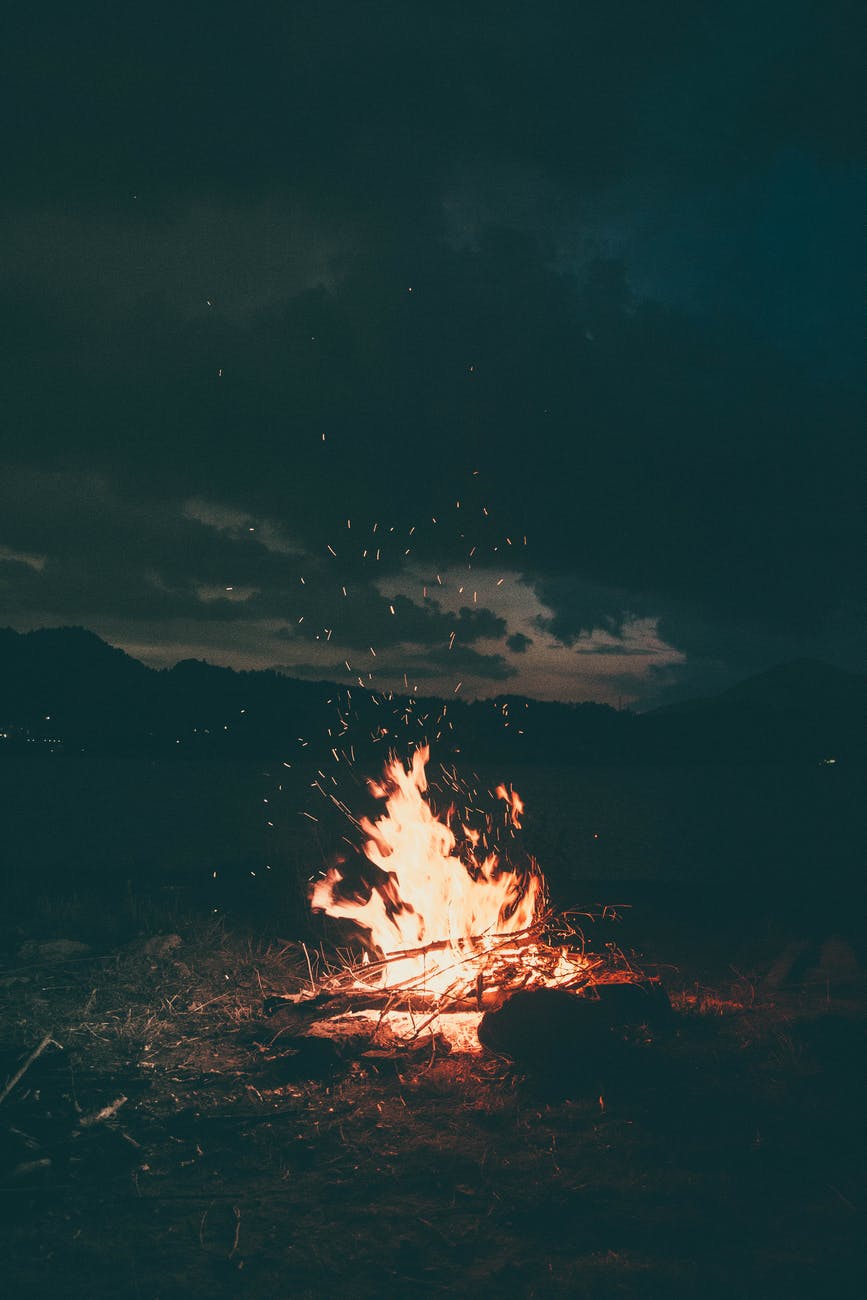
The four elements can be nurturing, but they an also destroy. There is much possibility in these primitive forces. Fire, for instance, can be cleansing or destructive at the same time.
There’s a scene about a fire and the seeds. I actually had that dream, where there was a fire, and I dreamt that I was carrying those seeds, that they’re what had to be protected. I thought about that later, that those are the instincts that these women had, the instinct to protect your food source, no matter what, because you didn’t have a Costco, you didn’t have Cub, you didn’t have social services or food shelves or anything else to rely on except yourself. Fire, to me, it’s got the two sides of it. It’s the simultaneous purging and cleansing, but it’s also destructive. But then you see what happens after a fire out in the forest and the deadwood’s gone and all of a sudden, there’s all these wildflowers coming up. I love that. I love that cycle of renewal that happens with fire. That was a really key element in the story.
Yes. To me, that’s Western science that has made that very arbitrary distinction. I think the extent to which we can consider ourselves “objective” is something of a myth because we bring all of our filters, we bring all of our experience, and while I believe you can have a rigorous process that really does your due diligence in research, it’s never separate from who you are and it’s never separate from everything around you. So that Western understanding of science is very different from an Indigenous understanding of science, which is all about place. There is a great book called Native Science by Greg Cajete. It’s one of my favorite books. I’ve got it underlined, I’ve got it marked up. He talks about the metaphoric mind. He talks about how science has to be relational as well. You can’t take it out of life and its context with everything else around it and say, “There’s just this.” That’s why I think technology has gotten so out of control, because it never takes into account what’s going to happen in the future. It doesn’t take into account the consequences of it, meaning some of the pollution or the using up of resources or nuclear power, when we think about waste that’s going to last for thousands and millions of years. That’s unethical in my mind. What you’ve done is borrowed or poisoned the future for your grandchildren. That’s not right. So science has to have ethics. It has to have a relational connection to the world around it. That book is just a beautiful way of understanding science. That’s my foundational book.
Where are you finding hope or joy or inspiration right now?
Plants, seeds, food, anything to do with the outside world. To go out and garden, to have my hands in the soil, to walk out the door in Minnesota in March and hear birds singing, because our winter is very, very quiet. So to hear birds singing as they’re returning on their migration, and the fact that when all that craziness was happening, the political coup and everything, they didn’t care. The birds keep singing. The world around us is just profound in its disconnect from what humans get so excited about. I think of that as a really good check and balance for our priorities. Writing, reading, working with native writers: those are all joyful places to me.
Witchcraft is thought to date back to the Stone Age and for several millennia witches and their male counterparts Warlocks, were the village doctors, herbalists and counselors. In this day and age, true witches and warlocks still revere the earth and all its inhabitants and work for the highest good of all.




 Eileen P. Kennedy Author