When I write, I try to use language that fits the audience and matches the content of the poem. Inappropriate language can turn your reader or listener off before you even get them started.
You want your own unique voice to come through in your writing, but you don’t want that voice to stop your reader from going on. When I read aloud to an audience, I choose different material than when I know the reader will be reading. Some writing is better heard aloud and other writing needs to be read to grasp the ideas and complexities.
When you’re in a line-up of writers at a reading, you usually only have a few minutes to grab your audience. I usually use poems with repeated lines when I read aloud, and shorter, rather than longer poems.
I will be doing a reading from my recent collection Touch My Head Softly (Finishing Line Press, 2021) at a closing reception at the Hosmer Gallery of the Forbes Library virtually. Check it out:
The word polish means to make something smooth and shiny, like leather shoes So what does it mean to polish your writing?
Does it mean to go through your piece and get rid of minor errors? Or does it mean to improve or perfect? To me it means go over your writing and make sure that it all makes sense. This differs from editing in my mind, which refers more to going over your piece for minor errors in punctuation or grammar.
I am currently writing a long narrative poem, about the drowning earth, interspersed with haiku. There’s a lot to follow. I do a draft and then read it over once, revising as I go. It’s not yet polishing, which I do at the end.
My most recent collection of poetry that I published was a different process. It was a highly emotional collection about the death of my partner to Alzheimer’s. It was painful to write, and I just got it out on paper periodically over a number of years. I then polished it at the end. Take a look:
Ok, so your piece has been rejected. As writers, we all go through it. Rejection can be defined as the act of pushing something away. We submit a piece or a manuscript somewhere where we think it will be a fit, and the powers that be don’t see it that way.
One thing I find that helps is knowing that publishing is just a business. A publisher is looking for something specific and your writing may not fit the bill. It doesn’t mean that it’s bad, it just means it’s not what the publisher is looking for.
Most editors don’t comment on their rejections, but if you do get feedback, you may learn from it. I had an editor tell me I was using too many adjectives and adverbs. I took the advice to heart and started editing them out, and it made my writing stronger.
When a piece has been rejected several times, I try revising it. Language in its uneducated, natural form, reveals if we uncouple our own judgment and explore linguistic vehicles, the piece may be better. In poetry, it sometimes means trying a different format. If it’s a free verse poem, I’ll try something more formal, like a pantoum or sonnet. It sometimes can provide a different, more successful vehicle for the piece.
Another thing I sometimes try is reordering the piece. The last line might not be right. The last line might be found a stanza or two up. Maybe I’ve done too much explaining, and it wants cutting. Or the beginning of the piece might better serve it in the middle.
When I did my last collection, “Touch My Head Softly,” I kept rearranging the order of the poems. Then I realized nothing fit the beginning. So I wound up writing a prose poem to start off the collection.
When I’m going through rejections, I sometimes remind myself why I like to write, and this often makes me feel better. I wrote the poems in Touch My Head Softly, about my partner who died of Alzheimer’s in his sixties. It helped me to get through my grief by doing this and this became an end in itself.
You can view my collection Touch My Head Softly, at:
“Read, read, read. Read everything – trash, classics, good and bad, and see how they do it. Just like a carpenter who works as an apprentice and studies the master. Read! You’ll absorb it. Then write. If it’s good, you’ll find out. If it’s not, throw it out of the window.” ― William Faulkner
I find this so true. I spend much more time reading than writing. I’m always marveling at the innovative way a writer has handled a particular passage or verse.
I blogged I would blog announcements on Tuesday and my regular blog on Thursday and so far I’m on schedule!
I have a new book of poetry coming out from Finishing Line Press. Check it out:
The four elements: earth, wind, fire, water in your writing can be exhilarating.
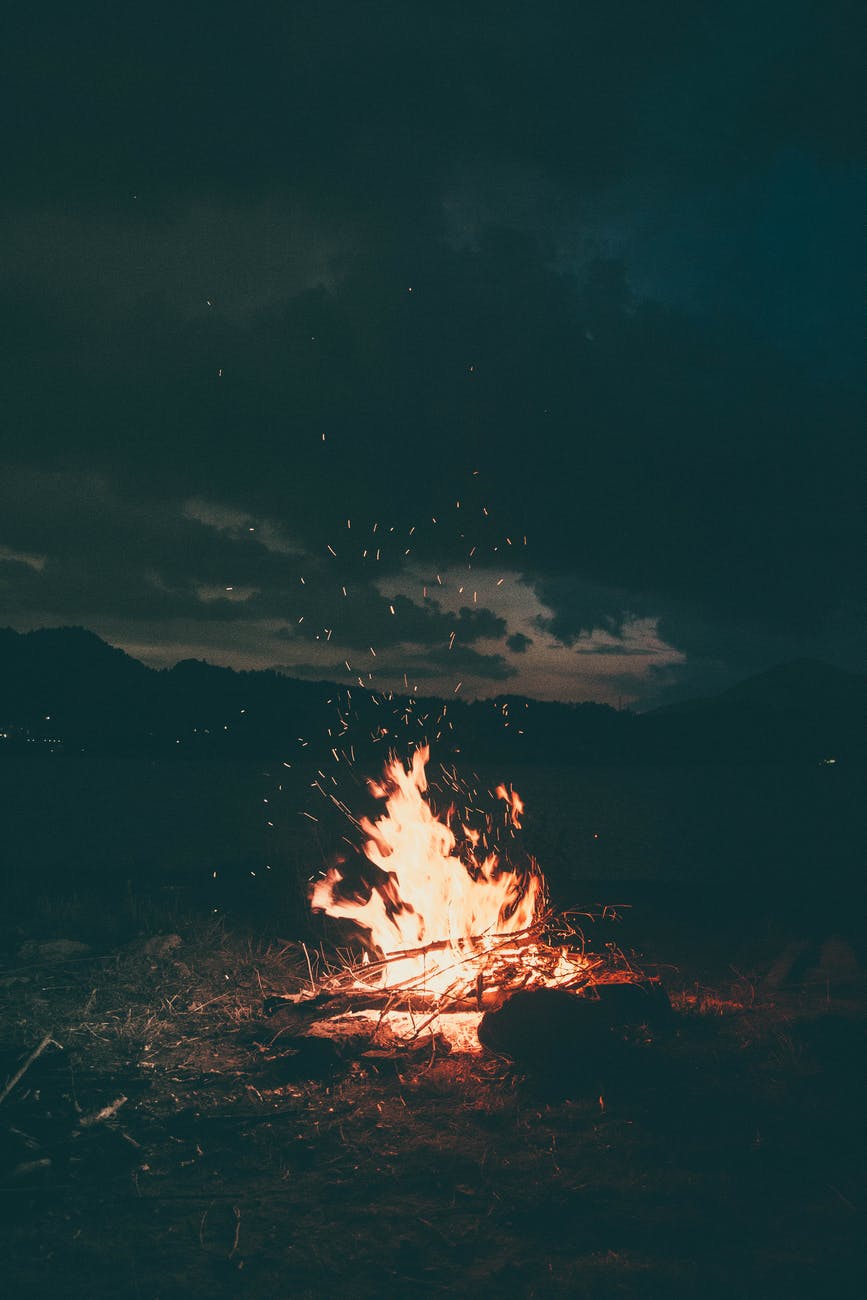
The four elements can be nurturing, but they an also destroy. There is much possibility in these primitive forces. Fire, for instance, can be cleansing or destructive at the same time.
There’s a scene about a fire and the seeds. I actually had that dream, where there was a fire, and I dreamt that I was carrying those seeds, that they’re what had to be protected. I thought about that later, that those are the instincts that these women had, the instinct to protect your food source, no matter what, because you didn’t have a Costco, you didn’t have Cub, you didn’t have social services or food shelves or anything else to rely on except yourself. Fire, to me, it’s got the two sides of it. It’s the simultaneous purging and cleansing, but it’s also destructive. But then you see what happens after a fire out in the forest and the deadwood’s gone and all of a sudden, there’s all these wildflowers coming up. I love that. I love that cycle of renewal that happens with fire. That was a really key element in the story.
Yes. To me, that’s Western science that has made that very arbitrary distinction. I think the extent to which we can consider ourselves “objective” is something of a myth because we bring all of our filters, we bring all of our experience, and while I believe you can have a rigorous process that really does your due diligence in research, it’s never separate from who you are and it’s never separate from everything around you. So that Western understanding of science is very different from an Indigenous understanding of science, which is all about place. There is a great book called Native Science by Greg Cajete. It’s one of my favorite books. I’ve got it underlined, I’ve got it marked up. He talks about the metaphoric mind. He talks about how science has to be relational as well. You can’t take it out of life and its context with everything else around it and say, “There’s just this.” That’s why I think technology has gotten so out of control, because it never takes into account what’s going to happen in the future. It doesn’t take into account the consequences of it, meaning some of the pollution or the using up of resources or nuclear power, when we think about waste that’s going to last for thousands and millions of years. That’s unethical in my mind. What you’ve done is borrowed or poisoned the future for your grandchildren. That’s not right. So science has to have ethics. It has to have a relational connection to the world around it. That book is just a beautiful way of understanding science. That’s my foundational book.
Where are you finding hope or joy or inspiration right now?
Plants, seeds, food, anything to do with the outside world. To go out and garden, to have my hands in the soil, to walk out the door in Minnesota in March and hear birds singing, because our winter is very, very quiet. So to hear birds singing as they’re returning on their migration, and the fact that when all that craziness was happening, the political coup and everything, they didn’t care. The birds keep singing. The world around us is just profound in its disconnect from what humans get so excited about. I think of that as a really good check and balance for our priorities. Writing, reading, working with native writers: those are all joyful places to me.
Witchcraft is thought to date back to the Stone Age and for several millennia witches and their male counterparts Warlocks, were the village doctors, herbalists and counselors. In this day and age, true witches and warlocks still revere the earth and all its inhabitants and work for the highest good of all.
Join me and many other artists and writers for the closing reception of this amazing visual art, poetry, prose and video exhibit by Western Massachusetts Authors and Artists on August 31 at 6:30 p.m. Go to the link below to get the link to the reading.