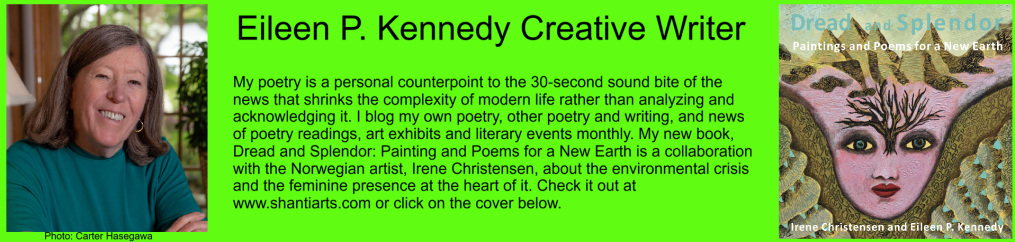

Collaboration Can Build a Friendship

Collaboration is working with another artist/writer, in whatever capacity that may be. I published three books on my own, but my latest collection is eco-poetry with a painter who is very concerned about the environmental crisis. We met in Costa Rica. I saw her art, she read my poems, and a collaboration began.

A book I recently read, A Friend Sails in on a Poem, celebrates the friendship of Molly Peacock and her poet friend of 46 years, Phillis Levin. According to the book “they have read and discussed nearly every poem they’ve written, creating an unparalleled friendship.” It puts me in mind of all the years I have sat in writing groups reading to my writer friends and seeking their support in my endeavors. It was aptly enough, given to me by a writer/artist friend, Holly Woodward. It’s dedicated to “all friends who make art together.” It put me in mind of all of the friendships I have made with other artists and how easy it is to take these relaltionships for granted.

The past two years I have been collaborating with the Norwegian artist, Irene Christensen, pictured on the left above. We met at the Julia and David White Artist Colony in Costa Rica years ago and it was our mutual love of nature and art through the years that eventually led to our collection of eco-poetry and art called Dread and Splendor: Paintings and Poems for a New Earth.

I guess when one artist collaborates with another, it creates an understanding of the other’s artists’ work that wouldn’t have been possible otherwise. Irene created a series of paintings about women at the heart of the environmental movement. I responded to these evocative paintings in the best way I know, through poetry. 

Yesterday. Oil, 16” x 12” by Irene Christensen

I find that the combination of painting and poem together merge and the separate works of art become something new. It’s a way of communicating in art that transcends painting or poem alonge.I responded to Yesterday with a poem called “She Occupies Time,” which begins “no quiet merging with the azure, but an orangesky, the earth bizarre with diasporic life.” 

Irene Christensen, the artist, started exhibiting her paintings with the poems I had written for them. Perilous Journey at the Galleries of the Interchurch Center in New York City. Queen of the Woods was exhibited with poem and painting at the Voices of the Earth Exhibition in Galleri Schaeffers Gate 5, Oslo,Norway. The painting and poem were sold together as that’s what the buyer wanted, the experience of having both the poem and painting together in his home.

The experience of collaborating and supporting each other as writers and artists is an invaluable part of the process. What has your interpersonal journey been like as a writer or artist?

I will be continuing the journey of our manuscript, Dread and Splendor: Paintings and Poems for a New Earth each week on Thursdays. Follow me here.

Submitting Poetry to Online Journals Who Accept New Writers

Photo by William Fortunato on Pexels.com

Finding the right home for your poetry can take a lot of time and research. I often submit to online journals because I want to demonstrate to my book publisher that there is a market for these poems. One way of doing that is to have literary journals publish them. These then become the “Acknowledgements” at the back of your book manuscript.

Another reason to submit online is because it builds your portfolio when you’re trying to submit to more prestigious print journals. Online journals can be a great first place to submit when you don’t have many or any publications.

Here are some places to start:

Barren Magazine https://barrenmagazine.com/ publishes monthly in all genres. They lean toward introspective poetry.

Euonia Review https://eunoiareview.wordpress.com/submissions/ accepts original poetry as well as reprints, but you must retain the rights to them. They also respond quickly, sometimes within 24 hours. They accept up to 10 poems at a time.

The Meadow https://authorspublish.com/the-meadow-now-seeking-submissions/ publishes both in print and online. They publish multiple genres of new and established writers. They nominate for the Pushcart Poetry Prize, so if you get published by them, you are eligible for this prize nomination.

Ghost City Review https://ghostcitypress.com/submit publishes in multiple genres, but do not accept simultaneous submissions. This means you can only submit to them individually and not to other journals at the same time.

Roses and Wildflowers https://societyforritualarts.com/rw/2024-spring/submission-guidelines/ publishes on themed issues. They publish in Spring and Fall and there is always a theme. Check their website for themes.

Starry Starry Kite https://starrystarrykite.substack.com/about is published monthly and welcomes new and established writers. They also do interviews with featured writers.

When I submitted my manuscript, Dread and Splendor: Paintings and Poems for a New Earth for publication, I had several acknowledgements from different journals, including online ones like Starry Starry Kite and Wordpeace. This assures the publisher you’re submitting to that journals were already interested in publishing some of the work in the manuscript. We submitted to four publishers and got offers from two. We ultimately wound up signing with Shanti Arts. The book should be out in early 2026.

Follow the journey of my book, Dread and Splendor: Paintings and Poems for a New Earth, which is a collaboration with the Norwegian artist, Irene Christensen. I will blog about it here on Thursdays.

Developing a Book Cover

Every book needs a cover. This process of development has varied with each book I’ve published. My first publisher, Prentice Hall, just did the design, which was a photograph of a teacher in a classroom with the book title on front. I approved it, but otherwise was not involved. The next publisher, Flutter Press, did not get involved with book covers. She suggested a book designer, Jasmine Hernandez. Jasmine ran several designs by me until I was happy with the cover and Banshees was launched.

The next publisher was Finishing Line Press of my poetry collection, Touch My Head Softly, about my experience with my partner’s Alzheimer’s Disease. This publisher designed its own covers from a photograph you suggested. I liked the way Jasmine had designed my previous whole cover. I asked Finishing Line Press if I could do my own cover with a designer and deliver it for publication. Jasmine suggested several designs, including a drawing of a brain, with the title inserted across it. I thought the brain worked well and was appropriate for the content. That’s what we went with and is pictured above.

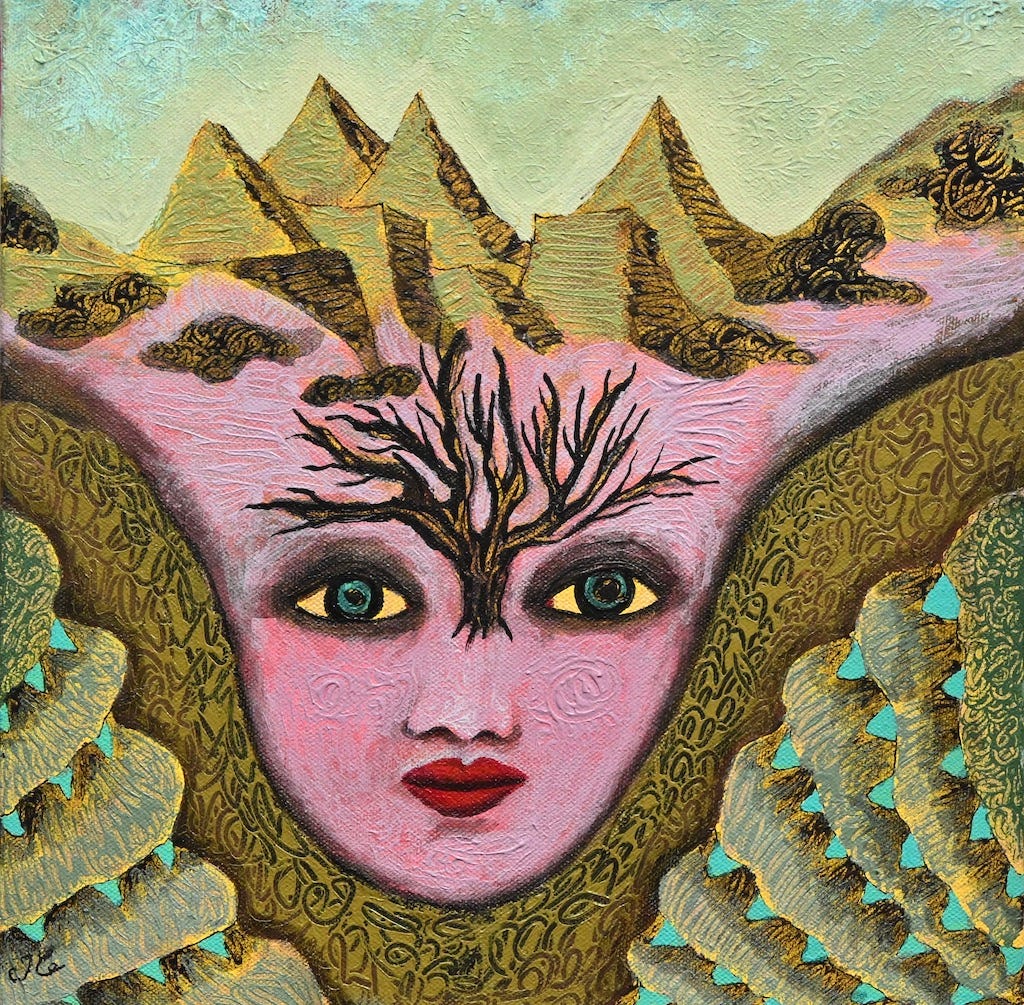
For the upcoming book,  Dread and Splendor: Paintings and Poems for a New Earth. my collaborator is an artist, Irene Christensen. She is coordinating the design with the publisher, Shanti Arts. She suggested a painting from the collection, which is comprised of an equal amount of paintings and poems. The painting is “The Goddess Speaks.” (pictured herewith). We also provided our bios, head shots, and endorsements from other art curators/writers for the back. Irene and Christine, my publisher, are still working this out together. I look forward to seeing the final cover and how it evolves.

We’re delivering the final manuscript and art at the end of this month. The cover will be developed after that. The book is scheduled for publication in early 2026. Follow me here on Thursdays as I blog about the publishing process and this book specifically.

Writing the Landscape

Photo by eberhard grossgasteiger on Pexels.com

A lot of the writing that I particularly love about landscape is immersive and meaningful. Every place has a unique quality. When writing about the environmental crisis, as I did in Dread and Splendor: Paintings and Poems for a New Earth (upcoming, Shanti Arts.), it adds another layer to the landscape and the valuing of it. Then writers add this sense of it: their own associations, their own experiences.

I think of sense of place is a layered, multi-faceted thing. It’s not only a sense of emotional connection with landscape, an insight into how that landscape is inhabited—peopled and animal-ed—but a sense of story. It’s also an invitation to explore and investigate and listen and engage the senses. The paintings and poems from Dread and Splendor are from all over, Norway, New York City, Costa Rica, India and more.

Joan Didion has written many books about place, including Central America and California. She emotionally engages with the places she’s at. Didion has been described by Martin Amis “as the poet of the great California emptiness.” California has had its fair share of wild fires that have seriously altered the landscape since Didion wrote about it.

Dread and Splendor: Paintings and Poems for a New Earth is about women at the heart of the environmental crisis. Irene Christensen, a Norwegian artist, did a series of paintings on this topic. I wrote poem responses to the paintings. I had to write about a dystopic landscape set in the not-too-distant future. Many landscapes are endangered as we ignore the warning signs of the planet’s destruction

Our manuscript/artwork will be delivered to Shanti Arts at the end of the month. It is scheduled to be out in early 2026. Follow me and the book here on Thursdays.

Getting a Manuscript Ready for Publishing

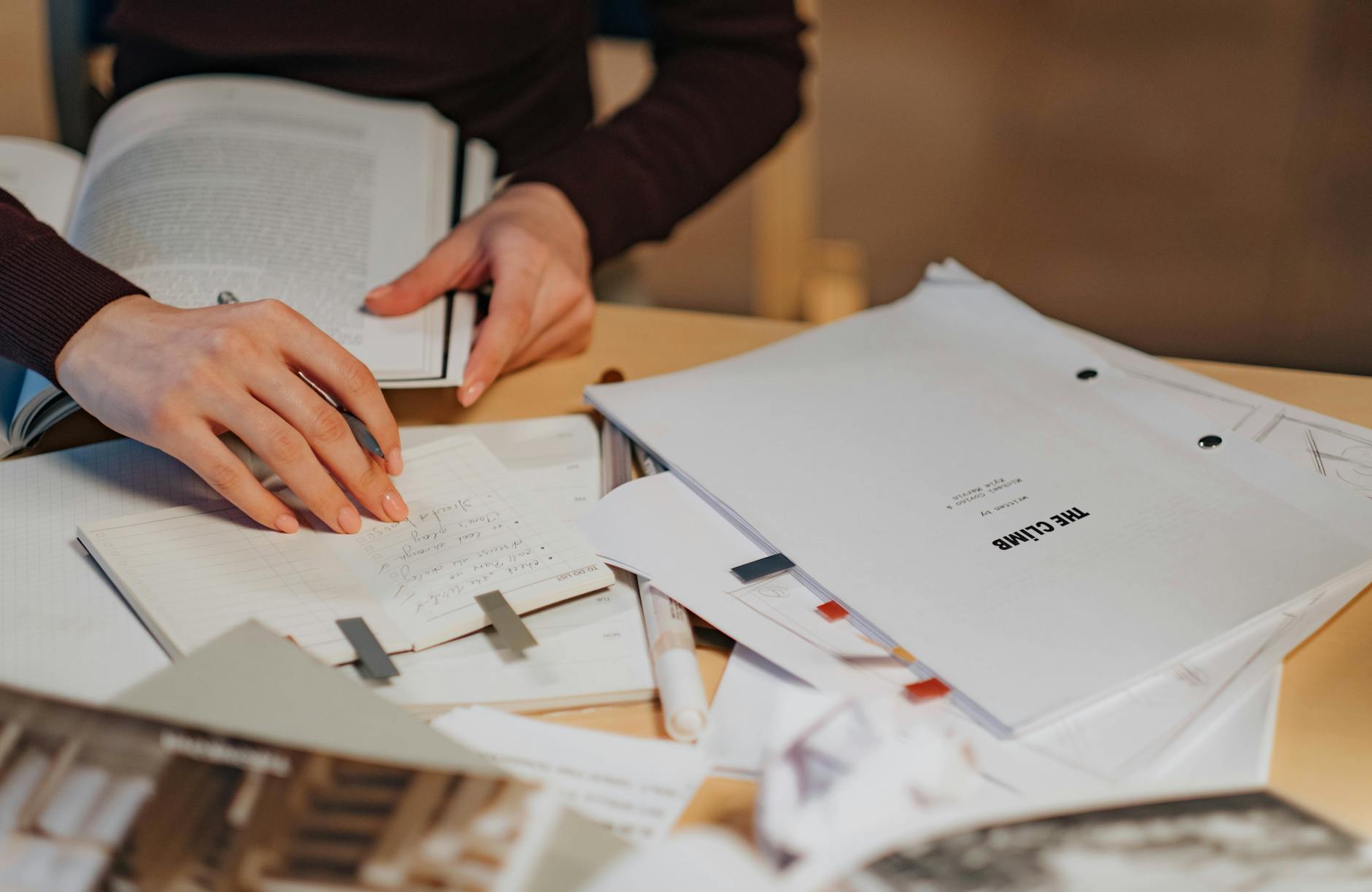
Photo by Ron Lach on Pexels.com

When you finally land that book contract, you have to deliver the final manuscript. I recently signed a contract with my publisher, Shanti Arts, for my manuscript, Dread and Splendor: Paintings and Poems for a New Earth.  It was more complicated than my two previous poetry collections for two reasons. The paintings and poems were a collaboration between myself and the Norwegian artist, Irene Christensen. Also, we got two offers for publication, Shanti Arts and the publisher of my previous collection, Finishing Line Press. 

It took several weeks to talk with both publishers and figure out, with my collaborator, which publisher was the right fit. I had a good relationship with Finishing Line Press and its publisher, Leah Maines. I had published my last book with them, and had a good experience with it. Finishing Line offered a higher royalty rate and I knew they were more proactive about promoting their new titles than most publishers. But they offered the contract to me and not my collaborator, Irene Christensen. We collaborated together from the beginning on the project. Shanti Arts is an arts publisher who offered us both a contract, but is not known for new book promotion. Irene and I decided to go with Shanti Arts.

Now I am in the process of preparing the manuscript for publication. As a poet, I want to put my best work into the published product. I have been workshopping my poems from the manuscript in my writing groups, relying on my fellow writers to help me edit and rewrite. I then have to pass them by my collaborator, Irene, who supplies the paintings that I responded to in poetry. Finally, I have to get it to my publisher, Christine Brooks Cote. Irene has to have the artwork ready as well.

After Christine receives the manuscript, it takes her a year to publish, with much going back and forth. Since there is a full-color painting with every poem, it takes longer to publish.

I will keep you posted here on the upcoming process, from contract to published book, and beyond. Follow me here on Thursdays.

How to Enhance Your Story

Writing a good story is essential to any genre. Story writing is a key element of being a competent writer.

If you want to be as complete a writer as possible, it is important that you know  how to write a good story. Story writing is a common skill for most writers, it is something that most writers take for granted. In truth, you must develop your writing skills to the best of your abilities.

If you want to reach your full potential as a writer, you will need to tell a truly great story. Before you start writing your story though, you should make sure you know what story writing really is, and what the elements are needed. The five elements of a story are character, plot, setting, conflict and resolution.

Photo by Suzy Hazelwood on Pexels.com

This is simple enough, but how do you make your story stand out?

One way to do this is to have your manuscript reviewed by a more experienced writer. There are many writers you can hire to do this or you can join a writing group. A good writing group will put everyone on an equal footing where everyone reads and the group comments on the piece. This can be done in a generative group, where everyone is writing something new right there and everyone shares or a critique group, where a manuscript, or part of one is sent out in advance by a group member and then the group reads it and offers critique. This route can be more difficult to do than paying a consultant, because you will want to feel comfortable with how the group operates before you can feel the feedback is helpful.

I was writing a collection of eco-poetry because I am passionate about climate justice. Then I met the Norwegian artist, Irene Christensen, who was doing a series of paintings about women at the heart of the environmental movement. We decided to collaborate and came up with a 60-page manuscript called Dread and Splendor: Paintings and Poems for a New Earth.

Another way to improve your story writing skills is to read other stories. I try to read something new on a daily basis. The more you delve into new literature, the more concepts and ideas will find their way into your own story writing.

But the most important thing to remember about being a good writer is to keep at it. A good writer writes everyday. Even if what you’re writing that day is not going well, if you keep at it, you’ll eventually get to something that works. You can’t sit down the first time and tell a wonderful, well-written story. It takes practice.

Follow me here on Thursdays. I will be writing about the writing/publishing process and the progress of my manuscript Dread and Splendor: Paintings and Poems for a New Earth.

My Manuscript Dread and Splendor: Paintings and Poems for a New Earth Has Found a Publisher

The Goddess Speaks. Oil, 12” x 12”

I have been working on this manuscript for some time with the Norwegian Artist, Irene Christensen. The painting seen here, “The Goddess Speaks,” is a candidate for the cover art. There are more than 30 full-color paintings, many oil, that inspired my poems.

It was a challenge finding a publisher who wanted to publish the book because the four-color art is more expensive to produce than the average poetry collection. Not many publishers even publish visuals with poetry. The final cost of the book will be more thatn the average poetry book. We wound up submitting simultaneously to four publishers, and getting offers from two, Finishing Line Press and Shanti Arts. We decided to go with Shanti Arts.

For those of you who follow my blog, you have been with me on my journey to publication of this manuscript. It was important to me to publish this manuscript as it’s a complete collection of eco-poems, inspired by the paintings of women at the heart of the movement to preserve the environment. Like recycling and going with green energy, as an artist, I wanted to contribute to the literature on the environmental crisis.

I didn’t even want to tell people about my upcoming book publication until I had a signed contract. Now I do. The next step is refining the accepted manuscript and making it the best it can be. I rely on my writer friends to read and make suggestions. I don’t always use these suggestions, but it helps to have another pair of eyes looking at my poems and suggesting what’s strong and what’s stopped them as they were reading.

For those of you who followed my blog through the development of this manuscript, my first collaborative effort with an artist, continue to follow me though the final steps before publication and beyond.

I will blog about the publication process each week. Follow me here.

Publishing In the Best Literary Journals for Poets

Photo by sumit kumar on Pexels.com

Poets like to be published in literary journals, but there are some journals that are considered at the top and most poets would love to be in. Once they’ve got a few publications under their belt, they might have success with one of the following sites. A publication in any of these poetry journals could catapult your writing toward a larger, more reputable audience.

Best American Poetry is an anthology of the best poetry of the year. Each year, this series presents essential American verse and the poets who create it. Truly the “best” American poetry has appeared in this venerable collection for over thirty-five years. Get a copy of this and look at the journals the poems first appeared in. Robert Pinsky, the famous poet and literature professor, has called this annual anthology “a vivid snapshot of what a distinuished poet finds exciting, fresh and memorable.”

Among the literary journals often found the Best American Poetry anthology is The New Yorker, Poetry Magazine, The American Poetry Review, The Southern Review, The New England Review, The Harvard Review, The Cincinnati Review, Prairie Schooner, The Kenyon Review, Southwest Review, The Virginia Review Quarterly, New Ohio Review, the Paris Review, The Nation, The Georgia Review, The American Scholar, AGNI, The Literary Review, The Iowa Review, The Common, The Boston Review, Harper’s, Gulf Coast, Conduit, River Styx, Denver Quarterly, The Atlantic Monthly, Barrow Street, Cave Wall, The Alaska Quarterly Review, The Sun, New York Times Magazine, Black Warrior Review, The Colorado Review, The Carolina Quarterly, The Missouri Review, Pleiades, The New Criterion, The Hopkins Review, Image Magazine, The Southampton Review, The Sewnee Review, Birmingham, Massachusetts Review, The Sycamore Review, Terminus Magazine, Cherry Tree, Ecotone, Crazy Horse, Gulfshore Life, Hayden’s Ferry Review, The Hudson Review, The Iron Horse Literary Review, Naugatuck River Review, Maggy, The Manhattan Review, McSweeney’s, Michigan Quarterly Review, New South, New York Quarterly, PEN America, Poetry London, Poetry Northwest, The Rumpus, Southern Indiana Review, Vinyl Poetry, Buzzfeed, Mississippi Review, Cooper Nickel, Crab Apple Review, Copper Nickel and Brilliant Corners.

I have just signed a contract for a new book, Dread and Splendor: Paintings and Poems for a New Earth, with my artist colleague, Irene Christensen with Shanti Arts Press. It should be out in 2025. I will chronicle this experience to publication here on Thursdays. Follow me here.


I’m Grateful to Have Our Painting and Poem, “The Day Wavers Between Going and Staying” in Issue 200 of the Arlington Literary Journal

The painting and poem “The Day Wavers Between Going and Staying” was published in Issue 200 of the Arlington Literary Journal. Take a look:

https://www.arlijo.com/post/issue-200#viewer-huuwn650

This poem and painting is part of the upcoming book Dread and Splendor: Paintings and Poems for a New Earth, to be published by Shanti Arts Press in 2025.

I will be blogging on Thursdays. Follow me here.

I’m Delighted The Orange & Bee Is Publishing My Twin Poem “Fairy Tale of Eternal Economic Growth”

I’m delighted to have my poem, “Fairy Tale of Eternal Economic Growth” published in the September 27, 2024 issue of The Orange and Bee. I’ve attached a link to it below if you want to read it.


The submission is a twin poem, which means the two columns can be read down or across.I drew on the Norse Folk Tales of Greta Thunberg’s Scandinavian heritage.  Odin had two wolves, Geri and Freki.  Geri was interpreted as the greedy one and Freki the avaricious one.  I think wolves are a good symbols of the corporate greed that Thunberg argues against. The visual they use with the poem is Greta Thunberg’s photo as a child.

Photo by Balpreet Singh on Pexels.com

The Orange & Bee publishes original and contemporary short stories, poems, and essays that explore, expand on, and subvert the rich traditions of international folklore, with a strong focus on fairy tales (though they also sometimes dabble in other forms of folklore, such as fables, myths, and legends). They also publish traditional tales accompanied by annotations, discussion questions, and writing prompts. Their real mission is to build a community—a virtual salon—around shared passion for fairy tales.

See the poem and photo of Greta Thunberg here:

https://theorangebee.substack.com/p/4523ca2d-ab6b-4812-b67e-7a157178cdeb

I am writing much eco-poetry these days, about the environmental crisis. I compiled a manuscript of poems and paintings, with the Norwegian artist, Irene Christensen, called Dread and Splendor: Paintings and Poems for a New Earth. It’s a book about women at the heart of the environmental movement. I will blog on Thursdays. Follow me here.