The Writing Process: Enjoying It

“Art is standing with one hand extended into the universe and one hand extended into the world, and letting ourselves be a conduit for passing energy.”

—Albert Einstein

Photo by Lisa Fotios on Pexels.com

Many artists focus on the final product, but the secret is in enjoying the road to creation. The process itself is a reward. The creative journey should interest you far more than reaching the destination.

I am currently working on a manuscript, Dread and Splendor: Paintings and Poems for a New Earth, with the Norwegian artist, Irene Christensen. “The Goddess” painting is part of that manuscript of eco-poetry and paintings. I wrote responses to Irene’s paintings about women at the heart of the environmental movement. It’s a pleasure to just enjoy art and respond to it with writing. I enjoyed the paintings and the friendship we felt and embellished along the way.

We forget to enjoy the journey, and in effect, we lose our desire to even reach the destination.Sylvia Plath said, “The worst enemy to creativity is self-doubt. Creativity holds great significance when it comes to connecting with our soul or authentic self.” Writing is a process of self-discovery of the self, among other things.

We can connect more powerfully with the soul, by tuning into the fire within. For some people, creativity can even be more affective at this than meditation. One reason for our art is to help us with self-discovery.

I remember starting to write just after I put together the alphabet at the age of eight. It was a source of wonderment and joy for me to create the words. I try to revisit that wonder periodically.

When we make room for creativity in our lives and activate our creative muscles, it can be transformative. It can strengthen our intuition, release stagnant energy, and align with our larger project, like writing a book or composing a song.

I will be blogging on Thursdays. Follow me here for the journey of the manuscript, Dread and Splendor: Paintings and Poems for a New Earth which should be published by Shanti Arts in early 2026.
Overcoming the Blank Page

Photo by Marta Nogueira on Pexels.com

I have just delivered a finished manuscript to a publisher. This is the time I look forward to the new project. But what will that new project be?

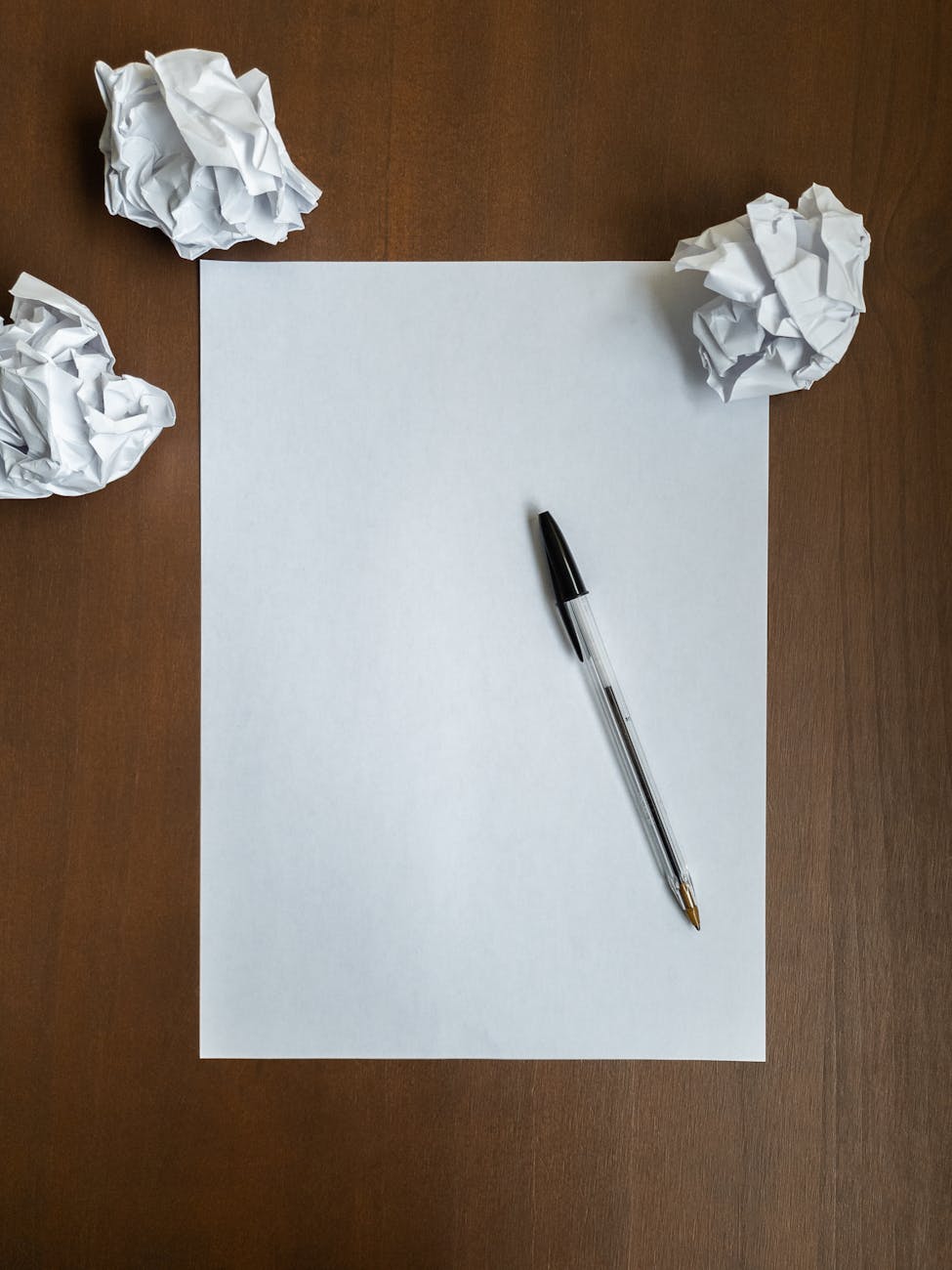
Have you ever thought “I have a book inside me, waiting to be written”? As an aspiring author myself, I know that yearning all too well. I spent a lot of time staring hopelessly at blank pages, willing the words to flow but finding only frustration. My dream of writing a book felt out of reach. You may be creative, but if you’re staring at a blank page, it doesn’t matter.

People who are creative are happier, healthier, and less lonely. A published poem can lead to a reading, a painting to an exhibit, a song to a concert. I recently wrote an ekphrastic poem recently to my friend’s painting and she sold it, with the poem. All of these things put us, and our art, out into the world to see and be seen and to interact.

A creative ability is a skill to use our imagination to solve a problem. We may feel stuck with a problem, but if we read up on how other people have solved this, or ask a friend how they solved this, we are using creativity to problem-solve.

You don’t have to be an artist to exercise your creative ability. You can use this skill to fulfill dreams, problem solve, and improve communication skills.

I’ll be blogging here on Thursdays. Follow me here as I propose a new project.

How to Enhance Your Story

Writing a good story is essential to any genre. Story writing is a key element of being a competent writer.

If you want to be as complete a writer as possible, it is important that you know  how to write a good story. Story writing is a common skill for most writers, it is something that most writers take for granted. In truth, you must develop your writing skills to the best of your abilities.

If you want to reach your full potential as a writer, you will need to tell a truly great story. Before you start writing your story though, you should make sure you know what story writing really is, and what the elements are needed. The five elements of a story are character, plot, setting, conflict and resolution.

Photo by Suzy Hazelwood on Pexels.com

This is simple enough, but how do you make your story stand out?

One way to do this is to have your manuscript reviewed by a more experienced writer. There are many writers you can hire to do this or you can join a writing group. A good writing group will put everyone on an equal footing where everyone reads and the group comments on the piece. This can be done in a generative group, where everyone is writing something new right there and everyone shares or a critique group, where a manuscript, or part of one is sent out in advance by a group member and then the group reads it and offers critique. This route can be more difficult to do than paying a consultant, because you will want to feel comfortable with how the group operates before you can feel the feedback is helpful.

I was writing a collection of eco-poetry because I am passionate about climate justice. Then I met the Norwegian artist, Irene Christensen, who was doing a series of paintings about women at the heart of the environmental movement. We decided to collaborate and came up with a 60-page manuscript called Dread and Splendor: Paintings and Poems for a New Earth.

Another way to improve your story writing skills is to read other stories. I try to read something new on a daily basis. The more you delve into new literature, the more concepts and ideas will find their way into your own story writing.

But the most important thing to remember about being a good writer is to keep at it. A good writer writes everyday. Even if what you’re writing that day is not going well, if you keep at it, you’ll eventually get to something that works. You can’t sit down the first time and tell a wonderful, well-written story. It takes practice.

Follow me here on Thursdays. I will be writing about the writing/publishing process and the progress of my manuscript Dread and Splendor: Paintings and Poems for a New Earth.

Creativity Gets Stimulated By Exercise

Many writers, including me, exercise as part of their creative process. The physical state of our bodies, and our willingness to routinely move them through space to the extent we are able, can either serve or subvert the quest to create. I am in the process of preparing my manuscript, Dread and Splendor: Paintings and Poems for a New Earth, for final submission to my publisher, Shanti Arts. I signed the contract, with the artist Irene Christensen, in October, and now I have to deliver the manuscript.

According to a new study by Scientific Reports* “the pattern of findings argues for shared variance between bodily movements and creativity or fluency and originality.”

Photo by Taryn Elliott on Pexels.com

There are studies about how aerobic exercise both increases the size of the prefrontal cortex and facilitates interaction between it and the amygdala. This is important to creators because the prefrontal cortex is the part of the brain that helps tamp down the amygdala’s fear and anxiety signals.

Dr. Jennifer Heisz, author of Move the Body, Heal the Mind, shares deeply compelling insights and research about the connection between movement and anxiety, depression, working memory, mental flexibility and creativity

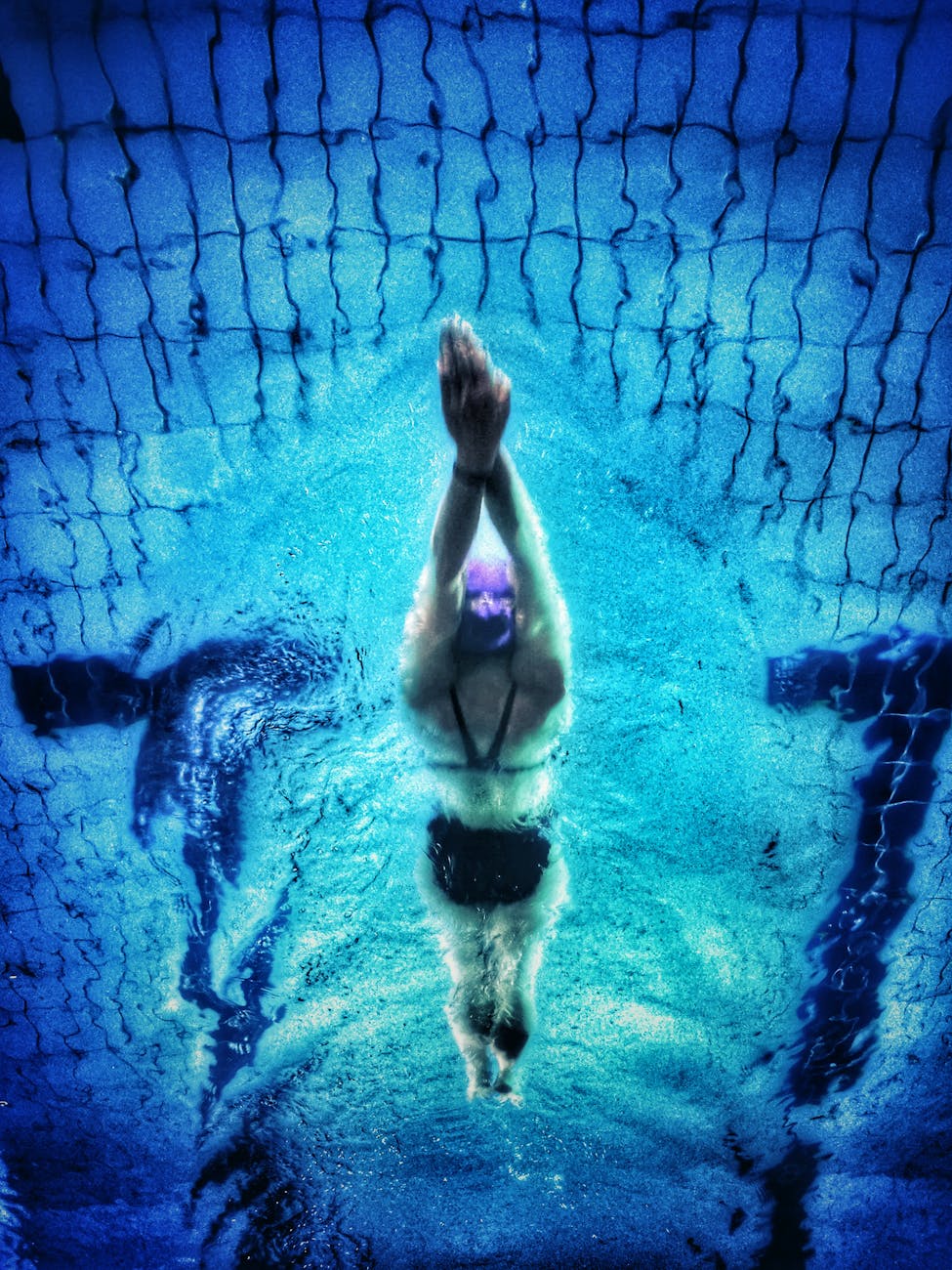
I swim everyday first thing in the morning, then I write. I have been following this pattern for years and find it works for me. Artists, writers and any other driven creators use movement as a powerful tool in the quest to help transform the persistent uncertainty, fear, and anxiety that accompanies the quest to create,

Anyone involved in a creative endeavor might consider movement, as a potent elixir to help transform the uncomfortable sensation of anxiety from a source of pain and creative stagnation into something not only manageable but usable.

A growing body of research on the therapeutic effect of exercise on anxiety, mood, and fear illustrates the often sustained anxiety that rides organically along with the uncertainty of creation. As artists, we need to cultivate the energetic capacity needed to give our brains what they require to function long enough, and at a high enough level, to have even a shot at closing the gap between idea and performed piece or manuscript. We need to not only train in the craft, but also do what we can to equip ourselves to flourish along the way.the creative process, especially in the context of a larger work, is a survival event.

What form of exercise do you use to feed your creativity? As I prepare the final manuscript, Dread and Splendor: Paintings and Poems for a New Earth, to my publisher, Shanti Arts, I depend on exercise to help me through. Swimming is one of the things that stimulates my writing each morning.

I will blog on Thursdays about the writing process and the submission of the final manuscript, and publication of my book. Follow me her on Thursdays.

*“Everyday bodily movement is associated with creativity independently from active positive affect” by Rominger, et al. Scientific Reports.

I’m Delighted The Orange & Bee Is Publishing My Twin Poem “Fairy Tale of Eternal Economic Growth”

I’m delighted to have my poem, “Fairy Tale of Eternal Economic Growth” published in the September 27, 2024 issue of The Orange and Bee. I’ve attached a link to it below if you want to read it.


The submission is a twin poem, which means the two columns can be read down or across.I drew on the Norse Folk Tales of Greta Thunberg’s Scandinavian heritage.  Odin had two wolves, Geri and Freki.  Geri was interpreted as the greedy one and Freki the avaricious one.  I think wolves are a good symbols of the corporate greed that Thunberg argues against. The visual they use with the poem is Greta Thunberg’s photo as a child.

Photo by Balpreet Singh on Pexels.com

The Orange & Bee publishes original and contemporary short stories, poems, and essays that explore, expand on, and subvert the rich traditions of international folklore, with a strong focus on fairy tales (though they also sometimes dabble in other forms of folklore, such as fables, myths, and legends). They also publish traditional tales accompanied by annotations, discussion questions, and writing prompts. Their real mission is to build a community—a virtual salon—around shared passion for fairy tales.

See the poem and photo of Greta Thunberg here:

https://theorangebee.substack.com/p/4523ca2d-ab6b-4812-b67e-7a157178cdeb

I am writing much eco-poetry these days, about the environmental crisis. I compiled a manuscript of poems and paintings, with the Norwegian artist, Irene Christensen, called Dread and Splendor: Paintings and Poems for a New Earth. It’s a book about women at the heart of the environmental movement. I will blog on Thursdays. Follow me here.

On Blogging

Photo by Pixabay on Pexels.com

A blog is a website where you can share your thoughts, ideas, and experiences with the world.

You canuse a blog to promote your business, connect with like-minded people, and make money. I’m a writer and I use it to promote writing: other writers and my own.A blog is a website where people can post their thoughts and opinions on a variety of topics. A blog is an online journal where you can share your expertise and ideas. 

Blogs started out as diaries, but they have evolved into much as most bloggers are now earning a full-time income from their blogs. I don’t aspire to making money with my blog, but some people do. I like to blog about the writing process and that’s the subject of this blog: the process, publishing, promoting.

I use WordPress here and more than 70 million posts are published each month by WordPress users. That’s a lot of blogs. I focus on the literary ones, but you can look for all kinds of topics and write one yourself if you’re interested. Blogs have been rated as the fifth most trustworthy source for gathering online information. More than 75 percent of internet users read blogs. That’s a lot of blog readers.

If you’re interested, you can start a blog on WordPress for free. When you publish a book, many publishers will want the link to your blog as a writer. Blog posts are written in a more informal way when compared to traditional academic articles. If you’re a writer, it’s easy to blog. Just sign up for a free blog site and start writing about what you’re doing as a writer. Blogs have an informal approach.

Blogs are organized in reverse chronological order, with the newest blog post appearing at the top. Websites can have a variety of structures, depending on their purpose.
A blog often has a conversational tone, whereas most websites use a formal writing tone. They are interactive as they allow reader engagement, such as commenting, social sharing buttons, etc., which websites do not. Also, a blog is updated continuously, a website may or may not be updated.

If you are interested in blogging, and many writers and artists are, by all means get started with a free carrier like WordPress. I will be blogging here on Thursdays. Follow me.

Exercise Stimulates Creativity

According to a new study by Scientific Reports* “the pattern of findings argues for shared variance between bodily movements and creativity or fluency and originality.”

Therefore many writers, including me, exercise as part of their creative process. The physical state of our bodies, and our willingness to routinely move them through space to the extent we are able, can either serve or subvert the quest to create.

Photo by Heart Rules on Pexels.com

There are studies about how aerobic exercise both increases the size of the prefrontal cortex and facilitates interaction between it and the amygdala. This is important to creators because the prefrontal cortex is the part of the brain that helps tamp down the amygdala’s fear and anxiety signals.

Dr. Jennifer Heisz, author of Move the Body, Heal the Mind, shares deeply compelling insights and research about the connection between movement and anxiety, depression, working memory, mental flexibility and creativity

I swim everyday first thing in the morning, then I write. I have been following this pattern for years and find it works for me. Artists, writers and any other driven creators use movement as a powerful tool in the quest to help transform the persistent uncertainty, fear, and anxiety that accompanies the quest to create,

Anyone involved in a creative endeavor might consider movement, as a potent elixir to help transform the uncomfortable sensation of anxiety from a source of pain and creative stagnation into something not only manageable but usable.

A growing body of research on the therapeutic effect of exercise on anxiety, mood, and fear illustrates the often sustained anxiety that rides organically along with the uncertainty of creation. As artists, we need to cultivate the energetic capacity needed to give our brains what they require to function long enough, and at a high enough level, to have even a shot at closing the gap between idea and performed piece or manuscript. We need to not only train in the craft, but also do what we can to equip ourselves to flourish along the way.the creative process, especially in the context of a larger work, is a survival event.

What form of exercise do you use to feed your creativity?

I will blog on Thursdays on creativity, the writing process, readings and publishing. Follow me her on Thursdays.

*“Everyday bodily movement is associated with creativity independently from active positive affect” by Rominger, et al. Scientific Reports.

Sometimes We Have to Gather Tomatoes to Write

I plant tomatoes every spring

Their small green selves

Growing shockingly tall

And flashing yellow flowers

That turn to rich red fruit

Juicy as I pop them in my mouth

Photo by Julia Nagy on Pexels.com

I wrote this on a winter’s day longing for summer and its fruit and vegetables.

This blog is intended for the part of you that is longing for a moment in the sultry sun.

Can you feel the fresh breezes coming?

Remember the time you bought tomatoes at a roadside stand. You ate them all by yourself or with a lover or a friend.

In order to write, take your shoes off, get rid of your bags, and all the items that keep interrupting your experience in this summer moment.

Recall some happy summer, some years ago, when you did this sort of thing.

If you do this sort of thing and poems will happen because of it. We need time and space for reflection.

Visit me here on Thursdays when I will blog about the writing process, poetry and publishing.

Bloom’s Taxonomy and the Writing Process

Photo by Roshan Ravi on Pexels.com

As a teacher, I relied on Bloom’s Taxonomy as a model.

As a career educator, I often used Bloom’s Taxonomy. I taught little ones on the elementary school level, and then college students. I always encouraged my students to approach study using this six-step process.

The model was named for Benjamin Bloom, who first came up with it. Here are its six levels:

  1. Knowledge
  2. Comprehension
  3. Application
  4. Analysus
  5. Synthesis
  6. Evaluation

So how do you use Bloom’s Taxonomy to enhance your writing process? I think Bloom’s Taxonomy can be applied to writing. You may come across an idea for your writing and research the topic and comprehend it. Then you can apply it in your writing. In the analysis phase you break down complex ideas about what you’re writing. In the synthesis part you combine the ideas you have generated in the process and make it original, or your own.

In evaluation, you make judgments about the value of what you have created and decide if it is something you want to pursue. As writers, we have all written things we don’t think work, but even if you don’t come out with something good after this process, it’s bound to lead to something worth using later. It’s an exercise in how to get through the writing process, even if it’s not working. Nothing is ever wasted in the creative process.

I started writing an eco-poetry manuscript on my own as I feel passionately about climate justice. Then I met the Norwegian artist, Irene Christensen, and saw some of her paintings about women at the heart of the environmental movement, and decided to collaborate with her. We came up with a 60-page manuscript of ekphrastic poems and paintings called Dread and Splendor: Paintings and Poems for a New Planet. It is currently out being considered by several publishers.

I will be blogging on Thursdays. Follow me here for blogs about the writing/publishing process and the progress of my new manuscript.

What Is the Voice of a Writer?

Photo by cottonbro studio on Pexels.com

What is the voice of a writer?

A writer’s voice is their distinct worldview, transcribed into words and shared with the audience.

What we term a writer’s voice is the unique fingerprint that separates one writer from the next. It’s the output when writers dredges through the hidden depths of their psyche, confronting fears, dreams, and interests.

How does a writer find his/her voice? Your voice is actually a reflection of your entire personality, including your speech patterns. And you can have more than one voice. I recently collaborated on a manuscript of eco-poetry with the Norwegian Artist, Irene Christensen called Dread and Splendor: Paintings and Poems for a New Earth. In this case, my voice became joined with the visuals of this artist who created a series of paintings about women at the heart of the environmental movement. So in this case, my voice became an extension of the visuals involved.

Your personality comes out in what you write. Even if you use many voices , they’re still created by tone, attitude and style.

Tone in your writing is similar to tone of voice while talking. It’s not what you say—the facts—but how you say or write it.

Attitude is about beliefs, emotion and values. It has to do with how you regard the world and life or how you feel about something. It reveals itself in the way you talk, your body language, and your actions. And your attitude is part of what shapes your writing voice. It’s a lot like a professional singer’s voice.

Style is revealed with vocabulary, sentence structure, grammar, and the technicalities of writing. It also involves who you are and your personal taste or preferences.

What is your writer’s voice? I’ll be blogging on Thursdays. Follow me here.