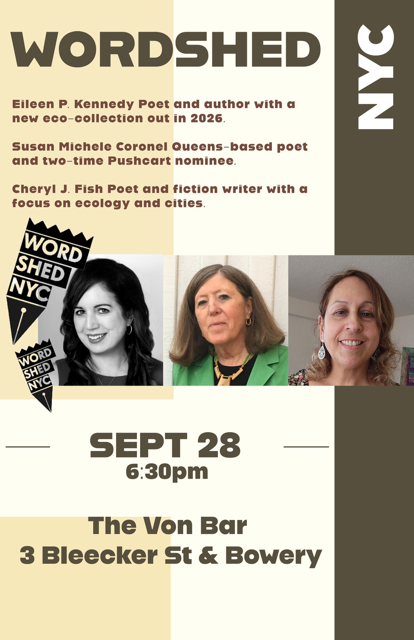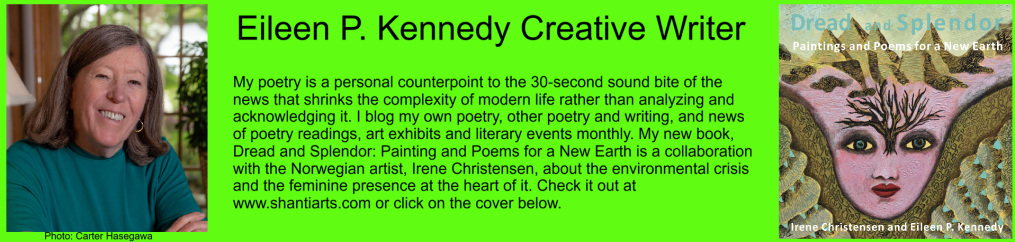
I Will Be Reading from my new book Dread and Splendor at Wordshed, NYC on September 28

Come join us if you are in the area. I will be blogging again monthly about the new book.

Titles

Photo by Mark Neal on Pexels.com

Titles of books, short stories, poems, are very important.

Corporations spend millions to find the name of a product. Thought should be put into how you title your creative product.

Let’s discuss book titles. The first thing anyone hears about is the title of your book. It even precedes the cover. Once the artist knows what the title is, he/she can work on the visual concept. Think about what you will call your book. Here are some things to think about:

.It should give an idea of what the book is about.

.It should be easy to say.

.It should be memorable.

.It should grab your attention.

When we were deciding on a title for our manuscript, Dread and Splendor: Paintings and Poems for a New Earth, we tried out a lot of titles. The first one was “Dreadful Splendor” from a W.B. Yeats poem. This was taken by a previous book, so we changed it to “Dread and Splendor.” We thought this encompassed the “splendor” of the art and poems and the “dread” of the environmental crisis. Then we decided this didn’t really tell what the book was about and we added the subtitle “Paintings and Poems.” At first we had “Paintings and Poems for a New Planet.” But then we thought it sounded too much like speculative or science fiction. So it became “Dread and Splendor: Paintings and Poems for a New Earth.”

The same is true of a short story, poem or play title. Editors look at hundreds of poems and short stories.

If you follow the guidelines above, you’ll draw attention to your piece from the beginning and have less change of being passed over.

Sometimes for titles a phrase can be used from the manuscript can be just the right thing. If you have a concept that is long, write it down and then edit it.

Try discussing your book using the title and seeing if people understand and appreciate what you’re saying. See if they ask questions and are interested in the title and what you have to say.

Choosing the perfect title is mostly about trial and error. If you try out a number of titles, the best one becomes clear.

I will be blogging monthly, taking about the production of Dread and Splendor: Paintings and Poems for a New Planet through publication and beyond. Follow me here.

From What Perspective Do You Tell Your Story

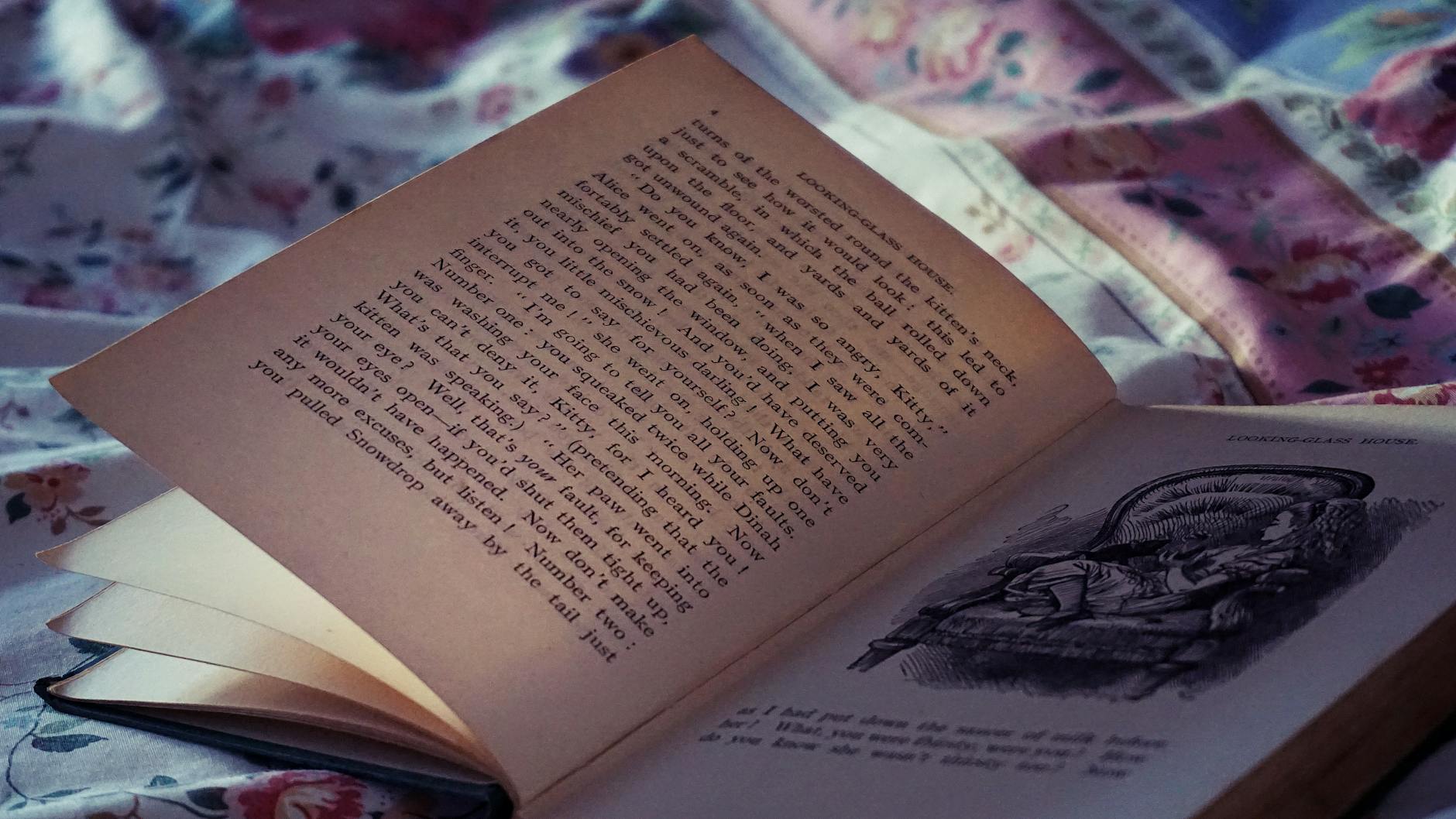
Voice is a rather abstract concept in writing and fiction generally. But it’s so important that it deserves mention as one of the core aspects of writing. Voice, quite simply, is what the narrator sounds like. Voice includes the narrator’s emotions, attitudes, perspective, and tone.


As you read the piece, you can hear the narrator’s voice in your head, and the voice leaps out in a particular and funny way. This is especially true in pieces where the narrator is some kind of interesting or unusual character.

Photo by Pixabay on Pexels.com

Additionally, voice is multi-layered. It includes both the general writing voice of an author, as well as individual voices that are tied to specific pieces of writing. In poetry, you can write a narrative poem in all kinds of voices.

Some writer’s tones are incredibly distinctive, and their sentence structure, length, word choice, and the way the paragraphs flow are original to their writing. In a longer literary work, readers will likely come across different voices as writers create different characters. When considering the difference between the author’s voice and the character’s voice, it’s important to pay attention to when one is used. A character’s voice is specific to a character in a literary work. It is created in order to define them as an individual. Readers should be able to tell the difference between major characters based on their  speaking. One character might be well-educated and prone to using large words, while another might have more basic education and find the former’s use of language elitist.

When using a third-person narrative, the narrator is omniscient or outside and telling about the action. “Half a league, Half a league onward, into the valley of death, rode the six hundred.*” is a famous example of third-person narrative.

First-Person narrative is another way to tell a story. Edna St. Vincent Millay’s “What My Lips Have Kissed and Where and Why” begins “What lips my lips have kissed, and where, and why, I have forgotten, and what arms have lain under my head till morning; but the rain Is full of ghosts tonight, that tap and sigh…” Or this famous line from “The Telltale Heart,” by Edgar Allen Poe It was the beating of the old man’s heart. It increased my fury, as the beating of a drum stimulates the soldier into courage.” The speaker of a first-person narrative does not necessarily have to be the author, but can be totally invented.

However you choose to tell your story, choose your narrator wisely. It will really make a difference in your piece. Follow me here the beginning of the month as I blog about writing, the writing process, and publishing.

*”The Charge of the Light Brigade,” by Alfred Lord Tennyson.

How to Enhance Your Story

Writing a good story is essential to any genre. Story writing is a key element of being a competent writer.

If you want to be as complete a writer as possible, it is important that you know  how to write a good story. Story writing is a common skill for most writers, it is something that most writers take for granted. In truth, you must develop your writing skills to the best of your abilities.

If you want to reach your full potential as a writer, you will need to tell a truly great story. Before you start writing your story though, you should make sure you know what story writing really is, and what the elements are needed. The five elements of a story are character, plot, setting, conflict and resolution.

Photo by Suzy Hazelwood on Pexels.com

This is simple enough, but how do you make your story stand out?

One way to do this is to have your manuscript reviewed by a more experienced writer. There are many writers you can hire to do this or you can join a writing group. A good writing group will put everyone on an equal footing where everyone reads and the group comments on the piece. This can be done in a generative group, where everyone is writing something new right there and everyone shares or a critique group, where a manuscript, or part of one is sent out in advance by a group member and then the group reads it and offers critique. This route can be more difficult to do than paying a consultant, because you will want to feel comfortable with how the group operates before you can feel the feedback is helpful.

I was writing a collection of eco-poetry because I am passionate about climate justice. Then I met the Norwegian artist, Irene Christensen, who was doing a series of paintings about women at the heart of the environmental movement. We decided to collaborate and came up with a 60-page manuscript called Dread and Splendor: Paintings and Poems for a New Earth.

Another way to improve your story writing skills is to read other stories. I try to read something new on a daily basis. The more you delve into new literature, the more concepts and ideas will find their way into your own story writing.

But the most important thing to remember about being a good writer is to keep at it. A good writer writes everyday. Even if what you’re writing that day is not going well, if you keep at it, you’ll eventually get to something that works. You can’t sit down the first time and tell a wonderful, well-written story. It takes practice.

Follow me here on Thursdays. I will be writing about the writing/publishing process and the progress of my manuscript Dread and Splendor: Paintings and Poems for a New Earth.

The Writer’s Notebook

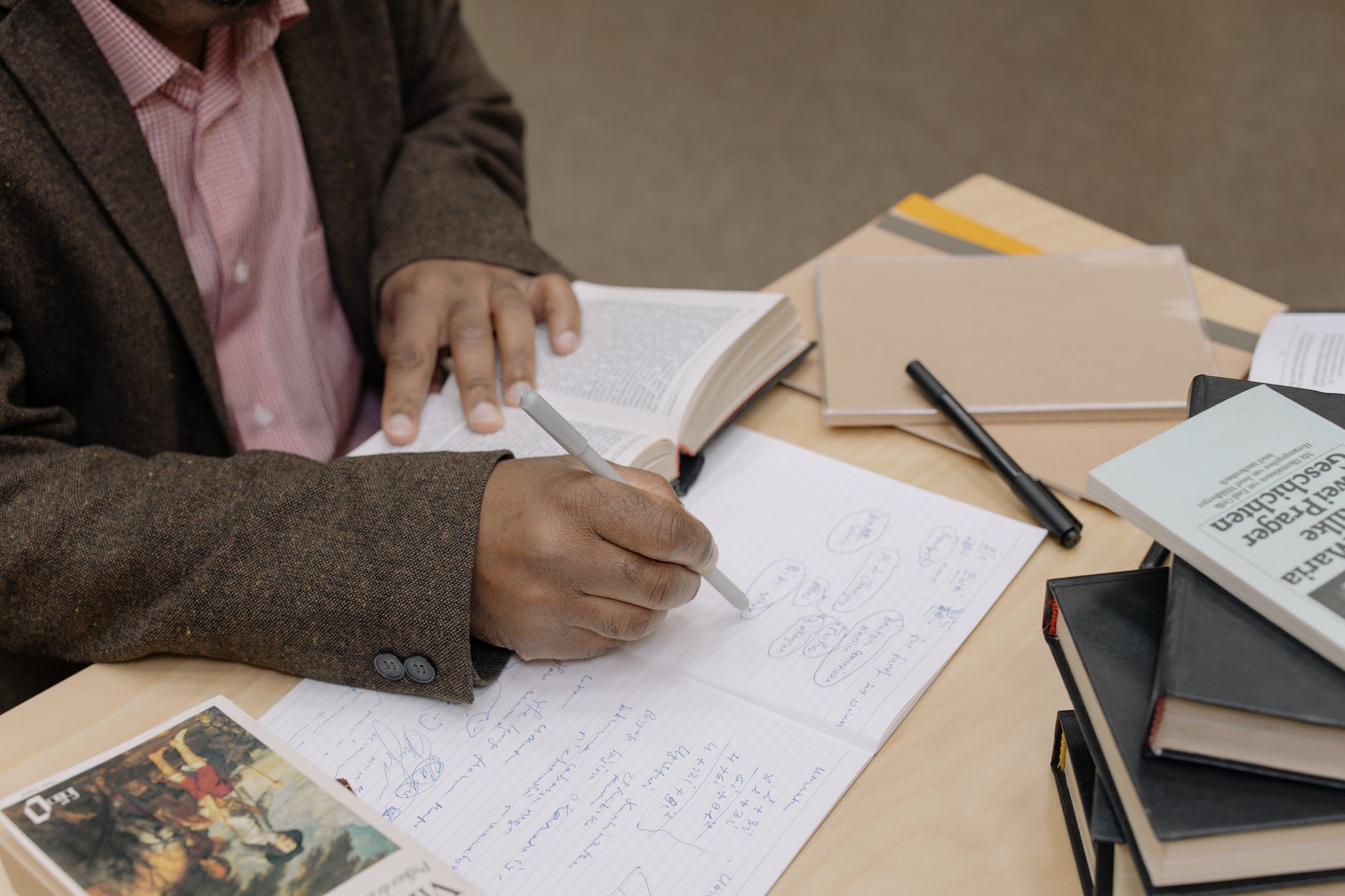
Every writer should keep a notebook or journal. A stray piece of paper wouldn’t do. I have always had a notebook, but I have been using my iPhone as a notebook these last few years. I find that I lose my notebook, but always have my phone. You can also use apps, such as My Journal. I was thinking about the long relationship that I’ve had with notebooks, and their centrality to everything I do, the way that they foster my creativity across years and decades.

I’m sure that’s true of most other writers. And yet, whenever I see guides to keeping a journal online, I rarely recognise my own practice in there. I’ve seen so many idealised journals, designed for public display, written in overly neat handwriting using multi-coloured pens, filled with motivational quotes and orderly bullet points. This kind of journal feels wrong to me, reeking of an overly disciplined school: the people-pleasing, self-conscious, high-pressure spaces of my school books. The tyranny of good presentation and legibility.

Photo by Ayush Meshram on Pexels.com

In my view, a notebook should be unorganized. It should be random thoughts that you want to pick up later. I’ve written many poems from random thoughts I’ve had a movies, while reading, while listening to music, or just going to the supermarket.

Your notebook should be written for nobody’s eyes but your own. It’s a completely private space, where you are the only one writing and reading. You should never show anything directly from its pages, and certainly don’t let anyone have a flick through. This gives you the freedom to write anything in it That might be my darkest thoughts or my fragile feelings; but mostly it’s just terrible writing. Be incoherent, self-pitying, tacky, boring or stupid in this space. It’s nobody else’s business.

I’ll be taking a break from blogging for the month of August. Follow me here again on Thursdays after Labor Day.

Create An Outline for Your Manuscript

An outline for your manuscript to is a great way to start a large book project.

Photo by Ron Lach on Pexels.com

Create an Outline

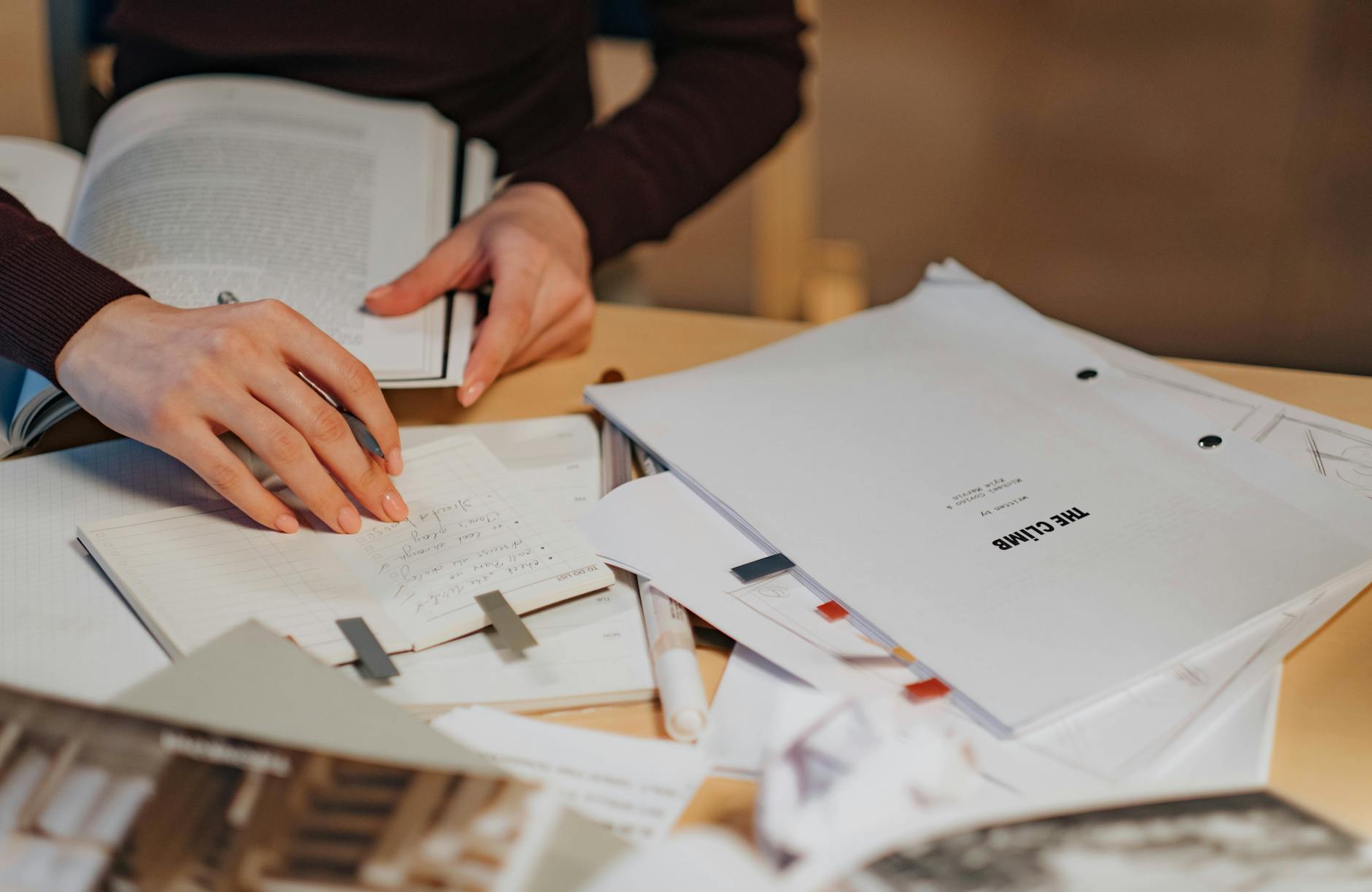
First you want to structure your raw idea into an organized manuscript format. This is where the outline becomes invaluable. Hopefully you have done some research before this stage and have a definite idea of how your manuscript would fit the lists of certain publishers and the overall book market.

Think about a logical sequence and flow. When I do a poetry manuscript, I think about a theme and how my recent poems fit into this theme. I might even have subsections. When I wrote Touch My Head Softly, which was about my partner and Alzheimer’s Disease, it naturally fell into three sections, before, during and after the death. When it came to publishing, my publisher immediately recognized the organization and acknowledged how it would fit into Finishing Line’s line of books for the season.

After you have shaped your outline, you can structure your material into an organized manuscript format. This is where your outline is invaluable. Think about the logical flow and sequence and divide your poems or ideas into coherent chapters and/or subsections.

If there is a chronology that makes sense, then present your content in that way. Determine what information and material belongs in the beginning, middle or end. In the end you will have a well-organized manuscript that you can present to a publisher.

This is what I did for my most recent manuscript, Dread and Splendor: Paintings and Poems for a New Earth. I will be blogging on Thursdays. Follow the progress of my manuscript here.

Creativity and Overcoming the Blank Page

Photo by Pixabay on Pexels.com

Have you ever thought “I have a book inside me, waiting to be written”? As an aspiring author myself, I know that yearning all too well. I spent a lot of time staring hopelessly at blank pages, willing the words to flow but finding only frustration. My dream of writing a book felt out of reach. You may be creative, but if you’re staring at a blank page, it doesn’t matter.

People who are creative are happier, healthier, and less lonely. A published poem can lead to a reading, a painting to an exhibit, a song to a concert. I recently wrote an ekphrastic poem recently to my friend’s painting and she sold it, with the poem. All of these things put us, and our art, out into the world to see and be seen and to interact.

A creative ability is a skill to use our imagination to solve a problem. We may feel stuck with a problem, but if we read up on how other people have solved this, or ask a friend how they solved this, we are using creativity to problem-solve.

You don’t have to be an artist to exercise your creative ability. You can use this skill to fulfill dreams, problem solve, and improve communication skills.

Follow me here. ‘ll be blogging on Thursdays. Good luck with your creative endeavors.

On Your Writing Space

Photo by cottonbro studio on Pexels.com
As a writer, I spend a lot of time in my study. This is a room that need only be inviting to one person—the one who inhabits it. I have a friend who has a very organized study with a clear desk. Unlike my desk, this one is s spacious and clear of the piles of work in progress that amass on my own. She recently pared down her book collection to fit on one small bookshelf. My office, by contrast, has four mismatched shelf units, each overstuffed with reference books, novels I hope to read one day, books on language and literacy, books relating to current projects, and stacks that I hope to get to “soon.” I love my office. Its creative chaos suits me and mirrors my writing process.

I find that writers have very different writing spaces that work uniquely for them. I know someone who works in a coffee shop in the town she lives in. She orders her favorite coffee and stays for the morning. Another friend writes in the library. She likes the quiet it affords her.

I can write in many different settings, at retreats, in my own studio, in writing groups, in the library, in coffee shops.

Where do you like to write? What fits your writing style, your process, your mood?
This study is where I created my latest manuscript, Dread and Splendor: Paintings and Poems for a New Planet. It’s my first collaborative manuscript with my Norwegian artist friend, Irene Christensen.

I’ll be blogging on Thursdays. Follow my blog here and the progress of my manuscript.


Enjoying the Process, As Well as the Product

Photo by Porapak Apichodilok on Pexels.com

“What keeps life fascinating is the constant creativity of the soul.” —Deepak Chopra

In the pursuit of success, we often focus on the end result. In so doing, we neglect interest in the journey because we want to get there as soon as possible or we lose the desire to even reach the destination.

Many artists focus on the final product, but the secret is in enjoying the process of creation

The process itself is a reward. The creative journey should interest you far more than reaching the destination. I am currently working on a manuscript, Dread and Splendor: Paintings and Poems for a New Earth, with the Norwegian artist, Irene Christensen.

We forget forget to enjoy the journey, and in effect, we lose our desire to even reach the destination.Sylvia Plath said, “The worst enemy to creativity is self-doubt.

Creativity holds great significance when it comes to connecting with our soul or authentic self.

By tuning into that creative fire that burns within, we can connect more powerfully with the soul. For some people, creativity can even be more affective at this than meditation.

When we make room for creativity in our lives and activate our creative muscles, it can be transformative. It can strengthen our intuition, release stagnant energy, and align with our larger project, like writing a book or composing a song.

I will be blogging on Thursdays. Follow me here for the journey of the manuscript, Dread and Splendor: Paintings and Poems for a New Earth.

Congratulating Yourself on Finishing a Piece of Writing

Photo by Skylar Kang on Pexels.com

As writers, we often feel that we don’t do enough. We don’t put enough hours into our writing,

we don’t do enough research before writing, and we don’t publish enough. When you finish a

piece of writing, give yourself a pat on the back: You finished a piece of creative writing—

something many attempt, but not quite as many achieve. I recently finished a manuscript called

Dread and Splendor: Paintings and Poems for a New Earth. I collaborated on it with the

Norwegian Artist, Irene Christensen. It’s a collection about the climate crisis and women at the

heart of it. I feel good about completing it.

Some writers consider the worth of their writing in the published pieces, but others don’t even

attempt to publish. The reward for them is in the process. You can share your writing at an

open-mic reading. You can post it online or bring it to an in-person writing group for

constructive critique. You can send it to a friend.

You can send it to a literary journal or an agent for possible publication, but that’s a topic for

another blog. As writers, we need to acknowledge our accomplishments for ourselves.

I’ll be blogging Thursdays about the writing process. Follow me here.