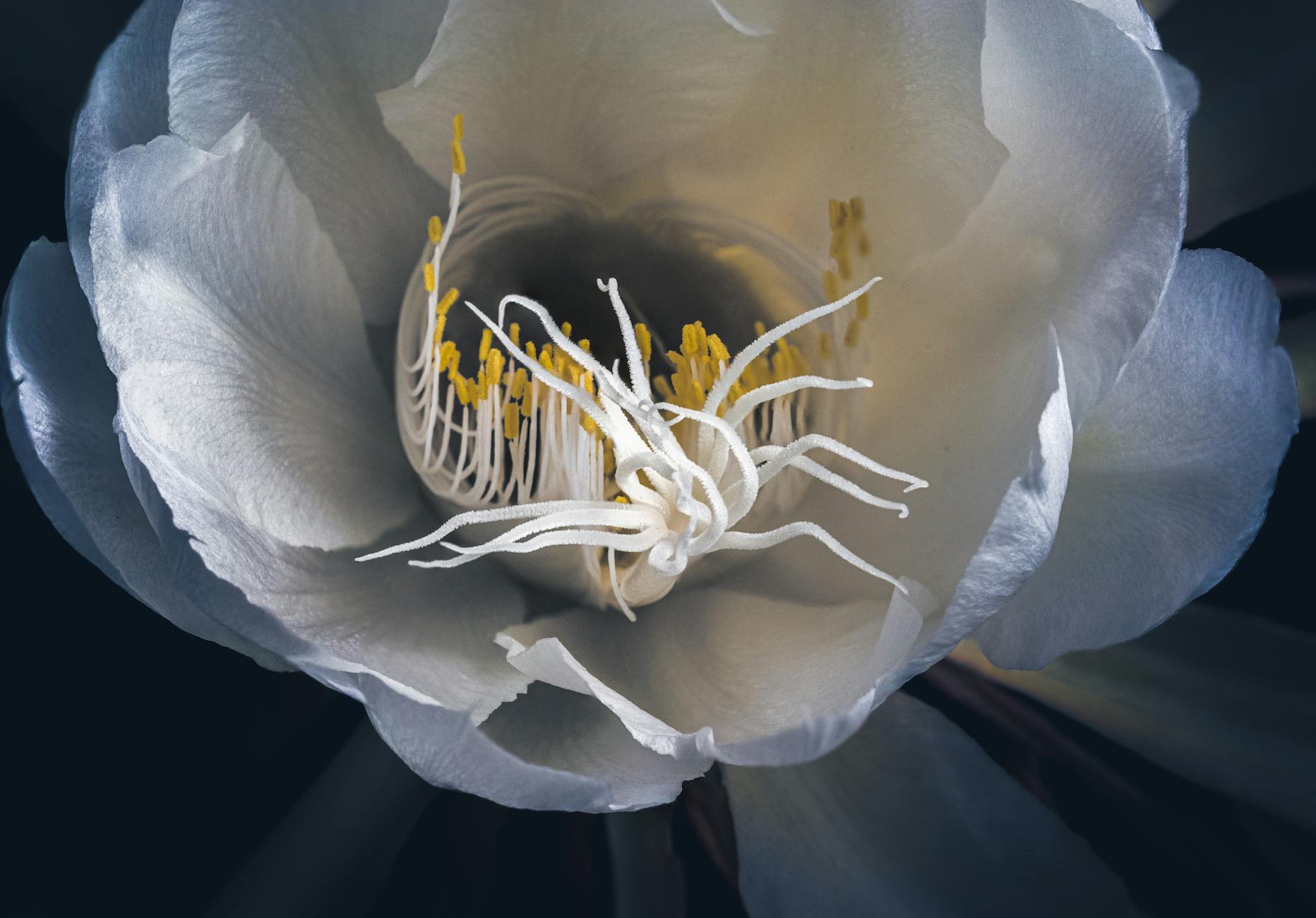
The shadow of the dome of pleasure Floated midway on the waves; Where was heard the mingled measure From the fountain and the caves.
--Samuel Taylor Coleridge (1772-1834)
Coleridge wrote these lines in 1797. Just listen to the rhythm and music in the lines. Coleridge did not publish “Kubla Khan” until 1816, at Lord Byron’s insistence. Coleridge worried about the irregular meter and that sections of the poem were not coherent. Yet, it is considered one of the best poems published in the English Language.
In a sense, that’s fair enough. The poem does not hold to traditional poetic unity in the way other Coleridge work does: his long narrative poems “The Rime of the Ancient Mariner” and “Christabel,” for example, and “Frost at Midnight,” his hymn to fatherhood. The poem began in a drug-induced dream.
So how many of us writers doubt the worth of our writing? Bertrand Russell, a famous writer in his own rite, had three tips for insecure writers:
Learn to recognize your writing insecurities and admit to their existence. You can’t address a problem if you pretend it’s not there. Look at your particular insecurities and recognize them. That way you’ll be prepared when insecurity strikes.
The second is to recognize that you’re not alone in your insecurities. All writers feel insecure about their writing one time or another. If you’re insecure about grammar, work on grammar. Remember no one writes a text right the first time.
The third tip is to let go of any concept of perfectionism that you have. If you finish a text and feel you can do better, it just means that you’re developing some judgmental ability. Being insecure with your writing is part of a writer’s life.
I recently finished a manuscript called Dread and Splendor: Paintings and Poems for a New Earth, with the Norwegian artist, Irene Christensen. Every time I submit a manuscript to a publisher, even though I’ve published three books, my insecurities come to play. The worst that can happen is that it will be rejected and I will submit it elsewhere.
Follow me here on Thursdays as I write about the writing process and the journey of my manuscript.
I will be reading one of my three poems in the anthology
On Sunday, June 3 at 4 pm EST, I will be reading from the anthology, Poetry for the Dementia Journey, along with many other poets included in the anthology, including Gail Thomas, Ellen Rittberg, and Christine Jones. The book officially launches in both paperback and Kindle on June 1st – in time for Alzheimer’s and Brain Awareness Month. The book will also be published with Draft2Digital, which will put it in many other stores, such as Barnes and Noble, Kobo, and Hoopla. The eBook will sell on all platforms for $9.99 and the paperback will sell for $14.99. All royalties will benefit AlzAuthors’ mission to provide quality resources for Alzheimer’s and dementia caregivers. They are a 501(c)(3) non-profit organization. You can order a copy at: https://www.amazon.com/dp/B0D3CCK368.
You can get the zoom link by emailing a request to alzauthors@gmail.com.
Poetry for the Dementia Journey is a moving, hopeful, heartwarming collection all written from the personal experience of dementia. Within its pages, readers will find nuggets of wisdom and glimpses of joy.
Follow me here on Thursdays for more writing and book publishing news.
On Sunday, June 3 at 4 pm EST, I will be reading from the anthology, Poetry for the Dementia Journey, along with many other poets included in the anthology, including Gail Thomas, Ellen Rittberg, and Christine Jones. The book officially launches in both paperback and Kindle on June 1st – in time for Alzheimer’s and Brain Awareness Month. The book will also be published with Draft2Digital, which will put it in many other stores, such as Barnes and Noble, Kobo, and Hoopla. The eBook will sell on all platforms for $9.99 and the paperback will sell for $14.99. All royalties will benefit AlzAuthors’ mission to provide quality resources for Alzheimer’s and dementia caregivers. They are a 501(c)(3) non-profit organization. You can order a copy at: https://www.amazon.com/dp/B0D3CCK368. You can get the zoom link by emailing a request to alzauthors@gmail.com.
This is a moving, hopeful, heartwarming collection all written from the personal experience of dementia. Within its pages, readers will find nuggets of wisdom and glimpses of joy.
Follow me here on Thursdays for more book publishing news.
Zoom in to View Us at the Launch on June 3 at 4 pm.
poetry-for-dj-cover-123650291
The book officially launches in both paperback and Kindle on June 1st – in time for Alzheimer’s and Brain Awareness Month. The book will also be published with Draft2Digital, which will put it in many other stores, such as Barnes and Noble, Kobo, and Hoopla. The eBook will sell on all platforms for $9.99 and the paperback will sell for $14.99. All royalties will benefit AlzAuthors’ mission to provide quality resources for Alzheimer’s and dementia caregivers. We are a 501(c)(3) non-profit organization. You can order the book on Amazon at: https://www.amazon.com/dp/B0D3CCK368
This is a moving, hopeful, heartwarming collection all written from the personal experience of dementia. Within its pages, readers will find nuggets of wisdom and glimpses of joy.
A book launch is planned and includes a virtual reading featuring the poets on Monday, June 3 at 4:00 pm EST. I will be reading at least one of my three poems in the anthology at that time. This will be on Zoom and recorded for both our podcast and YouTube channel.
There’s no money and little interest in poetry. One of the reasons for lack of interest in poetry is the way it was taught in school. You were taught to find a meaning, which is work, like cracking open a walnut and digging out the meat. Sometimes poets add to their own problems by making their poems difficult to understand. A poet has to learn to connect with the audience.
So why do we become poets?
We become poets because we love poetry. When I read a good poem, it totally nourishes me. When I write a good poem, there’s no better feeling. Louise Nevelson, the sculptor, said “I’d rather work twenty-four hours a day in my studio and come in here and fall down on the bed than do anything.”
Seamus Heaney, the Nobel-Prize winning poet said “The aim of the poet and the poetry is finally to be of service to ply the effort of at the individual work into the larger work of the community as a whole.” Here he says the poet makes a contribution to society as a whole. Though it’s amazing to write a poem that pleases the author, to write something that touches the reader is about as good as it gets.
Letting the poem become part of your experience is invaluable. If you read a poem about a robin that touches you, it re-freshens the world. The next time you take a walk and see a robin, you will notice it.
Poets read other poets. This teaches us to write the kind of poems we like to read.
Writing poems can be exhilarating. Joy Harjo the Poet Laureate, says “I don’t know when the first poem was, where it came from, or exactly how. I just know how much I needed it…I was in the dark and decided to investigate the dark to find the light.” Writing poetry is just that, finding the light in the dark.
I collaborated on an eco-poetry manuscript with the Norwegian Artist, Irene Christensen called Dread and Splendor: Paintings and Poems for a New Earth. It’s currently out with publishers being considered for publication.
I’ll be blogging on Thursdays. Follow me here. Let me know about your own writing experiences and I’ll blog about the journey of my eco-poetry manuscript.
As a teacher, I relied on Bloom’s Taxonomy as a model.
As a career educator, I often used Bloom’s Taxonomy. I taught little ones on the elementary school level, and then college students. I always encouraged my students to approach study using this six-step process.
The model was named for Benjamin Bloom, who first came up with it. Here are its six levels:
Knowledge
Comprehension
Application
Analysus
Synthesis
Evaluation
So how do you use Bloom’s Taxonomy to enhance your writing process? I think Bloom’s Taxonomy can be applied to writing. You may come across an idea for your writing and research the topic and comprehend it. Then you can apply it in your writing. In the analysis phase you break down complex ideas about what you’re writing. In the synthesis part you combine the ideas you have generated in the process and make it original, or your own.
In evaluation, you make judgments about the value of what you have created and decide if it is something you want to pursue. As writers, we have all written things we don’t think work, but even if you don’t come out with something good after this process, it’s bound to lead to something worth using later. It’s an exercise in how to get through the writing process, even if it’s not working. Nothing is ever wasted in the creative process.
I started writing an eco-poetry manuscript on my own as I feel passionately about climate justice. Then I met the Norwegian artist, Irene Christensen, and saw some of her paintings about women at the heart of the environmental movement, and decided to collaborate with her. We came up with a 60-page manuscript of ekphrastic poems and paintings called Dread and Splendor: Paintings and Poems for a New Planet. It is currently out being considered by several publishers.
I will be blogging on Thursdays. Follow me here for blogs about the writing/publishing process and the progress of my new manuscript.
A writer’s voice is their distinct worldview, transcribed into words and shared with the audience.
What we term a writer’s voice is the unique fingerprint that separates one writer from the next. It’s the output when writers dredges through the hidden depths of their psyche, confronting fears, dreams, and interests.
How does a writer find his/her voice? Your voice is actually a reflection of your entire personality, including your speech patterns. And you can have more than one voice. I recently collaborated on a manuscript of eco-poetry with the Norwegian Artist, Irene Christensen called Dread and Splendor: Paintings and Poems for a New Earth. In this case, my voice became joined with the visuals of this artist who created a series of paintings about women at the heart of the environmental movement. So in this case, my voice became an extension of the visuals involved.
Your personality comes out in what you write. Even if you use many voices , they’re still created by tone, attitude and style.
Tone in your writing is similar to tone of voice while talking. It’s not what you say—the facts—but how you say or write it.
Attitude is about beliefs, emotion and values. It has to do with how you regard the world and life or how you feel about something. It reveals itself in the way you talk, your body language, and your actions. And your attitude is part of what shapes your writing voice. It’s a lot like a professional singer’s voice.
Style is revealed with vocabulary, sentence structure, grammar, and the technicalities of writing. It also involves who you are and your personal taste or preferences.
What is your writer’s voice? I’ll be blogging on Thursdays. Follow me here.
As a writer, I spend a lot of time in my study. This is a room that need only be inviting to one person—the one who inhabits it. I have a friend who has a very organized study with a clear desk. Unlike my desk, this one is s spacious and clear of the piles of work in progress that amass on my own. She recently pared down her book collection to fit on one small bookshelf. My office, by contrast, has four mismatched shelf units, each overstuffed with reference books, novels I hope to read one day, books on language and literacy, books relating to current projects, and stacks that I hope to get to “soon.” I love my office. Its creative chaos suits me and mirrors my writing process.
I find that writers have very different writing spaces that work uniquely for them. I know someone who works in a coffee shop in the town she lives in. She orders her favorite coffee and stays for the morning. Another friend writes in the library. She likes the quiet it affords her.
I can write in many different settings, at retreats, in my own studio, in writing groups, in the library, in coffee shops.
Where do you like to write? What fits your writing style, your process, your mood? This study is where I created my latest manuscript, Dread and Splendor: Paintings and Poems for a New Planet. It’s my first collaborative manuscript with my Norwegian artist friend, Irene Christensen.
I’ll be blogging on Thursdays. Follow my blog here and the progress of my manuscript.
So said the man who got rid of slavery in the United States. It is an inspirational quote.
How do we as writers stay inspired? Writers have difficulty carving out time and summoning inspiration.
One way that keeps me going is the occasional writing workshop. There are so many opportunities online and in your writing community. I don’t take multi-week workshops unless I’m really trying to focus on something new and learn about it. I just take the occasional one-shot workshop to get some fresh ideas about my writing. Just google under a topic you might find interesting and see what’s available. Sometimes they are free, or very low cost.
Another way of finding inspiration is in a writing group. Listen to what others are reading and hear what they have to say about what you’re working on. Most communities have pockets of writers who meet up. Join a community group and see if you can get invited into a small group of your own. My writing groups have sustained me through the years.
Collaboration is another way I find inspiration. I particularly like collaborating with artists. I like reading a artist’s exhibits. This gives you inspiration and brings people in to see the art or art lovers in to hear some of your writing. It’s a win/win situation. You can also write ekphrastic poetry, or responses to art pieces. I recently did this with the Norwegian artist, Irene Christensen. She did a series of full-color paintings on women at the heart of the environmental movement. I found the paintings so inspiring, I wrote a whole series of ekphrastic poems in response and we wound up developing a 60-page manuscript called, Dread and Splendor: Paintings and Poems for a New Earth.
Follow me here on Thursdays. I’ll be blogging about writing, the writing process, steps to publishing, and the progress of our manuscript, Dread and Splendor: Paintings and Poems for a New Earth.