Writing an Outline for a Book Manuscript

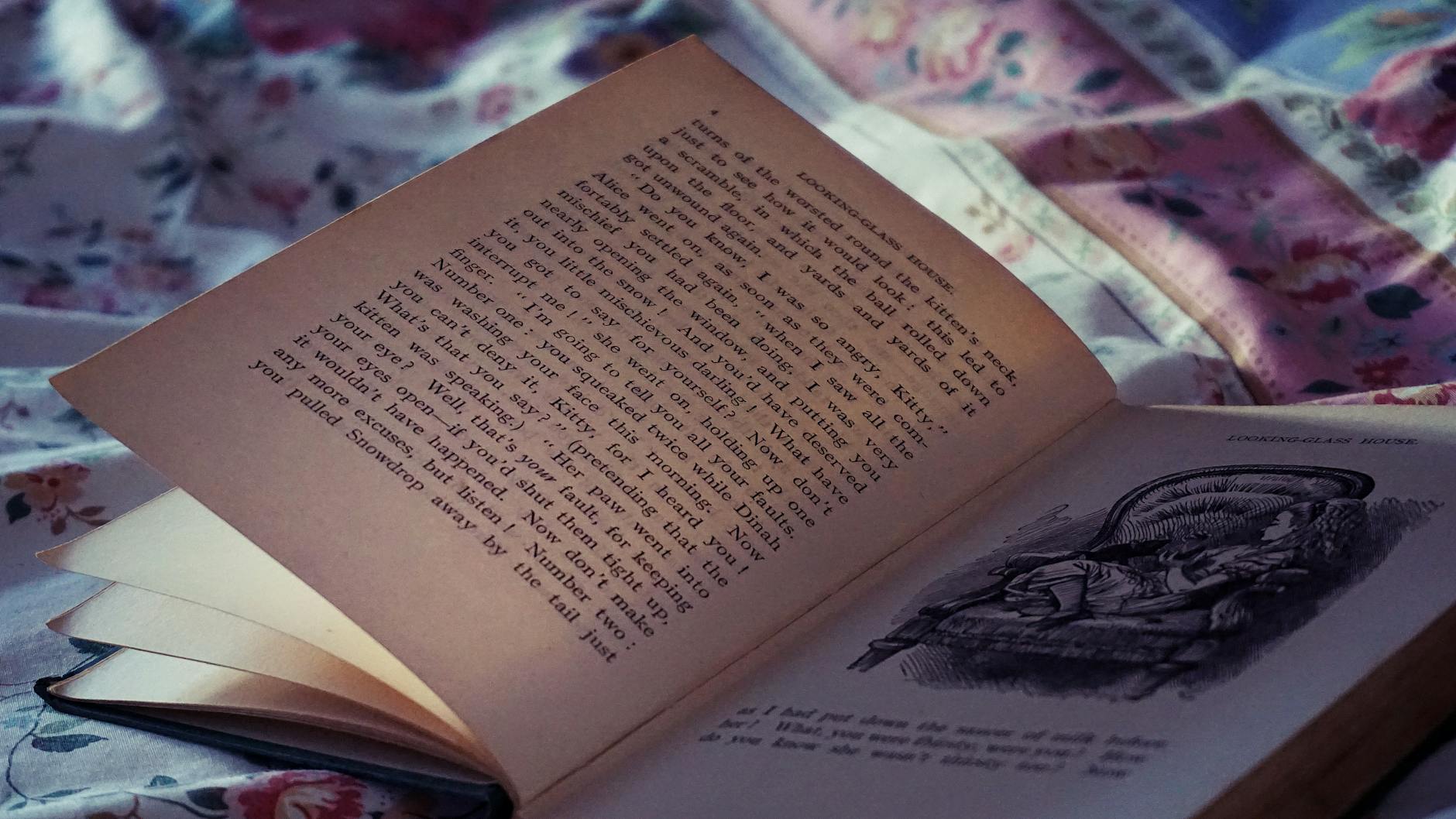
Photo by Pixabay on Pexels.com

Writing a book can be a daunting task, especially for first-time book writers. Where do you even begin? The essential thing in breaking a manuscript down into a doable project is first writing an outline. Some writers fill it in as they go along. These are usually proficient writers who have published many writers. I advise new book authors to plan the manuscript with an outline before they get there. I am a poet and many people don’t see the organization that goes into a collection of poetry.

To start an outline of a collection of poetry, I start with the theme. My last collection of poetry, Touch My Head Softly (Finishing Line Press, 2021) was on the theme of Alzheimer’s Disease. My poems were about my experiences with my partner who died of Early Onset Alzheimer’s. After I decided on the theme, I arranged the poems into three parts: before, during and after the death. This became the outline.

Poets have a singular challenge in developing an outline for a collection of poems. I advise poets to look through the poems they have written and see if a theme emerges. This can come from published and unpublished poems. Poets have a natural penchant for middle, beginning and end, as they need this sense to put a poem together. Also, published poems tend to strengthen a manuscript in the eyes of a publisher as she/he will know that other editors of literary journals and anthologies valued your work enough to publish it.Just make sure most of the poems are new when you submit the manuscript to a publisher.

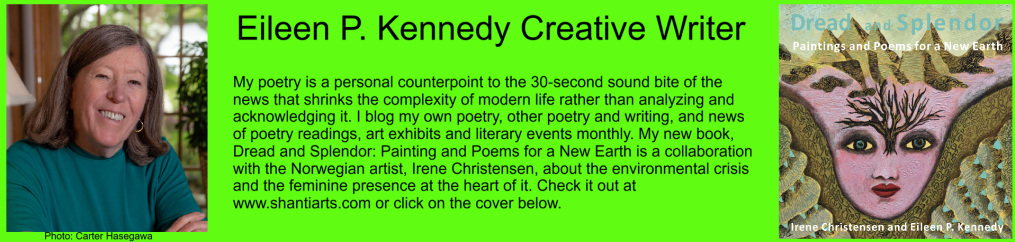
The organization of my upcoming manuscript Dread and Splendor: Paintings and Poems for a New Earth (Shanti Arts, 2026) was very different than Touch My Head Softly. I collaborated on this book with the Norwegian artist, Irene Christensen, who did a series of paintings on women at the heart of the environmental crisis. This informed the organization of the manuscript as there was a visual with each poem. We organized the manuscript together, taking into account the content of both the paintings and poems.

Once you have organized your manuscript and perhaps have a trusted colleague or mentor look it over, you may be ready to send out your manuscript. At this point, you need to start developing your query letter to a publisher. I will blog another week on writing a good query letter.

Follow me here on Thursdays as I talk about the development of my new collection, Dread and Splendor: Paintings and Poems for a New Earth and the writing process.

Overcoming the Blank Page

Photo by Marta Nogueira on Pexels.com

I have just delivered a finished manuscript to a publisher. This is the time I look forward to the new project. But what will that new project be?

Have you ever thought “I have a book inside me, waiting to be written”? As an aspiring author myself, I know that yearning all too well. I spent a lot of time staring hopelessly at blank pages, willing the words to flow but finding only frustration. My dream of writing a book felt out of reach. You may be creative, but if you’re staring at a blank page, it doesn’t matter.

People who are creative are happier, healthier, and less lonely. A published poem can lead to a reading, a painting to an exhibit, a song to a concert. I recently wrote an ekphrastic poem recently to my friend’s painting and she sold it, with the poem. All of these things put us, and our art, out into the world to see and be seen and to interact.

A creative ability is a skill to use our imagination to solve a problem. We may feel stuck with a problem, but if we read up on how other people have solved this, or ask a friend how they solved this, we are using creativity to problem-solve.

You don’t have to be an artist to exercise your creative ability. You can use this skill to fulfill dreams, problem solve, and improve communication skills.

I’ll be blogging here on Thursdays. Follow me here as I propose a new project.

Collaboration Can Build a Friendship

Collaboration is working with another artist/writer, in whatever capacity that may be. I published three books on my own, but my latest collection is eco-poetry with a painter who is very concerned about the environmental crisis. We met in Costa Rica. I saw her art, she read my poems, and a collaboration began.

A book I recently read, A Friend Sails in on a Poem, celebrates the friendship of Molly Peacock and her poet friend of 46 years, Phillis Levin. According to the book “they have read and discussed nearly every poem they’ve written, creating an unparalleled friendship.” It puts me in mind of all the years I have sat in writing groups reading to my writer friends and seeking their support in my endeavors. It was aptly enough, given to me by a writer/artist friend, Holly Woodward. It’s dedicated to “all friends who make art together.” It put me in mind of all of the friendships I have made with other artists and how easy it is to take these relaltionships for granted.

The past two years I have been collaborating with the Norwegian artist, Irene Christensen, pictured on the left above. We met at the Julia and David White Artist Colony in Costa Rica years ago and it was our mutual love of nature and art through the years that eventually led to our collection of eco-poetry and art called Dread and Splendor: Paintings and Poems for a New Earth.

I guess when one artist collaborates with another, it creates an understanding of the other’s artists’ work that wouldn’t have been possible otherwise. Irene created a series of paintings about women at the heart of the environmental movement. I responded to these evocative paintings in the best way I know, through poetry. 

Yesterday. Oil, 16” x 12” by Irene Christensen

I find that the combination of painting and poem together merge and the separate works of art become something new. It’s a way of communicating in art that transcends painting or poem alonge.I responded to Yesterday with a poem called “She Occupies Time,” which begins “no quiet merging with the azure, but an orangesky, the earth bizarre with diasporic life.” 

Irene Christensen, the artist, started exhibiting her paintings with the poems I had written for them. Perilous Journey at the Galleries of the Interchurch Center in New York City. Queen of the Woods was exhibited with poem and painting at the Voices of the Earth Exhibition in Galleri Schaeffers Gate 5, Oslo,Norway. The painting and poem were sold together as that’s what the buyer wanted, the experience of having both the poem and painting together in his home.

The experience of collaborating and supporting each other as writers and artists is an invaluable part of the process. What has your interpersonal journey been like as a writer or artist?

I will be continuing the journey of our manuscript, Dread and Splendor: Paintings and Poems for a New Earth each week on Thursdays. Follow me here.

Submitting Poetry to Online Journals Who Accept New Writers

Photo by William Fortunato on Pexels.com

Finding the right home for your poetry can take a lot of time and research. I often submit to online journals because I want to demonstrate to my book publisher that there is a market for these poems. One way of doing that is to have literary journals publish them. These then become the “Acknowledgements” at the back of your book manuscript.

Another reason to submit online is because it builds your portfolio when you’re trying to submit to more prestigious print journals. Online journals can be a great first place to submit when you don’t have many or any publications.

Here are some places to start:

Barren Magazine https://barrenmagazine.com/ publishes monthly in all genres. They lean toward introspective poetry.

Euonia Review https://eunoiareview.wordpress.com/submissions/ accepts original poetry as well as reprints, but you must retain the rights to them. They also respond quickly, sometimes within 24 hours. They accept up to 10 poems at a time.

The Meadow https://authorspublish.com/the-meadow-now-seeking-submissions/ publishes both in print and online. They publish multiple genres of new and established writers. They nominate for the Pushcart Poetry Prize, so if you get published by them, you are eligible for this prize nomination.

Ghost City Review https://ghostcitypress.com/submit publishes in multiple genres, but do not accept simultaneous submissions. This means you can only submit to them individually and not to other journals at the same time.

Roses and Wildflowers https://societyforritualarts.com/rw/2024-spring/submission-guidelines/ publishes on themed issues. They publish in Spring and Fall and there is always a theme. Check their website for themes.

Starry Starry Kite https://starrystarrykite.substack.com/about is published monthly and welcomes new and established writers. They also do interviews with featured writers.

When I submitted my manuscript, Dread and Splendor: Paintings and Poems for a New Earth for publication, I had several acknowledgements from different journals, including online ones like Starry Starry Kite and Wordpeace. This assures the publisher you’re submitting to that journals were already interested in publishing some of the work in the manuscript. We submitted to four publishers and got offers from two. We ultimately wound up signing with Shanti Arts. The book should be out in early 2026.

Follow the journey of my book, Dread and Splendor: Paintings and Poems for a New Earth, which is a collaboration with the Norwegian artist, Irene Christensen. I will blog about it here on Thursdays.

Developing a Book Cover

Every book needs a cover. This process of development has varied with each book I’ve published. My first publisher, Prentice Hall, just did the design, which was a photograph of a teacher in a classroom with the book title on front. I approved it, but otherwise was not involved. The next publisher, Flutter Press, did not get involved with book covers. She suggested a book designer, Jasmine Hernandez. Jasmine ran several designs by me until I was happy with the cover and Banshees was launched.

The next publisher was Finishing Line Press of my poetry collection, Touch My Head Softly, about my experience with my partner’s Alzheimer’s Disease. This publisher designed its own covers from a photograph you suggested. I liked the way Jasmine had designed my previous whole cover. I asked Finishing Line Press if I could do my own cover with a designer and deliver it for publication. Jasmine suggested several designs, including a drawing of a brain, with the title inserted across it. I thought the brain worked well and was appropriate for the content. That’s what we went with and is pictured above.

For the upcoming book,  Dread and Splendor: Paintings and Poems for a New Earth. my collaborator is an artist, Irene Christensen. She is coordinating the design with the publisher, Shanti Arts. She suggested a painting from the collection, which is comprised of an equal amount of paintings and poems. The painting is “The Goddess Speaks.” (pictured herewith). We also provided our bios, head shots, and endorsements from other art curators/writers for the back. Irene and Christine, my publisher, are still working this out together. I look forward to seeing the final cover and how it evolves.

We’re delivering the final manuscript and art at the end of this month. The cover will be developed after that. The book is scheduled for publication in early 2026. Follow me here on Thursdays as I blog about the publishing process and this book specifically.

Writing the Landscape

Photo by eberhard grossgasteiger on Pexels.com

A lot of the writing that I particularly love about landscape is immersive and meaningful. Every place has a unique quality. When writing about the environmental crisis, as I did in Dread and Splendor: Paintings and Poems for a New Earth (upcoming, Shanti Arts.), it adds another layer to the landscape and the valuing of it. Then writers add this sense of it: their own associations, their own experiences.

I think of sense of place is a layered, multi-faceted thing. It’s not only a sense of emotional connection with landscape, an insight into how that landscape is inhabited—peopled and animal-ed—but a sense of story. It’s also an invitation to explore and investigate and listen and engage the senses. The paintings and poems from Dread and Splendor are from all over, Norway, New York City, Costa Rica, India and more.

Joan Didion has written many books about place, including Central America and California. She emotionally engages with the places she’s at. Didion has been described by Martin Amis “as the poet of the great California emptiness.” California has had its fair share of wild fires that have seriously altered the landscape since Didion wrote about it.

Dread and Splendor: Paintings and Poems for a New Earth is about women at the heart of the environmental crisis. Irene Christensen, a Norwegian artist, did a series of paintings on this topic. I wrote poem responses to the paintings. I had to write about a dystopic landscape set in the not-too-distant future. Many landscapes are endangered as we ignore the warning signs of the planet’s destruction

Our manuscript/artwork will be delivered to Shanti Arts at the end of the month. It is scheduled to be out in early 2026. Follow me and the book here on Thursdays.

Getting a Manuscript Ready for Publishing

Photo by Ron Lach on Pexels.com

When you finally land that book contract, you have to deliver the final manuscript. I recently signed a contract with my publisher, Shanti Arts, for my manuscript, Dread and Splendor: Paintings and Poems for a New Earth.  It was more complicated than my two previous poetry collections for two reasons. The paintings and poems were a collaboration between myself and the Norwegian artist, Irene Christensen. Also, we got two offers for publication, Shanti Arts and the publisher of my previous collection, Finishing Line Press. 

It took several weeks to talk with both publishers and figure out, with my collaborator, which publisher was the right fit. I had a good relationship with Finishing Line Press and its publisher, Leah Maines. I had published my last book with them, and had a good experience with it. Finishing Line offered a higher royalty rate and I knew they were more proactive about promoting their new titles than most publishers. But they offered the contract to me and not my collaborator, Irene Christensen. We collaborated together from the beginning on the project. Shanti Arts is an arts publisher who offered us both a contract, but is not known for new book promotion. Irene and I decided to go with Shanti Arts.

Now I am in the process of preparing the manuscript for publication. As a poet, I want to put my best work into the published product. I have been workshopping my poems from the manuscript in my writing groups, relying on my fellow writers to help me edit and rewrite. I then have to pass them by my collaborator, Irene, who supplies the paintings that I responded to in poetry. Finally, I have to get it to my publisher, Christine Brooks Cote. Irene has to have the artwork ready as well.

After Christine receives the manuscript, it takes her a year to publish, with much going back and forth. Since there is a full-color painting with every poem, it takes longer to publish.

I will keep you posted here on the upcoming process, from contract to published book, and beyond. Follow me here on Thursdays.

How to Enhance Your Story

Writing a good story is essential to any genre. Story writing is a key element of being a competent writer.

If you want to be as complete a writer as possible, it is important that you know  how to write a good story. Story writing is a common skill for most writers, it is something that most writers take for granted. In truth, you must develop your writing skills to the best of your abilities.

If you want to reach your full potential as a writer, you will need to tell a truly great story. Before you start writing your story though, you should make sure you know what story writing really is, and what the elements are needed. The five elements of a story are character, plot, setting, conflict and resolution.

Photo by Suzy Hazelwood on Pexels.com

This is simple enough, but how do you make your story stand out?

One way to do this is to have your manuscript reviewed by a more experienced writer. There are many writers you can hire to do this or you can join a writing group. A good writing group will put everyone on an equal footing where everyone reads and the group comments on the piece. This can be done in a generative group, where everyone is writing something new right there and everyone shares or a critique group, where a manuscript, or part of one is sent out in advance by a group member and then the group reads it and offers critique. This route can be more difficult to do than paying a consultant, because you will want to feel comfortable with how the group operates before you can feel the feedback is helpful.

I was writing a collection of eco-poetry because I am passionate about climate justice. Then I met the Norwegian artist, Irene Christensen, who was doing a series of paintings about women at the heart of the environmental movement. We decided to collaborate and came up with a 60-page manuscript called Dread and Splendor: Paintings and Poems for a New Earth.

Another way to improve your story writing skills is to read other stories. I try to read something new on a daily basis. The more you delve into new literature, the more concepts and ideas will find their way into your own story writing.

But the most important thing to remember about being a good writer is to keep at it. A good writer writes everyday. Even if what you’re writing that day is not going well, if you keep at it, you’ll eventually get to something that works. You can’t sit down the first time and tell a wonderful, well-written story. It takes practice.

Follow me here on Thursdays. I will be writing about the writing/publishing process and the progress of my manuscript Dread and Splendor: Paintings and Poems for a New Earth.

On Using the Pause in Your Writing

Photo by Ekaterina Pashkevich on Pexels.com

“How much better it seems now, than when it is finally done. How hungrily one waits to feel the bright lure seized, the old hook bitten.

–Dana Gioia

Writers have been using “the pause” in their writing for a long time. This is a space between writing sessions where the writer breaks off before the piece is finished, and think about the piece in between. Many famous artists used this method from Hemingway to Beethoven. For creatives, it’s a way of keeping going when you know something is unfinished.

This “pause” taps directly into the creative process. Unfinished tasks stay in the psyche and urge the artist to be finished. Hemingway liked to stop in the middle of a sentence. Then he would think about the passage he had left behind until he was able to return to his work.

Artists don’t finish great works in one sitting anyway. Picasso would start multiple paintings at once and pause before each one was finished. Maya Angelou would stop mid-paragraph, if she felt it wasn’t going quite right. Pausing creates a discomfort for the artist. The artist is uncomfortable when the piece is left unfinished and wants to get back to it, maybe after many pauses, and finish it. The pull of the unfinished will bring the artist back to where he/she left off.

The pause is not complicated. It’s not something that requires hours of training or discipline. It’s just the call of the unfinished; the itch that needs to be scratched; the natural calling back to the page.

When I wrote my latest manuscript, Dread and Splendor: Paintings and Poems for a New Earth, it took me two years. It was my first collaborative effort with the Norwegian artist, Irene Christensen. We started the project in Costa Rica, where we had casitas close to each other in an artists colony, but later there were many pauses as we communicated across continents. She met me at my house in Massachusetts and I met her several times in New York City. But most of the reconnecting was done via internet or phone.

The manuscript has now been accepted by two publishers and there will be pauses and reconnecting again as we move forward with our new publisher, Shanti Arts. I will blog on Thursdays. Follow me here.

Creativity Gets Stimulated By Exercise

Many writers, including me, exercise as part of their creative process. The physical state of our bodies, and our willingness to routinely move them through space to the extent we are able, can either serve or subvert the quest to create. I am in the process of preparing my manuscript, Dread and Splendor: Paintings and Poems for a New Earth, for final submission to my publisher, Shanti Arts. I signed the contract, with the artist Irene Christensen, in October, and now I have to deliver the manuscript.

According to a new study by Scientific Reports* “the pattern of findings argues for shared variance between bodily movements and creativity or fluency and originality.”

Photo by Taryn Elliott on Pexels.com

There are studies about how aerobic exercise both increases the size of the prefrontal cortex and facilitates interaction between it and the amygdala. This is important to creators because the prefrontal cortex is the part of the brain that helps tamp down the amygdala’s fear and anxiety signals.

Dr. Jennifer Heisz, author of Move the Body, Heal the Mind, shares deeply compelling insights and research about the connection between movement and anxiety, depression, working memory, mental flexibility and creativity

I swim everyday first thing in the morning, then I write. I have been following this pattern for years and find it works for me. Artists, writers and any other driven creators use movement as a powerful tool in the quest to help transform the persistent uncertainty, fear, and anxiety that accompanies the quest to create,

Anyone involved in a creative endeavor might consider movement, as a potent elixir to help transform the uncomfortable sensation of anxiety from a source of pain and creative stagnation into something not only manageable but usable.

A growing body of research on the therapeutic effect of exercise on anxiety, mood, and fear illustrates the often sustained anxiety that rides organically along with the uncertainty of creation. As artists, we need to cultivate the energetic capacity needed to give our brains what they require to function long enough, and at a high enough level, to have even a shot at closing the gap between idea and performed piece or manuscript. We need to not only train in the craft, but also do what we can to equip ourselves to flourish along the way.the creative process, especially in the context of a larger work, is a survival event.

What form of exercise do you use to feed your creativity? As I prepare the final manuscript, Dread and Splendor: Paintings and Poems for a New Earth, to my publisher, Shanti Arts, I depend on exercise to help me through. Swimming is one of the things that stimulates my writing each morning.

I will blog on Thursdays about the writing process and the submission of the final manuscript, and publication of my book. Follow me her on Thursdays.

*“Everyday bodily movement is associated with creativity independently from active positive affect” by Rominger, et al. Scientific Reports.