Writing is necessary for so many things. We need it to exist in the world.
At school, we are judged and given grades by how well we perform on paper. The academic essay is the ultimate test.
To communicate at a distance with friends and loved ones, we need to know how to write.
Writing falls into all genres. From realistic fiction to mysteries to sci-fi to poetry to academic papers, your writing is only limited by your imagination.
I have written in many genres. I am specializing in poetry these days. I recently published a collection of poems called Touch My Head Softly about my partner who died of Alzheimer’s. Take a look:
Finding your own unique voice in your writing can be a challenge, but one worth pursuing.
One way to begin is by finding unique voices that you like in published writers. Billy Collins suggests finding a poem that you like and writing it out to discover exactly what makes it unique. What is it that drew you to it? The language, the topic, the genre? No matter what you’re writing: creative nonfiction, a blog, a poem, read other writers who have been successful in that genre.
But in the end, there’s only one unique you who has your own story to tell. You don’t necessarily have to write memoir or autobiography, but bring your own individual experiences to your writing. Focus on what you know, what interests you. If you love food, eating it, growing it, cooking it, write about that in a nonfiction article. If you’re a birder, out mornings observing birds, bring birds into your poem or short story.
I recently published a collection of poems about Alzheimer’s Disease, which I knew through my experiences with my partner. It was published by Finishing Line Press. Take a look:
Weather can be a major factor in a story or poem. If you look out your window, you can be inspired. I live in Western Massachusetts, where they say “If you don’t like the weather, just wait.” It changes rapidly from beautiful sunny days, to mist, to rain, to snow, sometimes in the same day. I usually spend some time in Costa Rica in the winter, where I am now, where there are many ecosystems in a little country, including temperate, dry, tropical, sub-tropical. There is a dry and a rainy season, and the winds, called Papagayo, blow across the Cordillera del Talamanca.
Think of all the climates in novels. British author J. Ballard in The Wind from Nowhere, creates a dystopia in which hurricane-force winds dominate the climate. Mother of Storms by John Barnes describes a catastrophic weather change caused by a nuclear explosion. Margaret Atwood’s Oryx and Crake, where the world is divided into gated communities and pleeblands where the working class lives in unsafe, populous and polluted communities. Weather in a book an be a plot motivator or scene setter.
And where would we be without nature poems. Think of William Wordsworth, “I Wandered Lonely as a Cloud,”
I wandered lonely as a cloud That floats on high o’er vales and hills, When all at once I saw a crowd, A host, of golden daffodils; Beside the lake, beneath the trees, Fluttering and dancing in the breeze.
March has brought unusually beautiful weather Costa Rica, with sunny skies, and wind blowing cooling breezes through the mountains. I hear the Northeast has been engaged in “glorious spring” with temperatures largely in the 60’s Fahrenheit.
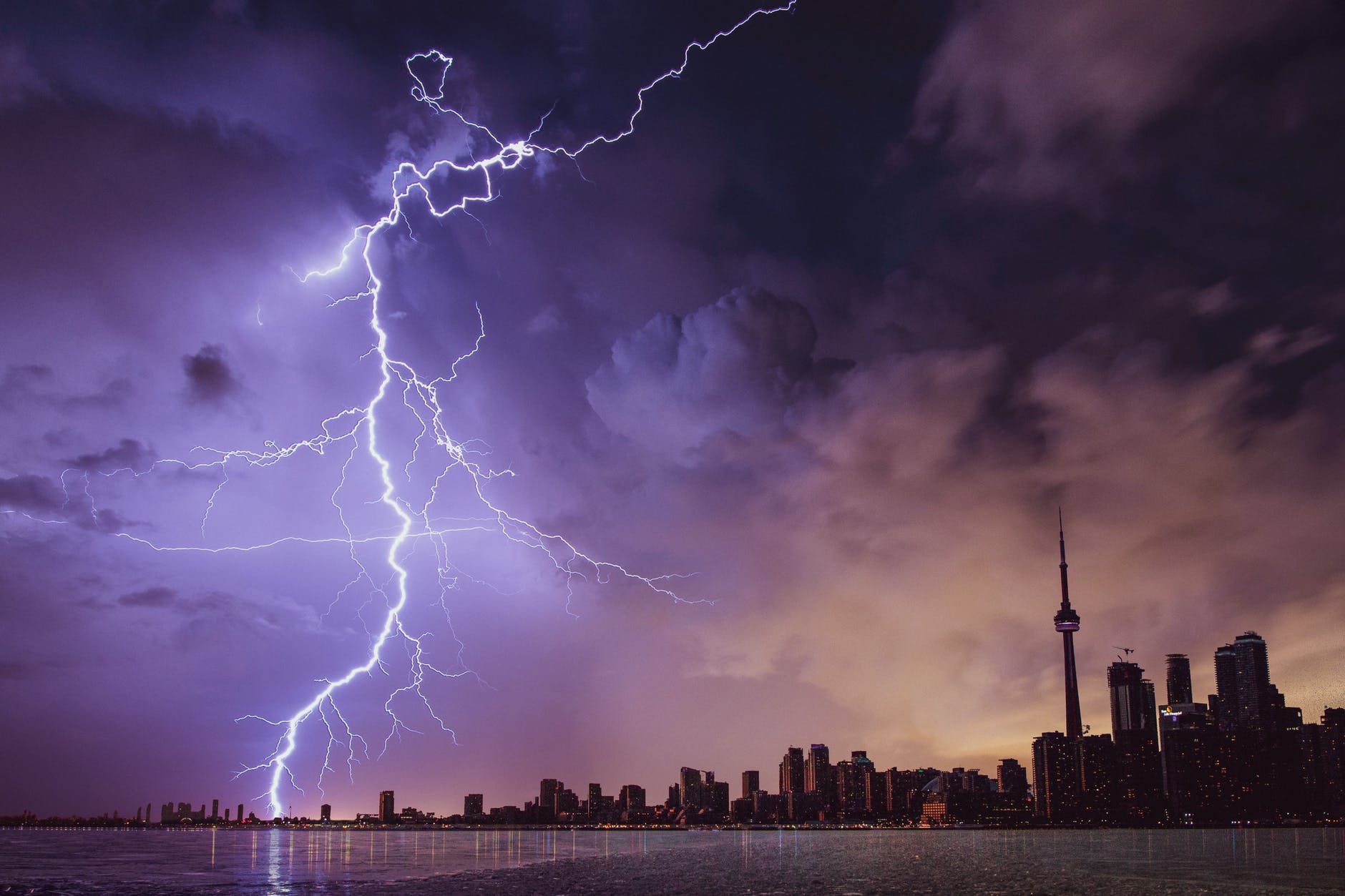
Storms really are unpredictable. They can add an interesting plot twist to a novel, or line to a poem. And they can move from dangerous, unpredictable weather, to rainbows and sunshine. How does this affect your plot?
In my latest book of poetry, Touch My Head Softly, the story involves my lover who had dementia. While I see an “unrelenting grey,” my partner, in his altered state, sees “white lilies surviving frost.”
I like this positive quote by Norton Juster. Possibility/Probability theory is a mathematical concept that Zadeh (1978) put forth as a possibility/probability consistency theory. I consider it more as an optimistic outlook. The Oxford dictionary defines it as a thing that may happen or be the case.
If you have possibilities, you are optimistic about the future. When my ex-partner died of Alzheimer’s Disease in his sixties, I felt pessimistic. My possibilities seemed limited. Then I wrote a book of poems about the experiences. This was recently published in a collection called, “Touch My Head Softly,” by Finishing Line Press. I opened up many possibilities for me, as well as giving me closure on much of my grieving.
Here is the link to my book at Finishing Line Press:
I have been journaling for many years. I used to use pen and a notebook. Now I journal on my Microsoft Word App on my iPhone. I just find that while I may not always have my notebook, I tend to always have my phone. I journal snippets of ideas that I may later develop into a writing piece or poem. Do you journal? When? How?
I have a new collection of poetry out that started with my journal. It will be out soon from Finishing Line Press:




 Eileen P. Kennedy Author