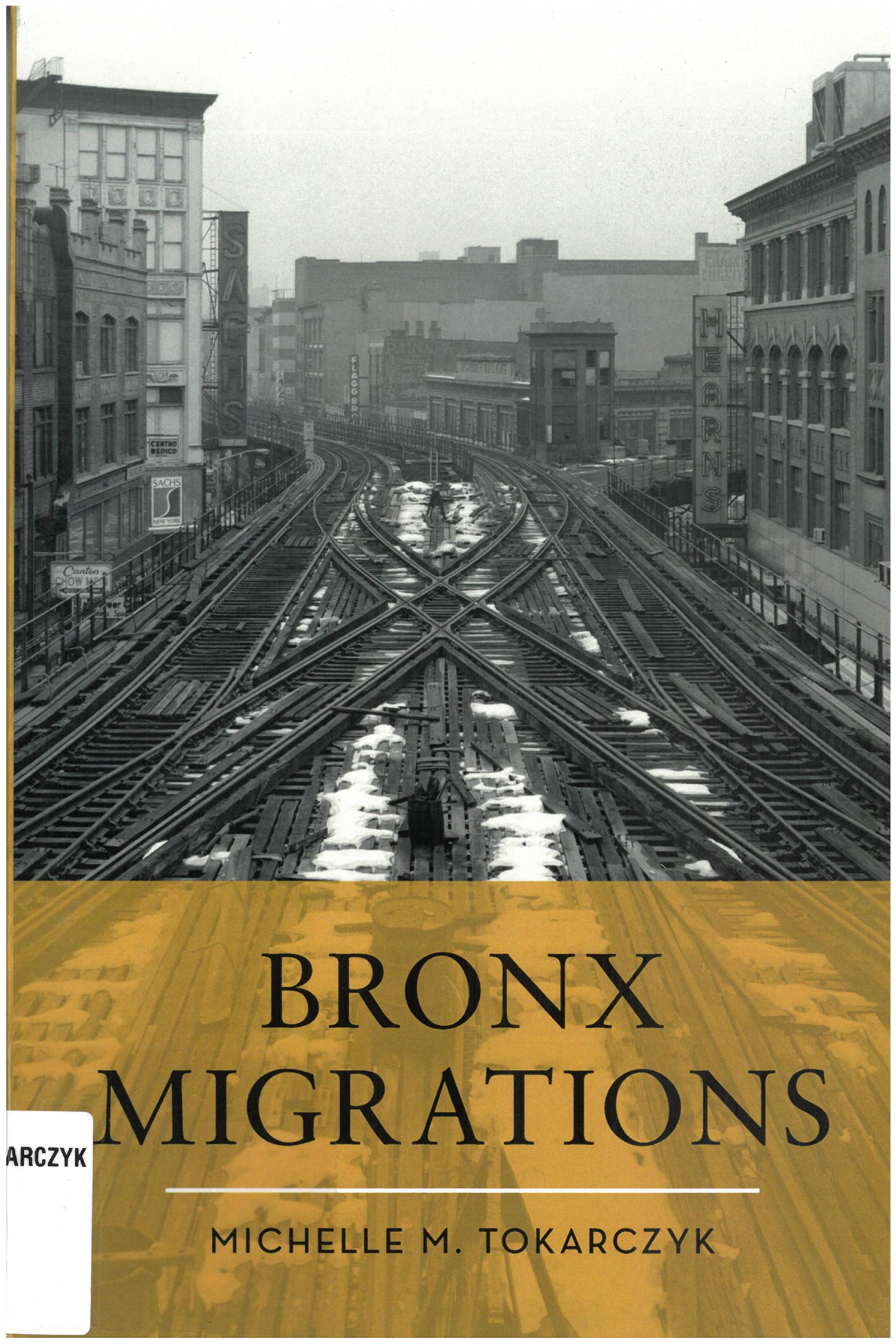
Michelle M. Tokarczyk will read from her book, Bronx Migrations on Tuesday, October 10 from 6:30 to 7:30 pm at the Hudson Park Library, 66 Leroy Street, New York, NY 10014
Tokarczyk has authored two other poetry books: The House I’m Running From and Galapagos: Islas Encantadas. Her poems have been published in numerous journals and anthologies and have received nominations for Pushcart and Best of the New awards.
Attend and enjoy her poetry.
I will blog on Thursdays. If you have an upcoming reading, let me know and I’ll blog it. Follow me here.
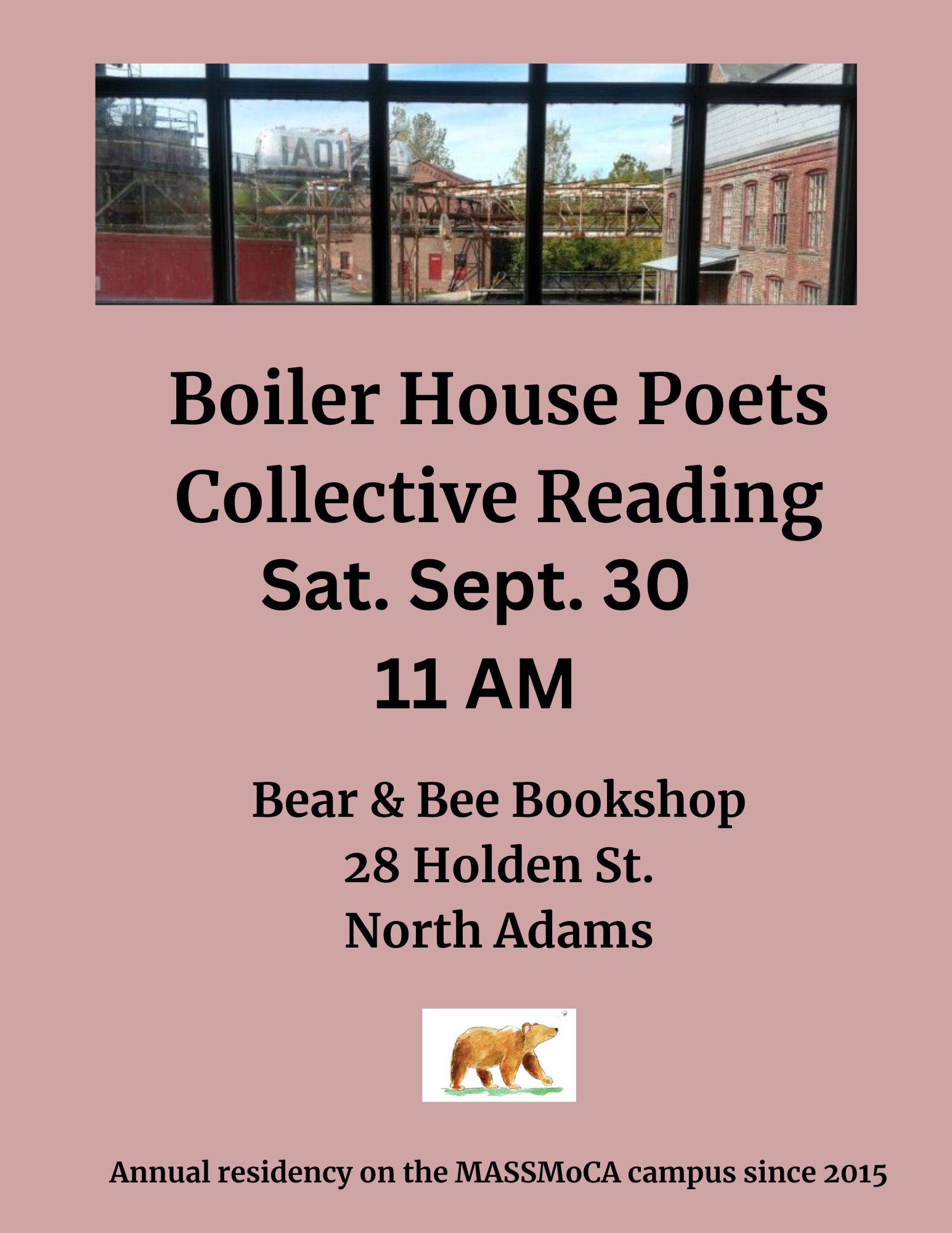
The Boiler House Poets, part of the Annual Residency at MASSMoCA, will do a collective reading on Saturday , September 30, at 11 am at Bear and Bee Bookshop, 28 Holden Street, North Adams, Massachusetts. It looks like an exciting reading.
I will continue to blog on Thursdays. If you have an upcoming reading or art exhibit, let me know and I’ll blog it.
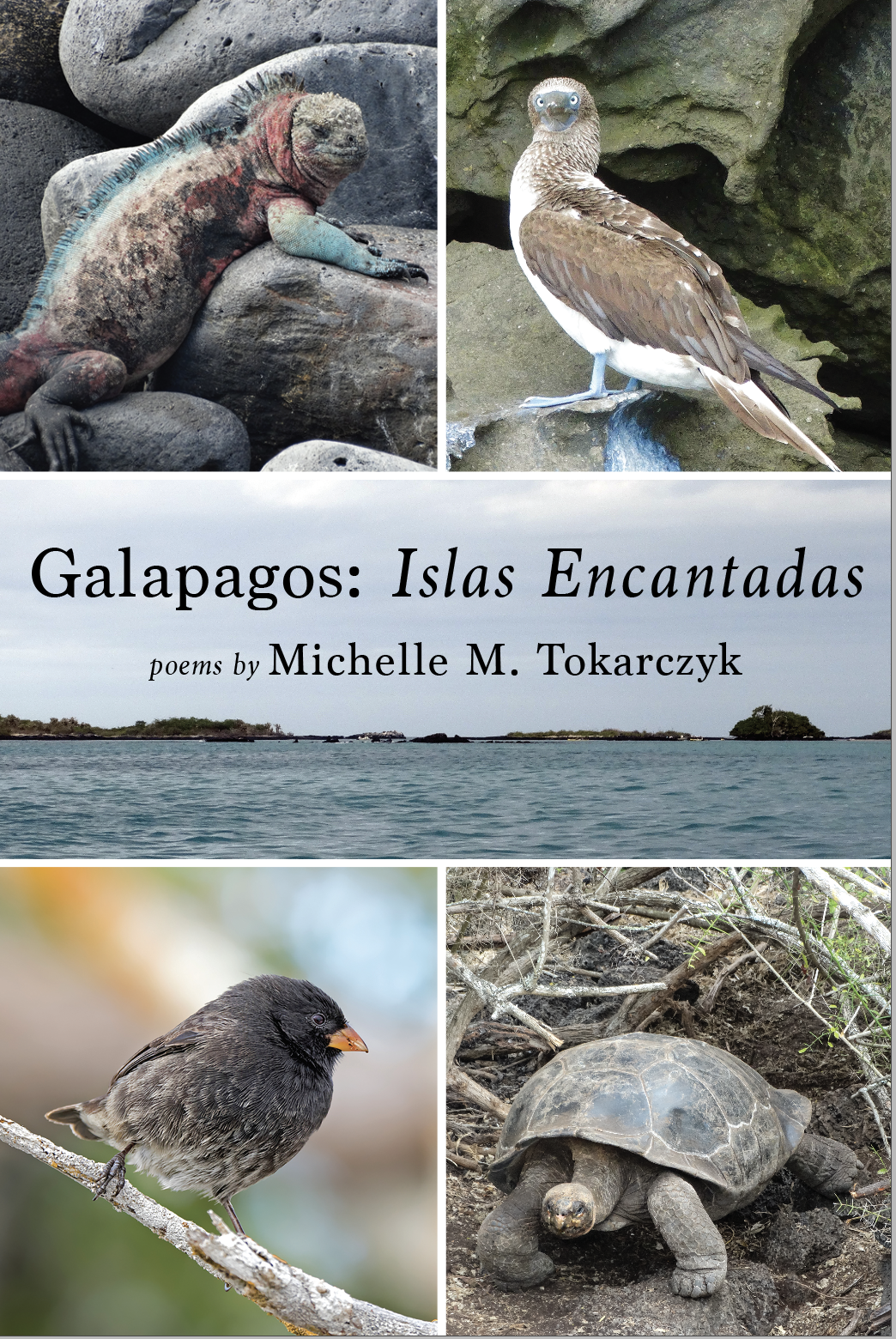
TRAVEL WRITING REIMAGINED: A READING FROM GALAPAGOS: ISLAS ENCANTADAS
Michelle M. Tokarczyk will read from her recently published book. She will talk about the inspiration for the poems and the process of composing them. Her presentation will include stunning pictures of the Galapagos. There will be ample time for questions and discussion. Michelle M. Tokarczyk has authored two other poetry books: The House I’m Running From and Bronx Migrations.
Her poems have been published in numerous journals and anthologies and have received nominations for Pushcart and Best of the Net Awards. Tokarczyk was raised in a working-class family in New York City. For many years, she was a professor of English at Goucher College in Baltimore, Maryland. Now, she again lives full-time in New York City’s Chelsea. THURSDAY, SEPTEMBER 28, 6:30 PM.
Michelle M. Tokarczyk has authored two other poetry books: The House I’m Running From and Bronx Migrations. Her poems have been published in numerous journals and anthologies and have received nominations for Pushcart and Best of the Net Awards. Tokarczyk was raised in a working-class family in New York City. For many years, she was a professor of English at Goucher College in Baltimore, Maryland. Now, she again lives full-time in New York City’s Chelsea.
HUDSON PARK LIBRARY 66 LEROY STR, NEW YORK, NY 10014 | 212-243-6876 | MONDAY-FRIDAY 10-6; SATURDAY 10-5; SUNDAY CLOSED.
I will be reading a poem about a Shotei print, “Coming Ships,” along with many other poets, like Jennifer Delozier. The reading will take place at 5 pm on Thursday, September 14 at Eastworks, Moonlit Sea Prints Gallery at 116 Pleasant Street, Suite #226. It’s on the second floor, and there will be a flag signaling the gallery in the hallway.
The Moonlit Sea Prints Gallery features prints by many Japanese artists, including Hiroaki Takahashi (Shotei,) Kiyoharu (Ginnosuke)Yokouchi, and Hiroshi Yoshida. The Moonlit Sea Prints Gallery curates Japanese woodblock prints that touch the soul and imagination.
The Easthampton Art Walk will feature works by several galleries, but Moonlit Sea Prints in Eastworks will sponsor a reading in conjunction with their Japanese Woodblock Print Show “Stories With Shotei.”
The show will continue for a two-month period at Moonlit Sea Prints Gallery. I will continue to blog on Thursdays. If you have any readings coming up, let me know. I’ll blog them here.
The Easthampton Art Walk will feature works by several galleries, but Moonlit Sea Prints in Eastworks will sponsor a reading in conjunction with their Japanese Woodblock Print Show “Stories With Shotei.”
The Moonlit Sea Prints Gallery features prints by many Japanese artists, including Hiroaki Takahashi (Shotei,) Kiyoharu (Ginnosuke)Yokouchi, and Hiroshi Yoshida. The Moonlit Sea Prints Gallery curates Japanese woodblock prints that touch the soul and imagination.
I will be reading a poem about a Shotei print, “Coming Ships,” along with many other poets, like Jennifer Delozier, who will be reading about “Two Ladies Catching Fireflies.” The reading will take place at 5 pm on Thursday, September 14 at Eastworks, Moonlit Sea Prints Gallery at 116 Pleasant Street, Suite #226. It’s on the second floor, and there will be a flag signaling the gallery in the hallway. A QR code next to the prints will allow you to read the poems on your smart phone.
Hiroaki Takahashi Shotei was a Japanese woodblock print artist of the early 20th century in the shin-hanga art movement whose work generally focused around beautiful landscapes and scenes of everyday life. Many of his works are beautiful vignettes, many easily leading the viewer to imagine the stories transpiring within the images. Moonlit Sea Prints of Easthampton MA will be presenting this exhibit, “Stories with Shotei,” showcasing the works of Hiroaki Takahashi Shotei paired with short stories
The show will continue for a two-month period at Moonlit Sea Prints Gallery. I will continue to blog on Thursdays. If you have any readings coming up, let me know. I’ll blog them here.
As a career educator, I often used Bloom’s Taxonomy. I taught little ones on the elementary school level, and then college students. I always encouraged my students to approach study using this six-step process.
The model was named for Benjamin Bloom, who first came up with it. It has six levels:
Knowledge
Comprehension
Application
Analysus
Synthesis
Evaluation
I think Bloom’s Taxonomy can be applied to writing. You may come across an idea for your writing and research the topic and comprehend it. Then you can apply it in your writing. In the analysis phase you break down complex ideas about what you’re writing. In the synthesis part you combine the ideas you have generated in the process and make it original, or your own.
Finally in evaluation, you make judgments about the value of what you have created and decide if it is something you want to pursue. As writers, we have all written things we don’t think work, but even if you don’t come out with something good after this process, it’s bound to lead to something worth using later. Nothing is ever wasted in the creative process.
I will be take a hiatus from blogging for the summer, but will be back blogging on Thursdays in September. Have a great summer and look for me here in the fall.
There is a negative voice inside all of us. It’s the brain’s defense mechanism against danger.
Anxiety acts as a guardian angel. Its intentions are pure, but we all know the road to hell is paved with good intentions.
Anxiety protects us in life or death situations. But in day to day modern life, we rarely encounter a life or death situation that warrants such an extreme measure. Anxiety acts like a guardian, but it can cause us to not act.
The important thing to to is to reframe your anxiety, so it doesn’t get in the way of your writing. The inner critic isn’t objective.
If what you write today doesn’t turn into something you can use, it is an exercise toward good writing. Think of it as athletic practice before you get really good. Your inner narrator should keep you grounded, but moving forward.
Every time you hear yourself thinking that the writing is not good enoughr, you tell yourself that it’s not so.
Your inner critic is far from objective. Although its intentions are good, it won’t help you get to where you want to go.
If we try, we might fail. If we give it our all, we might fail.
So, what’s the trick?
Simple. If you’re a writer, you have to write. It’s compulsive. So you might as well follow your heart.
When it’s do or die, most people tend to do.
Sometimes it’s not massive action in order to reach a certain goal.
Our attitude always determines our altitude in life. When we think we can’t do something, there’s no reason to even try.
It’s better to try something than to give up without even attempting just because you believe that you must do it. Thomas Edison said he re-framed his failures into “finding ways that don’t
It’s always better to try, at least once or twice what can’t be done.
So remember to keep your inner critic in check.
We are the ones who decide what words we choose to write after “I am…”
I taught literature many years in college. I taught adult and children’s.
It is almost impossible to go a single day without reading. Whether a social media post, email, book, or even a cereal box, we are constantly reading words. What is classified as literature vs technical writing?
There are two main separations between writing and literature. The first is the intended audience, or rather, the intention of the audience when reading, and the second is the author’s intenti when writing.
Literature, and the reading of it, has saved many people in difficult situations. Literature can show people at their best. If you’re living through a difficult situation, say prison, this can be an important hope and message. Words can teach, illuminate and inspire us. Nelson Mandella cites the books he read in jail that gave him solace during his long incarceration. He devoured anything he could read on armed combat because he was trying to form a Liberation Army. As a young strategist, he read about boxing when he tried to defeat his opponents in the ring or books on chess when he was competing in chess tournaments. “I had no time to brood. I enjoyed reading and writing letters and that occupied my mind completely…” says Mandela.
Most prisons have a library and prisoners are encouraged to read books. According to most state statutes, prisoners are entitled to legal texts to research their own appeals. In addition to lawl books, almost all libraries have literature. Sometimes there are limits on content, like rape or gun construction, but overall there is much literature available to inmates. Some of the most popular in prisons are Stephen King and Harry Potter novels. Orange is theNew Black and Gone Girl are some of the most popular novels in prisons. Longer novels are also popular, like Ayn Rands The Fountainhead. Biographies of different famous Americans are also sought-after in prison.
I have been keeping a journal for years. I’m often not at my laptop when I have an idea, so I journal on my iPhone. I always have my IPhone near by, as most people do. A piece of writing begins with a germ of an idea, an inspiration, a thought. Some people use their journals to spark ideas.
In addition to being a good starting point for a writer, journaling has other benefits. According to LeslieAndrus-Hacia, a clinical psychiatrist says “writing is a brain-based porthole leading to a balanced and calm state of being … through writing, both right-and left-brain hemispheres communicate, synthesizing information that ultimately results in greater mental coherence.”* Other benefits of journaling include memory support and increasing communication skills.
I published a collection of poems on Alzheimer’s Disease and Dimentia. Many were from thoughts in my journal.
It’s really easy to get distracted when you write, especially now that we’re all largely home working and there are phone calls, emails and housework all conspiring to take away the writing time.
The human brain takes around 17 minutes to refocus on a task after a distraction. Losing focus while in the middle of writing, can seriously damage the quality of your content. If you want your writing to be the best quality content possible, you need to get rid of distractions.
Disable all notification on your computer and put your phone on silent so that you do not get disturbed in the middle of a writing session. Be disciplined enough to either do your housework before you write, or better yet, delay it until after your writing session.




 Eileen P. Kennedy Author