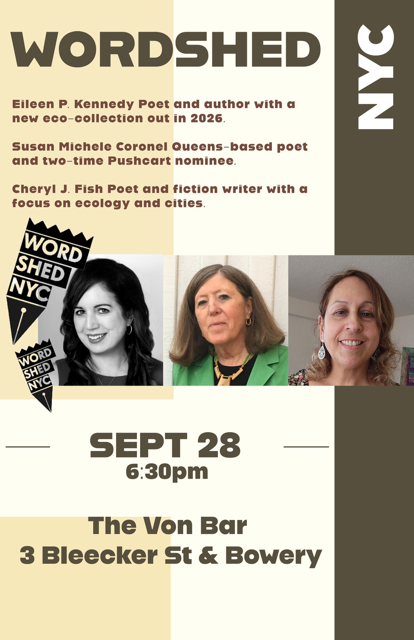
I Will Be Reading from my new book Dread and Splendor at Wordshed, NYC on September 28

Come join us if you are in the area. I will be blogging again monthly about the new book.

Putting Together a Poetry Chapbook

Photo by Tima Miroshnichenko on Pexels.com

If you’ve published poems in literary journals, your next step might be a poetry chapbook. A poetry chapbook is a small poetry collection that is significantly shorter than a typical printed poetry collection. Typically running in the range of 20 to 40 pages, a chapbook can be affordably published by small presses and is therefore a more economical option for emerging writers who may be financing their own book of poems. 

Some poets begin with publishing a chapbook before a full-length collection. The chapbook, due to its small size, has to be focused on a theme. Ghost Girl by Laura Madeline Wiseman is a small group of poems about memory loss. Muted: A Short Story in Verse by Jessica Bell is a narrative in poetry about whose vocal cords are brutally cut. I’m working on a manuscript about a drowned future world, Water Journey in the form of a Japanese narrative form called a Haibun. Soul Work: A Chapbook of Poems by Elizabeth Spring is about astrology.

The word chap dates back to sixteenth century England. A written account from Cambridgeshire in 1553 describes “lytle books” sold by pedlars, likely containing lyrics to sung ballads. The price of these books was low—typically a penny or a halfpenny—and they provided cheap entertainment for the masses, although there’s little evidence that the books themselves were mass produced. A “chapman” is an English word for an itinerant pedlar or tradesman.

There are several things to consider in compiling a chapbook. The first is audience. The biggest reason to write a chapbook is to reach dedicated poetry fans, a tiny but devout slice of the general population. So think about who will be reading your chapbook.

Another consideration is theme. Nearly any theme is acceptable, since your poetry chapbook should ultimately reflect your personal taste and style as a poet and showcase your best work. The theme can be almost anything, winter, New York City, nature, a poetry form like haiku.

Another thing to consider is organization. My second book, Touch My Head Softly (Finishing Line Press, 2021) was about my partner’s dying of Alzheimer’s. I organized it into three sections: before, during and after the death.

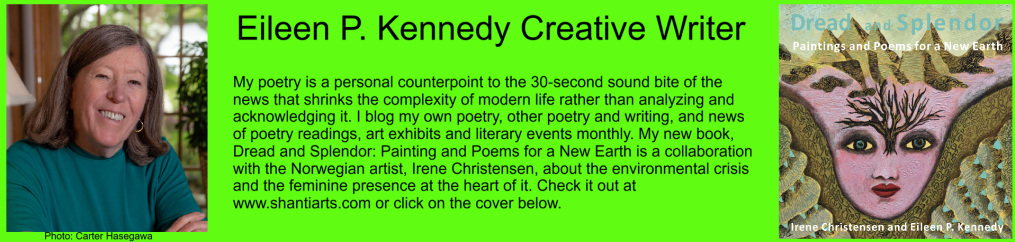
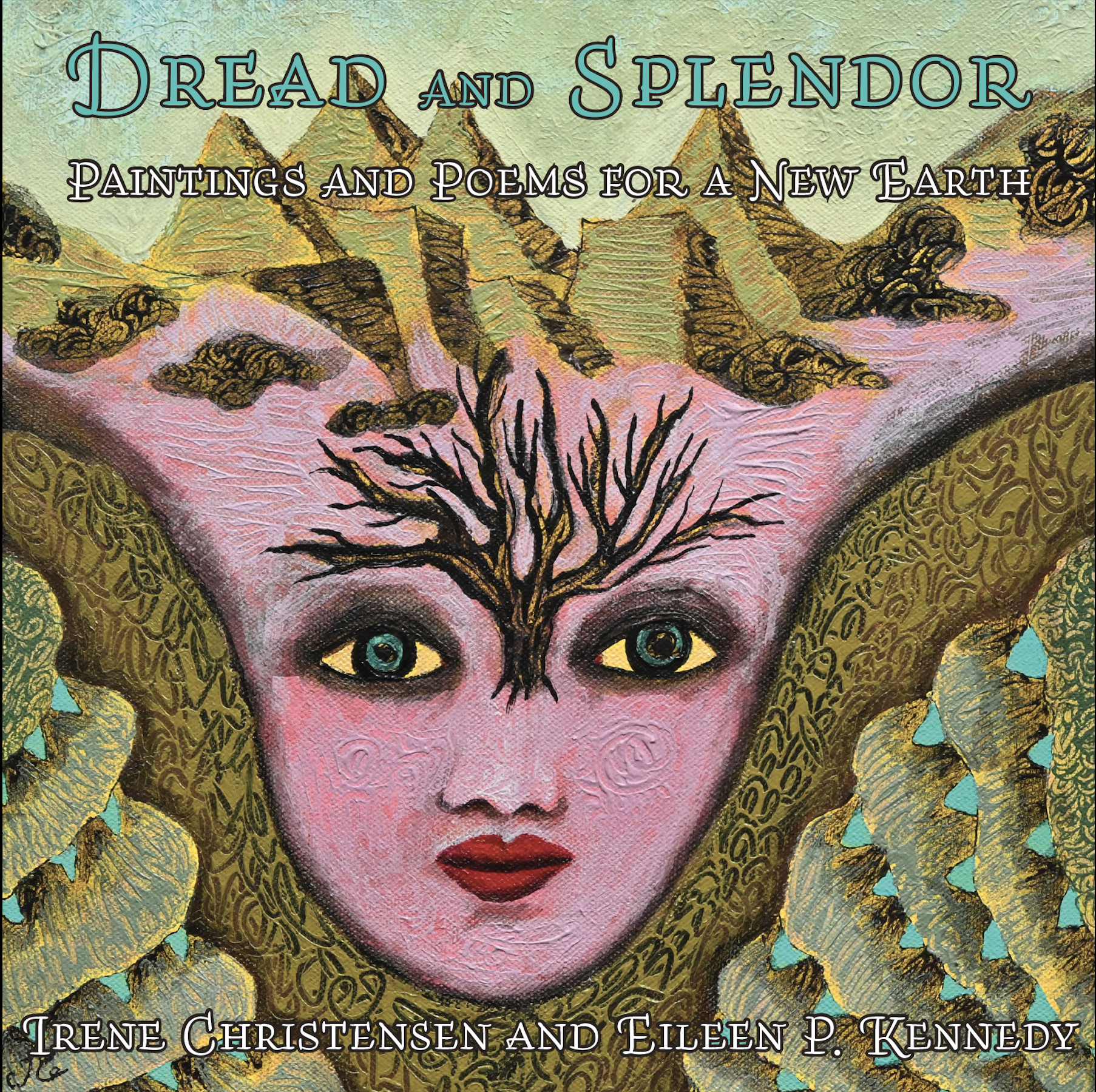
My latest collection of poetry, Dread and Splendor: Paintings and Poems for a New Earth, is due out from Shanti Arts in early 2026. Follow me here monthly as I blog about writing, the publishing process and my new book.

Writing in a Foreign Country

Photo by Kevin Malik on Pexels.com

If you are a writer, you write. Even if you’re traveling or just put down for awhile in a new place. I find traveling stimulating for my imagination and a natural time to write, even if it’s just in a travel journal.

For about the past twenty years, I have been spending winter in Costa Rica, where mostly I writeThe change of location seems to effect my writing in a positive way. Travel brings new experiences and ideas to you that will show up in your writing.

The travel can be anywhere: the next town to another country. I just don’t like winters in the Northeast, where I normally live, so I like traveling in warmer climbs in the winter months. I’ve traveled in the winter in Mexico too. I mostly write while I’m here. i devised the manuscript for my upcoming book: Dread and Splendor: Paintings and Poems for a New Earth here.

I find the change of scene helps my writing in several ways. First of all, whether I’m in a hotel or temporary apartment, I don’t worry about cleaning or answering mail (which I have held.) I focus more on my writing. Also, you don’t tend to be on the phone with telemarketers or even friends. 

Then there is just the stimulation of being someplace different, with a different language, culture, sights. This may lead to a whole opening up of your writing to new topics.

You can add new language to your writing. A noun or two in Italian or Spanish can add to the authenticity of your poem or story. But be careful about using too much that a non-Spanish or non-Italian speaker may find confusing. You can offer your reader context cues and nonverbal communication to help understanding. You can also italicize the foreign word to distinguish it from the English.

You can also set your next piece in the country your visiting. I’ve often written poems about Costa Rica. The sights and smells of the country will permeate your writing. It’s a much better way of learning about it then researching online or in a library. Talk to as many locals as possible. Introduce yourself as a writer and explain that you are working on a story set in that country. This will help open up people to answer your questions.

Read other books set in that country and google it. Read blogs, articles, travel articles, news. Learn as much as you can about the country.

Finally, talk to your accountant. You may be able to write off your travels to your writing business. I am publishing a book, Dread and Splendor: Paintings and Poems for a New Earth early next year with Shanti Arts. It’s a book that was hatched by myself and an artist, Irene Christensen, on one of my visits to Costa Rica. The book, which has some poems and paintings about Costa Rica, would not have existed unless I had made that trip to Costa Rica.

I will be blogging monthly about the writing process and my new book. Follow me here on Thursdays.

Writing an Outline for a Book Manuscript

Photo by Pixabay on Pexels.com

Writing a book can be a daunting task, especially for first-time book writers. Where do you even begin? The essential thing in breaking a manuscript down into a doable project is first writing an outline. Some writers fill it in as they go along. These are usually proficient writers who have published many writers. I advise new book authors to plan the manuscript with an outline before they get there. I am a poet and many people don’t see the organization that goes into a collection of poetry.

To start an outline of a collection of poetry, I start with the theme. My last collection of poetry, Touch My Head Softly (Finishing Line Press, 2021) was on the theme of Alzheimer’s Disease. My poems were about my experiences with my partner who died of Early Onset Alzheimer’s. After I decided on the theme, I arranged the poems into three parts: before, during and after the death. This became the outline.

Poets have a singular challenge in developing an outline for a collection of poems. I advise poets to look through the poems they have written and see if a theme emerges. This can come from published and unpublished poems. Poets have a natural penchant for middle, beginning and end, as they need this sense to put a poem together. Also, published poems tend to strengthen a manuscript in the eyes of a publisher as she/he will know that other editors of literary journals and anthologies valued your work enough to publish it.Just make sure most of the poems are new when you submit the manuscript to a publisher.

The organization of my upcoming manuscript Dread and Splendor: Paintings and Poems for a New Earth (Shanti Arts, 2026) was very different than Touch My Head Softly. I collaborated on this book with the Norwegian artist, Irene Christensen, who did a series of paintings on women at the heart of the environmental crisis. This informed the organization of the manuscript as there was a visual with each poem. We organized the manuscript together, taking into account the content of both the paintings and poems.

Once you have organized your manuscript and perhaps have a trusted colleague or mentor look it over, you may be ready to send out your manuscript. At this point, you need to start developing your query letter to a publisher. I will blog another week on writing a good query letter.

Follow me here on Thursdays as I talk about the development of my new collection, Dread and Splendor: Paintings and Poems for a New Earth and the writing process.

Join Us for a Reading from Poetry for the Dementia Journey at the Book Launch at 4 pm EST on June 3

I will be reading one of my three poems in the anthology

On Sunday, June 3 at 4 pm EST, I will be reading from the anthology, Poetry for the Dementia Journey, along with many other poets included in the anthology, including Gail Thomas, Ellen Rittberg, and Christine Jones. The book officially launches in both paperback and Kindle on June 1st – in time for Alzheimer’s and Brain Awareness Month. The book will also be published with Draft2Digital, which will put it in many other stores, such as Barnes and Noble, Kobo, and Hoopla. The eBook will sell on all platforms for $9.99 and the paperback will sell for $14.99. All royalties will benefit AlzAuthors’ mission to provide quality resources for Alzheimer’s and dementia caregivers. They are a 501(c)(3) non-profit organization. You can order a copy at: https://www.amazon.com/dp/B0D3CCK368.

You can get the zoom link by emailing a request to alzauthors@gmail.com.


Poetry for the Dementia Journey is a moving, hopeful, heartwarming collection all written from the personal experience of dementia. Within its pages, readers will find nuggets of wisdom and glimpses of joy.

Follow me here on Thursdays for more writing and book publishing news.

I Will Be Reading from Poetry for the Dementia Journey at the Book Launch at 4 pm EST on June 3

Join Us on Zoom

On Sunday, June 3 at 4 pm EST, I will be reading from the anthology, Poetry for the Dementia Journey, along with many other poets included in the anthology, including Gail Thomas, Ellen Rittberg, and Christine Jones. The book officially launches in both paperback and Kindle on June 1st – in time for Alzheimer’s and Brain Awareness Month. The book will also be published with Draft2Digital, which will put it in many other stores, such as Barnes and Noble, Kobo, and Hoopla. The eBook will sell on all platforms for $9.99 and the paperback will sell for $14.99. All royalties will benefit AlzAuthors’ mission to provide quality resources for Alzheimer’s and dementia caregivers. They are a 501(c)(3) non-profit organization. You can order a copy at: https://www.amazon.com/dp/B0D3CCK368. You can get the zoom link by emailing a request to alzauthors@gmail.com.

This is a moving, hopeful, heartwarming collection all written from the personal experience of dementia. Within its pages, readers will find nuggets of wisdom and glimpses of joy.

Follow me here on Thursdays for more book publishing news.

Gallery of Readers Invites You to a Reading 4 pm November 19 at Northampton Friends Hall

Gallery of Readers presents:
Eileen P. Kennedy  and Barbara A. Rouillard reading from their work
Sunday, November 19 at 4 p.m.Northampton Friends Meeting Hall 
43 Center Street, Suite 202 Northampton, MA.
Come join us, all are welcome!
For those how can’t or prefer not to attend in person, the Zoom link below is available from 3.45 p.m. EDT on the day of the reading.(Be aware no admittance after 4.05 p.m. for security purposes.) Contact me for the link if you want to zoom.

Eileen P. Kennedy is the author of two collections of poetry: Banshees (Flutter Press, 2015), which was nominated for a Pushcart Prize and won Second Prize in Poetry from the Wordwrite Book Awards, andTouch My Head Softly (Finishing Line Press, 2021) which Literary Titan has described as “emotionally-charged poetry that explores life with observant poems that will appeal to anyone who loves inspired poetry.” It was a finalist for the International Book Awards in General Poetry. She lives in Amherst, MA with the ghost of Emily Dickinson. More at EileenPKennedy.com.

Rouillard photo.jpeg

Barbara A. Rouillard, of Springfield, Massachusetts, has over eighty-five publishing credits to her name and was the recipient of both a NEH Fellowship and a Massachusetts Cultural Council Grant. She received her MA in English in 2007. She was a special education teacher at West Springfield High School for thirty-two years. In her retirement, she studies French, writes, and travels with her husband William. 

Gallery of Readers Invites Listeners to a Reading in Person or on Zoom on Sunday, November 19

Photo by Enzo Muu00f1oz on Pexels.com

Gallery of Readers, one of Western Massachusetts prime publishers and leader of writing workshops, will sponsor a reading on Sunday, November 19 at 4 pm at the Friends Meeting House of Northampton, 43 Center Street. The reading is available in person or on zoom.

Barbara A. Rouillard will read from her memoir, I Don’t Mind Waiting for You. Barbara is an award-winning writer with 85 publishing credits and the recipient of an NEH Fellowship and a Massachusetts Cultural Council Grant.

Eileen P. Kennedy will be reading from her two poetry collections, Banshees (Flutter Press, 2016) Touch My Head Softly (Finishing Line Press, 2021) and her new eco-poetry manuscript Dreadful Splendor: Paintings and Poems for a New Planet which she collaborated on with the Norwegian Artist, Irene Christensen.

If you want the zoom link, contact me here. Follow me here. I blog on Thursdays.

Ekphrastic Reading September 14 at Moonlit Sea Prints Gallery in Easthampton Massachusetts

The Easthampton Art Walk will feature works by several galleries, but Moonlit Sea Prints in Eastworks will sponsor a reading in conjunction with their Japanese Woodblock Print Show “Stories With Shotei.”

The Moonlit Sea Prints Gallery features prints by many Japanese artists, including Hiroaki Takahashi (Shotei,) Kiyoharu (Ginnosuke)Yokouchi, and Hiroshi Yoshida. The Moonlit Sea Prints Gallery curates Japanese woodblock prints that touch the soul and imagination.

I will be reading a poem about a Shotei print, “Coming Ships,” along with many other poets, like Jennifer Delozier, who will be reading about “Two Ladies Catching Fireflies.” The reading will take place at 5 pm on Thursday, September 14 at Eastworks, Moonlit Sea Prints Gallery at 116 Pleasant Street, Suite #226. It’s on the second floor, and there will be a flag signaling the gallery in the hallway. A QR code next to the prints will allow you to read the poems on your smart phone.

Hiroaki Takahashi Shotei was a Japanese woodblock print artist of the early 20th century in the shin-hanga art movement whose work generally focused around beautiful landscapes and scenes of everyday life. Many of his works are beautiful vignettes, many easily leading the viewer to imagine the stories transpiring within the images. Moonlit Sea Prints of Easthampton MA will be presenting this exhibit, “Stories with Shotei,” showcasing the works of Hiroaki Takahashi Shotei paired with short stories

The show will continue for a two-month period at Moonlit Sea Prints Gallery. I will continue to blog on Thursdays. If you have any readings coming up, let me know. I’ll blog them here.