Publishing Poetry

Many writers write poetry, even if it’s not their favorite genre.There is not much money in publishing poetry, unless you’re a poet laureate like Billy Collins or famous internationally like Sheamus Heaney.  But there is a market for publishing poetry.

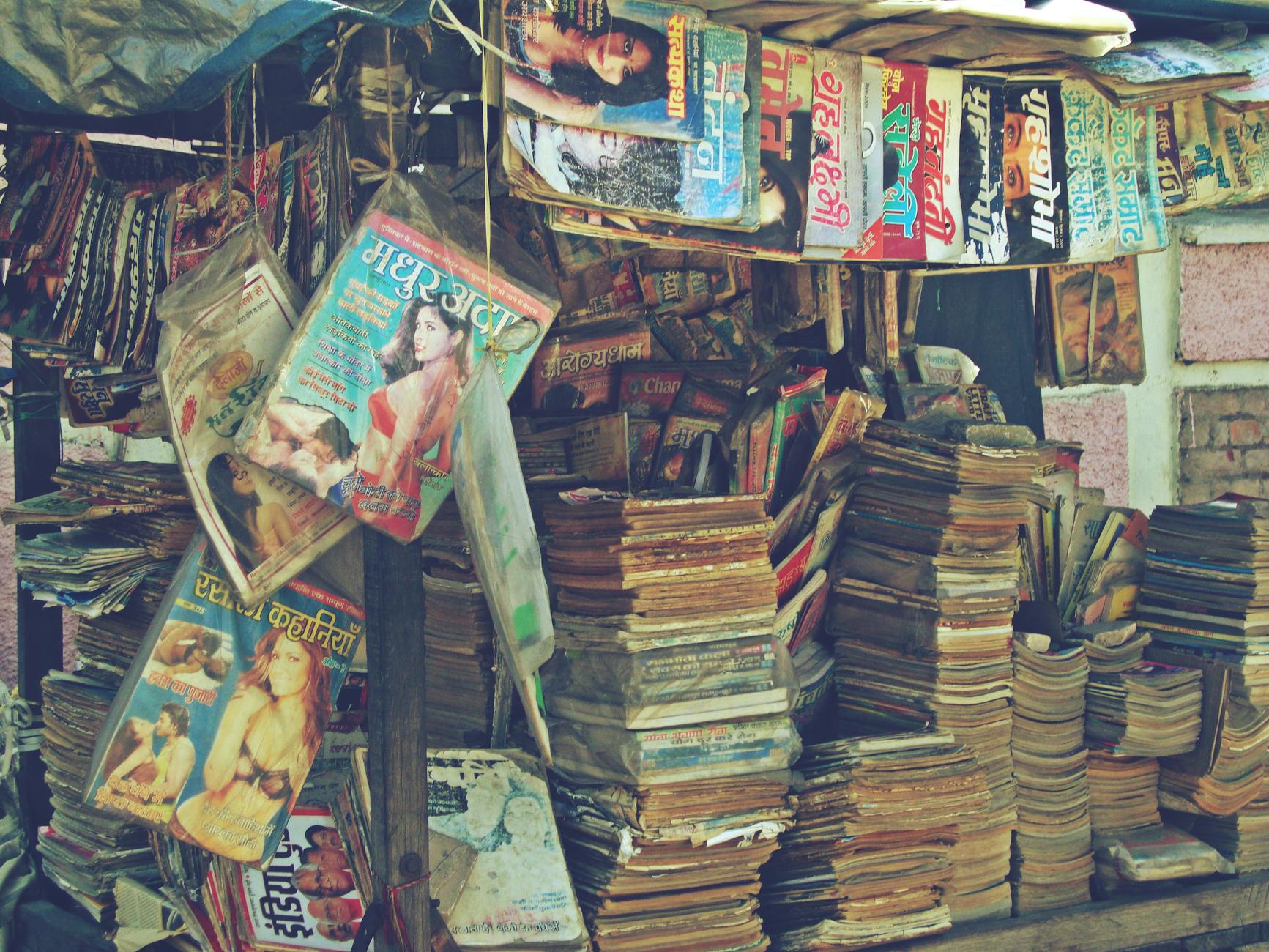
Photo by Ou011eUZHAN YAVUZ on Pexels.com

The best way for a new poet to publish is in a poetry journal or magazine.  Split This Rock offers an online list of literary journals https://www.splitthisrock.org/resources/literary-arts-journals. There are many other websites that show journals looking for poetry. You need to do some homework to figure out with which journals your poetry will resonate.

You may not want to start with well-established journals like The Kenyon Review or The American Poetry Journal, but there are many to choose from.  Starry Starry Kite https://www.lindacastronovo.com/theonlinejournala new online journal, is open to submissions from new writers.

Poetry remains a niche market for bookstores.  A good bookstore carries poetry books (and you should buy some.)  They carry classic poets, academic anthologies, and well-known poets. Most poets don’t reach this level.  If you have a relationship with your local bookstore owner (and you should get to know him/her,) this person is likely to carry a few copies of your new book.  I left three copies of my latest book with a local bookstore, and it sold all three copies, but it took about a year.

Book publishers look at the back of your submitted full-length manuscripts for acknowledgements of poetry published in literary journals.  I’ve heard that some publishers look for a 25 percent ratio of published poems to 75 percent nonpublished when looking at a book manuscript.  This percentage will vary publisher to publisher, but the publisher wants to know the poems in the manuscript were considered publishable by the literary journals.

Each journal has its own submission procedures, but as a rule, they don’t want more than five or six poems per submission.  Rejections are more common than not, so be prepared for this.  You should get an idea of what the journal is publishing by looking online at poetry from that journal, going to your local library and looking at old issues, or just buying a sample issue.  A good sponsor for a good journal is a university, so check the journal’s affiliations. If you like the poetry the journal offers, it’s a good sign that the journal might like your poetry.

I published in about 25 literary journals, including Nebo, The California Quarterly, Taproot Literary Quarterly and Crosswinds Literary Journal, before I published my first book of poetry. 


I chose to submit to small, independent publishers who were known to publish new poets.


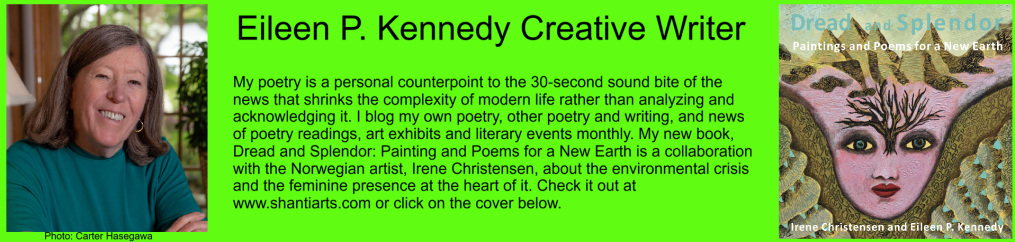
I have a new manuscript, Dread and Splendor: Paintings and Poems for a New Earth, out for consideration with a few small independent publishers.  This is my first collaborative manuscript with the Norwegian artist, Irene Christensen.  She did a series of paintings about women at the heart of the environmental movement for which I wrote poem responses.  This is specialized publishing as the publisher needs to be experienced with four-color visuals as well as poetry. I don’t know if this will get published, but we never know for sure as poets.

I will be blogging on Thursdays. Follow me here.

I’m Delighted The Orange & Bee Is Publishing My Twin Poem “Fairy Tale of Eternal Economic Growth”

I’m delighted to have my poem, “Fairy Tale of Eternal Economic Growth” published in the September 27, 2024 issue of The Orange and Bee. I’ve attached a link to it below if you want to read it.


The submission is a twin poem, which means the two columns can be read down or across.I drew on the Norse Folk Tales of Greta Thunberg’s Scandinavian heritage.  Odin had two wolves, Geri and Freki.  Geri was interpreted as the greedy one and Freki the avaricious one.  I think wolves are a good symbols of the corporate greed that Thunberg argues against. The visual they use with the poem is Greta Thunberg’s photo as a child.

Photo by Balpreet Singh on Pexels.com

The Orange & Bee publishes original and contemporary short stories, poems, and essays that explore, expand on, and subvert the rich traditions of international folklore, with a strong focus on fairy tales (though they also sometimes dabble in other forms of folklore, such as fables, myths, and legends). They also publish traditional tales accompanied by annotations, discussion questions, and writing prompts. Their real mission is to build a community—a virtual salon—around shared passion for fairy tales.

See the poem and photo of Greta Thunberg here:

https://theorangebee.substack.com/p/4523ca2d-ab6b-4812-b67e-7a157178cdeb

I am writing much eco-poetry these days, about the environmental crisis. I compiled a manuscript of poems and paintings, with the Norwegian artist, Irene Christensen, called Dread and Splendor: Paintings and Poems for a New Earth. It’s a book about women at the heart of the environmental movement. I will blog on Thursdays. Follow me here.

How to Publish Poetry

Photo by Mathias Reding on Pexels.com

There is a large poetry market for individual poems and whole manuscripts.

Literary journals publish many poems and some publishers publish poetry books. Poetry remains a niche market for bookstores.  A good bookstore carries poetry books (and you should buy some.)  They carry classic poets, academic anthologies, and well-known poets. Most poets don’t reach this level.  If you have a relationship with your local bookstore owner (and you should get to know him/her,) this individual is likely to carry a few copies of your new book.  I left three copies of my latest book with a local bookstore, and it sold all three copies, but it took about a year.

The best way for a new poet to publish is in a poetry journal or magazine.  Split This Rock offers an online list of literary journals https://www.splitthisrock.org/resources/literary-arts-journals.

You need to do some homework to figure out with which journals your poetry will resonate and want whatever poetry you have to offer.

You may not want to start with well-established journals like The Kenyon Review or The American Poetry Journal, but there are many to choose from.  Starry Starry Kite https://www.lindacastronovo.com/theonlinejournala new online journal, is open to submissions of poetry.

Publication in literary journals is also important to book publishers.  I’ve heard that some publishers look for a 25 percent ratio of published poems to 75 percent nonpublished when looking at a book manuscript.  This percentage will vary publisher to publisher, but the publisher wants to know the poems in the manuscript were considered publishable by the literary journals.

In nearly all cases, these book publishers will only publish a new poet if they have a track record with the literary journals.

Each journal has its own submission procedures, but as a rule, they don’t want more than five or six poems per submission.  Rejections are more common than not, so be prepared for this.  You should get an idea of what the journal is publishing by looking online at poetry from that journal going to your local library and looking at old issues, or just buying a sample issue.  A good sponsor for a good journal is a university, so check the journal’s affiliations. If you like the poetry the journal offers, it’s a good sign that the journal might like your poetry. Read the journal’s submission guidelines carefully.

I published in about 25 literary journals, including Nebo, The California Quarterly, Taproot Literary Quarterly and Crosswinds Literary Journal, before I published my first book of poetry. 

I chose to submit to small, independent publishers who were known to publish new poets.

I have a new manuscript, Dread and Splendor: Paintings and Poems for a New Earth, out for consideration with a few small independent publishers.  This is my first collaborative manuscript with the Norwegian artist, Irene Christensen.  She did a series of paintings about women at the heart of the environmental movement for which I wrote poem responses.  This is specialized publishing as the publisher needs to be experienced with four-color visuals as well as poetry. I don’t know if this will get published, but we never know for sure as poets.

Follow me here on Thursdays where I will blog about writing, the writing process, editing, revising and publishing.

Why Are We So Insecure About Our Writing?

The shadow of the dome of pleasure
Floated midway on the waves;
Where was heard the mingled measure
From the fountain and the caves.

--Samuel Taylor Coleridge (1772-1834)

Coleridge wrote these lines in 1797. Just listen to the rhythm and music in the lines. Coleridge did not publish “Kubla Khan” until 1816, at Lord Byron’s insistence. Coleridge worried about the irregular meter and that sections of the poem were not coherent. Yet, it is considered one of the best poems published in the English Language.

In a sense, that’s fair enough. The poem does not hold to traditional poetic unity in the way other Coleridge work does: his long narrative poems “The Rime of the Ancient Mariner” and “Christabel,” for example, and “Frost at Midnight,” his hymn to fatherhood. The poem began in a drug-induced dream.

Photo by Tyler Lastovich on Pexels.com

So how many of us writers doubt the worth of our writing? Bertrand Russell, a famous writer in his own rite, had three tips for insecure writers:

Learn to recognize your writing insecurities and admit to their existence. You can’t address a problem if you pretend it’s not there. Look at your particular insecurities and recognize them. That way you’ll be prepared when insecurity strikes.

The second is to recognize that you’re not alone in your insecurities. All writers feel insecure about their writing one time or another. If you’re insecure about grammar, work on grammar. Remember no one writes a text right the first time.

The third tip is to let go of any concept of perfectionism that you have. If you finish a text and feel you can do better, it just means that you’re developing some judgmental ability. Being insecure with your writing is part of a writer’s life.

I recently finished a manuscript called Dread and Splendor: Paintings and Poems for a New Earth, with the Norwegian artist, Irene Christensen. Every time I submit a manuscript to a publisher, even though I’ve published three books, my insecurities come to play. The worst that can happen is that it will be rejected and I will submit it elsewhere.

Follow me here on Thursdays as I write about the writing process and the journey of my manuscript.

Write a Strong Opening to Bring Your Reader In

Photo by Andrew Neel on Pexels.com

Writing an opening, a foreword to a book, a first line that will encourage your reader to continue is a challenge.

The tone for a trial is set by the lawyer’s opening statement. It’s the first opportunity to make an impression, to frame the narrative. In your writing, your introduction serves the same purpose.

Start with a strong statement. Hook your reader with a provocative statement. “Call me Ismael” brings you right into Moby Dick. It’s an invitation you can’t refuse.

Lawyers build their cases on evidence. They introduce facts, exhibits, testimonies to support their opening statement. Your introduction should also be grounded in facts.

Lawyers question witnesses to strengthen their case and counter opposing arguments. As a writer, you should think about and address counterarguments to your opening, including opposing views. Provide a thoughtful counter-argument. Consider all sides of the issue and enhance your reliability.

In all of these ways you will have an opening that will encourage people to continue reading.

In the case of a poetry collection, like Dread and Splendor: Paintings and Poems for a New Earth, the artist, Irene Christensen and I, put the strongest paintings and poems up front. There are 27 paintings and poems in a 60-page manuscript. We began with poems that editors had chosen for publication and with paintings that had been curated for international shows.

I’ll be blogging on Thursdays, following the progress of our manuscript, Dread and Splendor: Paintings and Poems for a New Earth. And writing about the writer’s process. Follow me here.