All query letters, regardless of genre, have one goal: to get an editor or agent interested in knowing more about your manuscript. To do this, you want to be specific and concrete.
The first sentence should include the full title of your manuscript, the genre and sub-genre, if applicable, and word count. The next sentence or two should be the hook that makes the editor want to know more about your manuscript.
Whether you’re presenting groundbreaking research or a compelling narrative, your letter should reflect your professionalism. Clear purpose statements play a crucial role in outlining the objectives and intentions of original manuscripts.
No matter what you’re writing—fantasy, thriller, sci-fi, poetry, romance—or whether you’re writing for children or adults, there’s a lot you can do in just one short page. If the editor’s website says he/she is looking to publish narrative poems, begin with the fact that your manuscript contains many narrative poems. If it doesn’t, look for a different publisher.
If your manuscript refers to a regional area, look for a publisher who publishes in that area and is interested in local writers. Journals, such as Persimmon Tree (persimmon tree.com), post submission guidelines for certain parts of the country at certain times of the year.
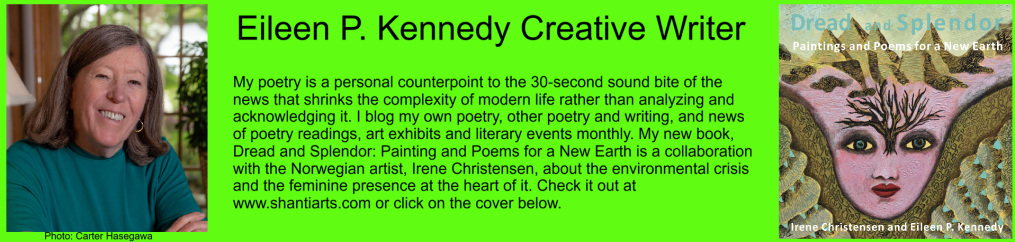
Find out how the editor wants manuscripts submitted. Does he/she want 10 pages, the whole manuscript or just the query? If you liked a volume the editor published, refer to it in your letter. Let the editor know how your work relates or is similar. Also, be sure to include places you’ve published that you think the editor would be interested in. I sent out four query letters for my most recent book, Dread and Splendor: Paintings and Poems for a New Earth (Shanti Arts, 2026.) I got back two offers from publishers. Of the two who responded negatively, one said they were going through a reorganization and not taking on new projects and they other said they were changing their line and my manuscript didn’t fit.
A good query letter to an editor may well be your first step in publishing your manuscript. Spend time on drafting it, ask colleagues to read it and give you feedback, and then submit while the editor is looking for new work.
Follow me here monthly.
 Eileen P. Kennedy Author